
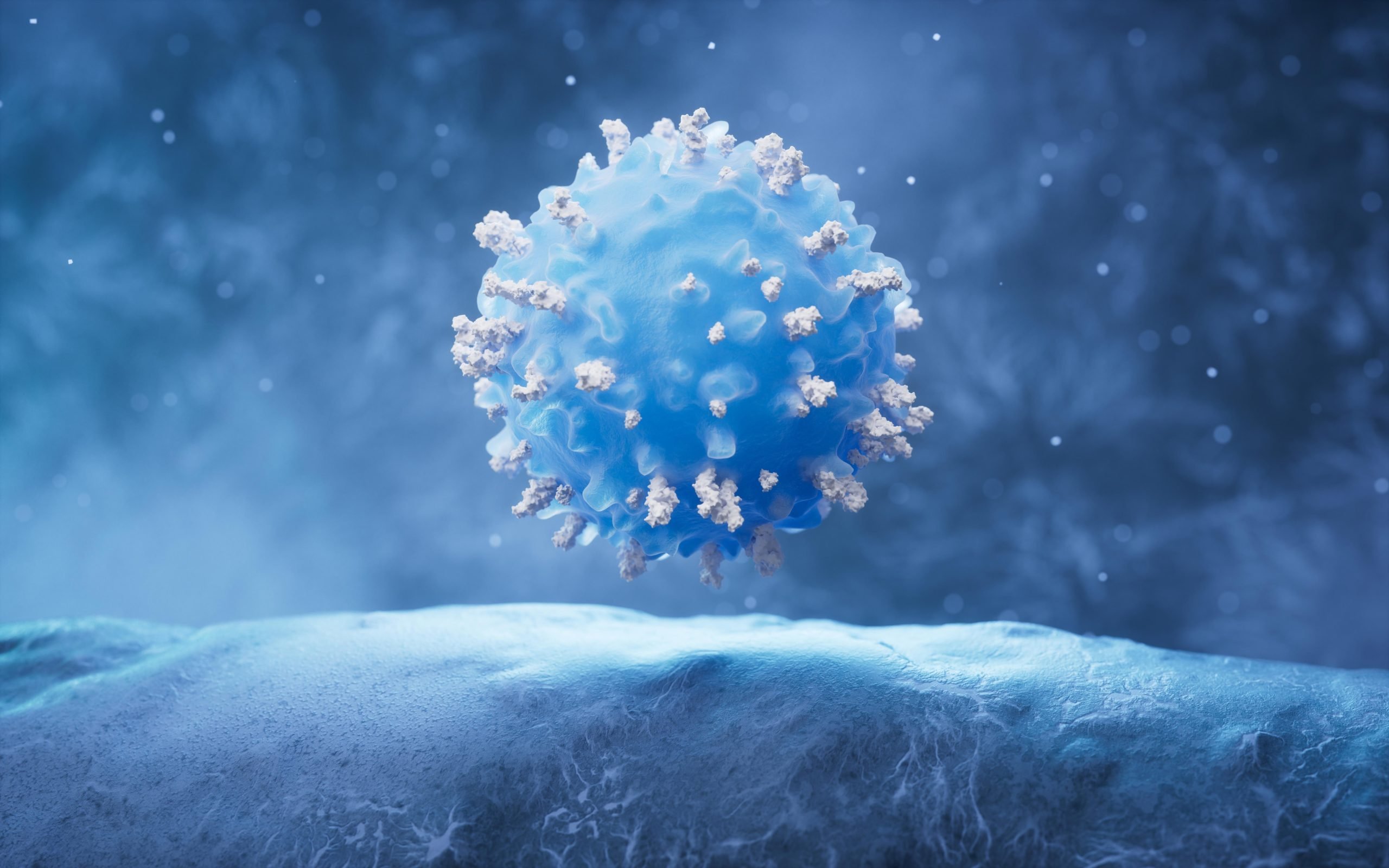
Scientists uncover a new “recipe” that shows how exhausted T cells can be reprogrammed to regain their ability to attack tumors.
When cancer or a stubborn infection keeps the immune system in a prolonged fight, some of its most important soldiers can lose steam.
A new study from teams at the Salk Institute for Biological Studies, UNC Lineberger Comprehensive Cancer Center, and UC San Diego reports that CD8 “killer” T cells follow genetic decision rules that steer them toward two very different futures. They can develop into long lasting cells that help protect the body over time, or they can slip into an exhausted state where they become far less effective.
The study, published in Nature, introduces a predictive framework that could allow researchers to deliberately guide T cell behavior. This approach aims to help T cells maintain immune memory while continuing to combat cancer and infections, offering new possibilities for cancer immunotherapy and infectious disease research.
CD8 killer T cells are essential to immune defense because they identify and destroy cells infected by viruses as well as cancerous cells. Over time, however, persistent threats such as long lasting infections or tumors can weaken these cells. As their effectiveness declines, they may enter a state known as T cell exhaustion, where their ability to eliminate targets is greatly reduced.
Because healthy memory T cells and exhausted T cells often appear nearly identical, the research team investigated whether the two states could be distinguished by their genetic activity. A major achievement of the study was the development of a comprehensive genetic atlas that maps multiple CD8 T cell states. This atlas shows how T cells shift along a continuum that ranges from highly protective to severely dysfunctional.
“Our long-term goal is to make immune therapies work better by creating clear ‘recipes’ for designing T cells,” says co-corresponding author Susan Kaech, PhD, a professor at the Salk Institute at the time of the study. “To do that, we first needed to identify which molecular ingredients are uniquely active in one T cell state but not others. By building a comprehensive atlas of CD8 T cell states, we were able to pinpoint the key factors that define protective versus dysfunctional programs—information that is essential for precisely engineering effective immune responses.”
Can T cell exhaustion ever be reversed?
To answer this question, the researchers used a combination of advanced laboratory methods, genetic manipulation, mouse models, and computational analysis. They examined nine different CD8 T cell states and identified transcription factors, which are proteins that regulate gene activity, that function as switches directing T cells toward sustained performance or exhaustion.
Within this group, the team identified two transcription factors, ZSCAN20 and JDP2, that had not previously been associated with T cell exhaustion. When these factors were turned off, exhausted T cells recovered their ability to destroy tumors while still retaining their potential to provide long-term immune memory.
“We flipped specific genetic switches in the T cells to see if we could restore their tumor-killing function without damaging their ability to provide long-term immune protection,” says co-corresponding author H. Kay Chung, PhD, an assistant professor at UNC Lineberger. Chung began this research at the Salk Institute before joining UNC. “We found that it was indeed possible to separate these two outcomes.”
The study challenges the long-standing belief that immune exhaustion is an unavoidable consequence of prolonged immune activity.
Can T cells be engineered to prevent burnout?
The researchers say this genetic atlas of T cell states could now guide the development of supercharged T cells for use in cellular therapies such as adoptive cell transfer (ACT) and CAR T cell therapy.
“Once we had this map, we could start giving T cells much clearer instructions—helping them keep the traits that allow them to fight cancer or infection over the long term, while avoiding the pathways that cause them to burn out,” says Kaech. “By separating these two programs, we can begin to design immune cells that are both durable and effective in cancer and chronic infection.”
The researchers say the findings should be especially relevant for treating solid tumors, where separating protective immune responses from exhaustion is critical for effective therapy.
Looking ahead, the team will combine advanced laboratory methods with AI-guided computational modeling to develop a larger number of precise genetic recipes for programming T cells into specific states, enabling greater precision for cellular therapies.
“Because genes work together in complex regulatory networks that are difficult to decipher, powerful computational tools are essential to pinpoint which regulators drive specific cell states,” says co-corresponding author Wei Wang, PhD, a professor at UC San Diego. “This study shows that we can begin to precisely manipulate immune cell fates and unlock new possibilities for enhancing immune therapies.”
By revealing how killer T cells choose between resilience and burnout, this research brings scientists closer to guiding the immune system with intention—rather than watching it fail under pressure.
Reference: “Atlas-guided discovery of transcription factors for T cell programming” by H. Kay Chung, Cong Liu, Anamika Battu, Alexander N. Jambor, Brandon M. Pratt, Fucong Xie, Brian P. Riesenberg, Eduardo Casillas, Ming Sun, Elisa Landoni, Yanpei Li, Qidang Ye, Daniel Joo, Jarred Green, Zaid Syed, Nolan J. Brown, Matthew Smith, Shixin Ma, Shirong Tan, Brent Chick, Victoria Tripple, Z. Audrey Wang, Jun Wang, Bryan Mcdonald, Peixiang He, Qiyuan Yang, Timothy Chen, Siva Karthik Varanasi, Michael LaPorte, Thomas H. Mann, Dan Chen, Filipe Hoffmann, Josephine Ho, Jennifer Modliszewski, April Williams, Yusha Liu, Zhen Wang, Jieyuan Liu, Yiming Gao, Zhiting Hu, Ukrae H. Cho, Longwei Liu, Yingxiao Wang, Diana C. Hargreaves, Gianpietro Dotti, Barbara Savoldo, Jessica E. Thaxton, J. Justin Milner, Susan M. Kaech and Wei Wang, 4 February 2026, Nature.
DOI: 10.1038/s41586-025-09989-7
The work was supported by the National Institutes of Health (R37AI066232, R01AI123864, R21AI151986, R01CA240909, R01AI150282, R01HG009626, K01EB034321, R01AI177864, R01CA248359, R01CA244361, AI151123, EB029122, GM140929) and the Damon Runyon Cancer Research Foundation.
Never miss a breakthrough: Join the SciTechDaily newsletter.
Follow us on Google and Google News.
3 Comments
there has to be a way to hybrid blood cells in the body to T cells and make them adaptable to generate a tourine varient in the bloodstream which said cells can adapt to white or red blood cells. O- could be adapted to said cells which has to be pressurized in a correct timeframe so any acid variend could be discasrded. a potassium electrolyte with a cream varient and a compundable sugar or super pressurized carbohydrate with a white blood cells booster with salt properties to keep in moisture. I would use bone marrow properties to make sure its adaptable to the body
Yes lets make movies like “I am Legend” and “Resident Evil” real possibilities!
Or not.
Such control will be also effective in preventing immune response to transplant organs, there by extending the life of the receiver by many years