
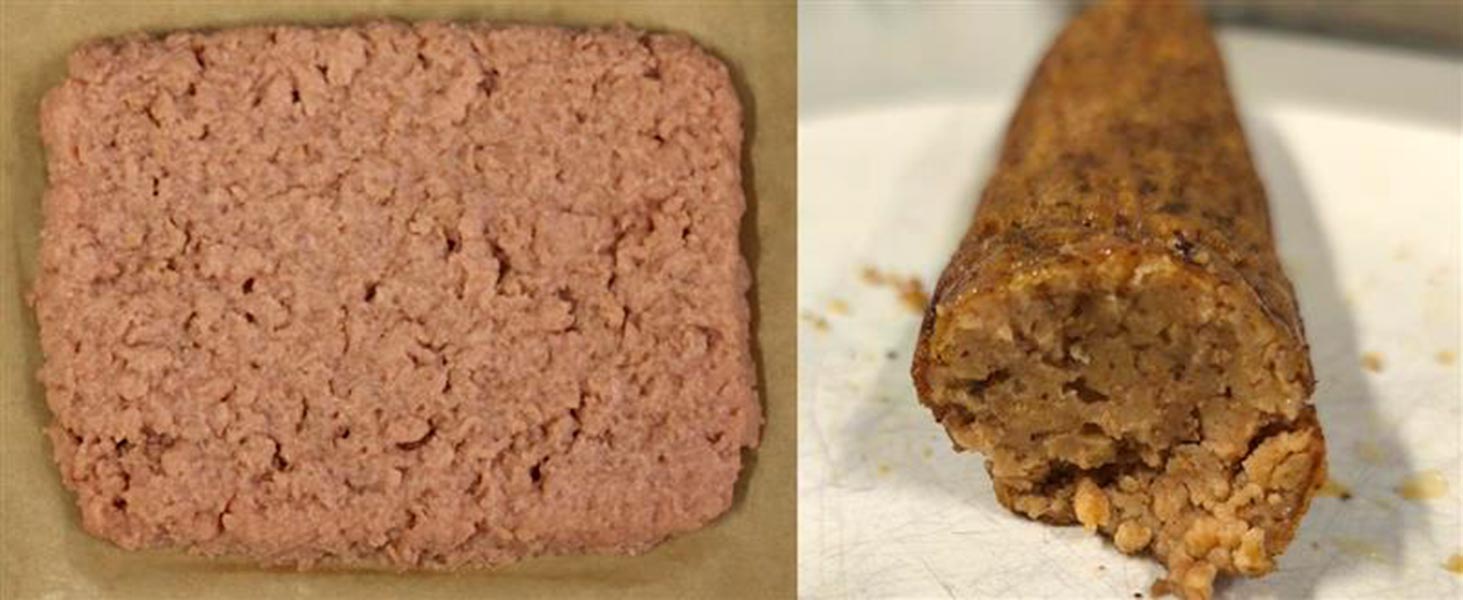
Leftover carrots are being turned into fungal protein that makes vegan burgers and sausages taste even better.
As the global population grows, the demand for nutritious food and more efficient production methods continues to rise. At the same time, modern food manufacturing creates large amounts of leftover material that often goes unused. Scientists reporting today (December 17) in ACS’ Journal of Agricultural and Food Chemistry explored whether waste from carrot processing could be put to better use. By feeding these carrot side streams to edible fungi, they created a sustainable protein source that was later tested in vegan foods.
The team used the fungal protein in experimental vegan patties and sausages. When volunteers sampled the foods, they rated the fungal versions as more enjoyable than comparable products made with common plant-based proteins.
“This study is a significant step towards a circular economy by transforming valuable food side streams into a high-quality protein source, highlighting the potential of fungal mycelium in addressing global food security and sustainability challenges,” says Martin Gand, the corresponding author of the study.
Why New Protein Sources Are Needed
According to the United Nations, about one in 11 people worldwide experienced hunger in 2023, and more than three billion people could not afford a healthy diet. These numbers highlight the need for food systems that produce more nutrition using fewer resources. One promising approach involves edible fungi, which earlier studies have shown can grow on food industry byproducts such as apple pomace and whey from apple juice and cheese production.
Gand and his colleagues focused on carrot processing leftovers as a potential growing medium for fungi. Their goal was to recover nutrients that would otherwise be discarded and convert them into food. Instead of growing mushrooms to harvest their caps, the researchers concentrated on fungal mycelia. These root-like structures grow faster and require less space while still providing nutrients beneficial to human diets.
Screening Fungi for Protein Quality
To find the best candidate, the research team tested 106 different fungal strains grown on side streams from orange and black carrots used in natural color production. They evaluated how well each fungus grew and how much protein it produced. One strain stood out: Pleurotus djamor (pink oyster mushroom).
After selecting this fungus, the researchers refined the growing conditions to increase protein yield. The resulting proteins had biological values — which reflect how efficiently food proteins are absorbed and incorporated by the body — comparable to those found in both animal and plant proteins. The P. djamor mycelia were also low in fat and contained fiber levels similar to other edible fungi.
Taste Tests With Vegan Patties and Sausages
To see how the fungal protein performed in real food, the team prepared vegan patties that replaced soy protein with varying amounts of mycelia. The patties contained 0%, 25%, 50%, 75% or 100% fungal protein. Volunteers evaluated each version based on texture, flavor, and aroma. A key result was that participants preferred the patties made entirely with mycelium over those made entirely with soy.
The researchers also produced vegan sausages using either soaked chickpeas or fresh mycelia. In these tests, volunteers generally favored the smell and taste of the sausages containing fungal mycelium.
A Promising Path for Sustainable Food Production
Overall, the findings suggest that fungal mycelia could serve as a flavorful and sustainable protein source. The approach makes use of food production leftovers instead of relying on additional farmland, while delivering nutrition similar to existing plant-based proteins. Gand adds, “utilizing side streams as substrate for mycelium production reduces environmental impact while adding value and supports food security by enabling an efficient and sustainable protein production.”
Reference: “Pleurotus djamor Mycelium: Sustainable Production of a Promising Protein Source from Carrot Side Streams” by Leonie Cora Juhrich, Iris Lammersdorf, Pascal Schmitt, Lars Tasto, Falk Speer, Denise Salzig, Kai Reineke, Holger Zorn and Martin Gand, 17 December 2025, Journal of Agricultural and Food Chemistry.
DOI: 10.1021/acs.jafc.5c11223
The authors acknowledge funding from institutional resources and GNT Europa GmbH, a company that manufactures natural food colors.
Never miss a breakthrough: Join the SciTechDaily newsletter.
Follow us on Google and Google News.