
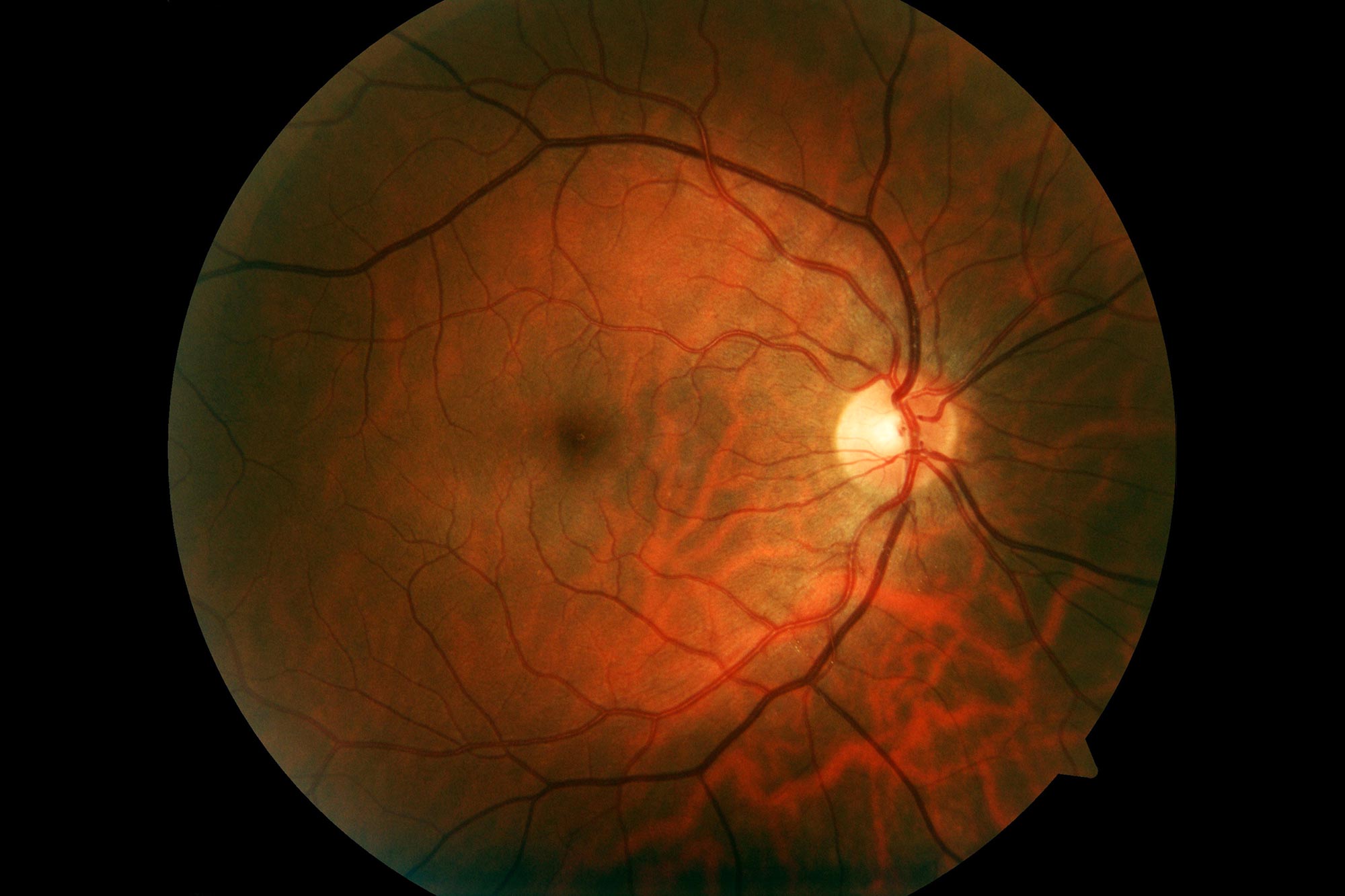
Researchers have developed a retinal ‘vascular fingerprint’ that can predict stroke risk as effectively as traditional methods, but with less invasiveness.
Utilizing a set of 29 vascular health indicators from the retina, this method stands out for its potential in primary healthcare, especially in areas with limited resources.
Retinal Vascular Health as a Stroke Predictor
A unique vascular “fingerprint” in the retina — the light-sensitive tissue at the back of the eye — can predict stroke risk with the same accuracy as traditional risk factors, but without requiring invasive lab tests. This finding, published today (January 14) in the journal Heart, offers a simpler, more accessible approach to assessing stroke risk.
The vascular fingerprint consists of 29 indicators of vascular health and has been identified as a practical, easily implemented tool. Researchers highlight its potential, particularly in primary healthcare and resource-limited settings.
Global Stroke Burden and Retinal Research
Stroke affects approximately 100 million people worldwide each year, resulting in 6.7 million deaths. Most cases are linked to modifiable risk factors, including high blood pressure, high cholesterol, unhealthy diets, and smoking.
The retina’s complex vascular network shares many anatomical and physiological similarities with the brain’s blood vessels. This makes it a valuable window into the effects of systemic health issues, such as diabetes, and a promising tool for predicting stroke risk.
Advancements in Stroke Prediction Technology
Its potential for stroke risk prediction hasn’t been fully explored, due to variable study findings and inconsistent use of the specialized imaging technique for the back of the eye — fundus photography — they add.
But machine learning (AI), such as the Retina-based Microvascular Health Assessment System (RMHAS), has opened up the possibilities for the identification of biological markers that can accurately predict stroke risk without the need for invasive lab tests, say the researchers.
Study Methodology and Participant Data
To explore this further, they measured 30 indicators across 5 categories of retinal vascular architecture in fundus images from 68,753 UK Biobank study participants.
The 5 categories included caliber (length, diameter, ratio) density, twistedness, branching angle, and complexity of the veins and arteries.
They also accounted for potentially influential risk factors: background demographic and socioeconomic factors; lifestyle; and health parameters, including blood pressure, cholesterol, HbA1c (blood glucose indicator), and weight (BMI).
The final analysis included 45,161 participants (average age 55). During an average monitoring period of 12.5 years, 749 participants had a stroke.
Impact of Retinal Indicators on Stroke Risk
These people tended to be significantly older, male, current smokers, and to have diabetes. They also weighed more, had higher blood pressure, and lower levels of ‘good’ cholesterol, all of which are known risk factors for stroke.
In all, 118 retinal vascular measurable indicators were included, of which 29 were significantly associated with first-time stroke risk after adjusting for traditional risk factors. Over half (17) were density indicators; 8 fell into the complexity category; 3 were caliber indicators; and 1 came under the twistedness category.
Each change in density indicators was associated with an increased stroke risk of 10-19%, while similar changes in caliber indicators were associated with an increased risk of 10-14%.
Each decrease in the complexity and twistedness indicators was associated with an increased risk of 10.5-19.5%.
Conclusion and Implications for Future Research
This retinal ‘vascular fingerprint’, even when combined with just age and sex, was as good as the use of traditional risk factors alone for predicting future stroke risk, the findings showed.
This is an observational study, and therefore no firm conclusions can be drawn about cause and effect. And the researchers acknowledge that the findings may not apply to diverse ethnicities as most of the UK Biobank’s participants are White. Nor were they able to assess the risk associated with different types of stroke.
Nevertheless, they conclude: “Given that age and sex are readily available, and retinal parameters can be obtained through routine fundus photography, this model presents a practical and easily implementable approach for incident stroke risk assessment, particularly for primary healthcare and low-resource settings.”
Reference: “Retinal vascular fingerprints predict incident stroke: findings from the UK Biobank cohort study” by Mayinuer Yusufu, David S Friedman, Mengtian Kang, Ambhruni Padhye, Xianwen Shang, Lei Zhang, Danli Shi and Mingguang He, 13 January 2025, Heart.
DOI: 10.1136/heartjnl-2024-324705
Never miss a breakthrough: Join the SciTechDaily newsletter.
Follow us on Google and Google News.