
A brief, calorie-restricted diet centered almost entirely on oats led to a surprisingly strong and lasting reduction in cholesterol in people with metabolic syndrome.
A very short dietary intervention built around oats may deliver meaningful improvements in cholesterol levels, according to new research from the University of Bonn published in Nature Communications. In the study, people with metabolic syndrome followed a sharply reduced-calorie eating plan made up almost entirely of oatmeal for just two days.
Compared with participants on a similar low-calorie diet that did not include oats, those who consumed oatmeal showed a marked drop in cholesterol. Notably, this improvement was still present six weeks later, suggesting the effects were not simply temporary. Researchers also observed changes in the gut microbiome, pointing to a possible biological mechanism behind the results.
Oats have long been associated with metabolic benefits, although their role has faded from modern medical practice. In the early 1900s, German physician Carl von Noorden used oats as a treatment for diabetes and reported strong results. “Today, effective medications are available to treat patients with diabetes,” explains Marie-Christine Simon, junior professor at the Institute of Nutritional and Food Science at the University of Bonn. “As a result, this method has been almost completely overlooked in recent decades.”
The volunteers in the current study were not diagnosed with diabetes, but all had metabolic syndrome, a condition that significantly raises the risk of developing it. People with this syndrome typically have excess body weight, elevated blood pressure, high blood sugar, and abnormal lipid levels.
“We wanted to know how a special oat-based diet affects patients,” explains Simon, who is also a member of the Transdisciplinary Research Areas “Life & Health” and „Sustainable Futures“ at the University of Bonn.
300 grams of oatmeal per day
Participants were instructed to eat only oatmeal that had been cooked in water, three times a day. They were allowed to add small amounts of fruit or vegetables but no other foods. In total, 32 women and men completed the oat-based phase of the study. Each consumed 300 grams of oatmeal per day over two days, while cutting their overall calorie intake to about half of their usual amount. A separate control group also followed a calorie-restricted diet, but without oats.
Reducing calories alone led to health improvements in both groups, but the changes were noticeably greater among those eating oats.
“The level of particularly harmful LDL cholesterol fell by 10 percent for them – that is a substantial reduction, although not entirely comparable to the effect of modern medications,” Simon emphasizes. “They also lost two kilos in weight on average and their blood pressure fell slightly.”
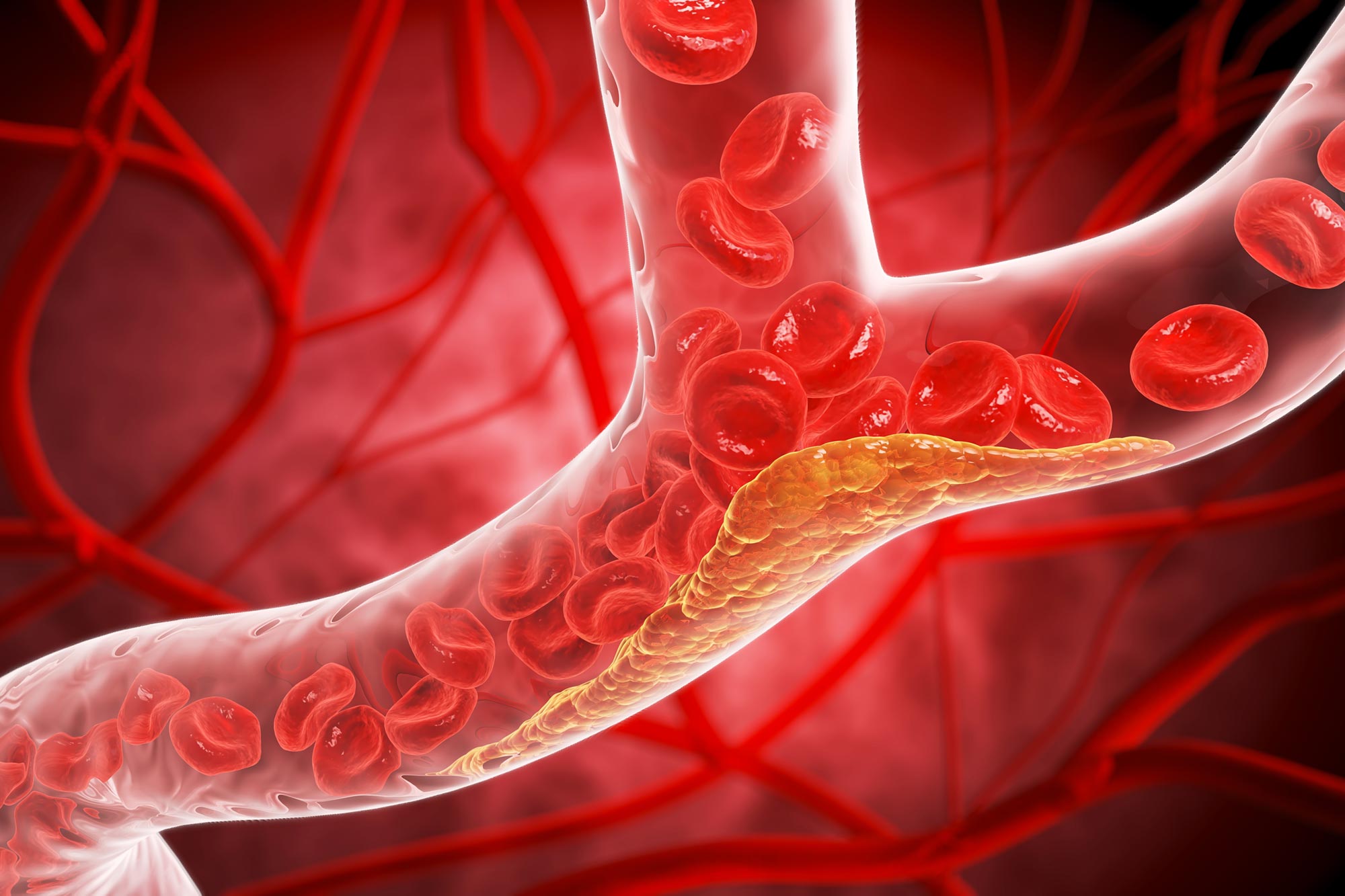
This reduction in LDL cholesterol is especially important because of its role in cardiovascular disease. Excess LDL can build up along blood vessel walls, forming plaques that restrict blood flow. Under certain conditions, such as physical strain or emotional stress, these plaques can rupture. This can trigger clot formation that blocks the vessel or allows plaque fragments to travel through the bloodstream, potentially leading to a heart attack or stroke.
Oats promote the growth of “healthy” intestinal bacteria
So what could explain the stronger effect seen with oats?
“We were able to identify that the consumption of oatmeal increased the number of certain bacteria in the gut,” says Linda Klümpen, the study’s lead author and a colleague of Simon. The gut microbiome has become a major focus of research as scientists uncover its influence on metabolism and disease risk.
Intestinal bacteria play a central role in breaking down food and producing metabolic compounds that affect the body in multiple ways. Some of these by-products provide energy to the cells lining the gut, helping maintain a healthy intestinal barrier.
Others can enter the bloodstream and influence processes elsewhere in the body, including lipid and glucose metabolism. The findings suggest that oats may support metabolic health not only through their nutrient content, but also by shaping the microbial ecosystem inside the gut.
In addition, the microbes send some of their products around the body in the bloodstream, where they can have various effects. “For instance, we were able to show that intestinal bacteria produce phenolic compounds by breaking down the oats,” says Klümpen. “It has already been shown in animal studies that one of them, ferulic acid, has a positive effect on the cholesterol metabolism. This also appears to be the case for some of the other bacterial metabolic products.”
At the same time, other microorganisms “dispose of” the amino acid histidine. The body otherwise turns this into a molecule that is suspected of promoting insulin resistance. This insensitivity to insulin is a key feature of diabetes mellitus.
A large amount of oats for two days better than a small amount for six weeks
The positive effects of the oat-based diet tended to still be evident six weeks later. “A short-term oat-based diet at regular intervals could be a well-tolerated way to keep the cholesterol level within the normal range and prevent diabetes,” says Junior Professor Simon.
However, in the current study, the cereal above all exerted its effect at a high concentration and in conjunction with a calorie reduction: A six-week diet, in which the participants consumed 80 grams of oats per day, without any other restrictions, achieved small effects. “As a next step, it can now be clarified whether an intensive oat-based diet repeated every six weeks actually has a permanently preventative effect,” continues Simon.
Test method
A total of 68 participants took part in the trial. For the two-day short-term oat-based diet, all 17 participants on the oat-based diet and 15 participants on the control diet successfully completed the study phase. Two participants in the control group withdrew for personal reasons. For the six-week-long oat-based intervention, 17 participants in the study group and the same number in the control group took part until the end. The sample size of 17 participants per group was calculated by the researchers on the basis of data from an earlier interventional trial.
Both the two-day intensive diet and the six-week trial with a moderate dose of oats were randomized controlled trials. In these “RCTs,” the test subjects are divided into two groups at random (i.e., randomized). One of them receives the potential active ingredient – in this case, the oats – but the other (the control group) does not. Ideally, the test subjects are “blind”: They do not know to which group they belong. This rules out any placebo effects.
In nutritional experiments, blinding is often not possible – those involved ultimately generally know what they are eating. This was also the case in these studies. However, the evaluation of the blood and stool samples was indeed “blind”: The researchers in charge of this were not informed whether the material had been taken from members of the test group or the control group. The same also applied to the blood pressure and weight measurements. This ruled out the possibility of the scientists’ expectations falsifying the results.
Blood and stool samples were taken before the participants made any changes to their diet. Their blood pressure, weight, height, waist size, and body fat were also measured. A second examination took place immediately after the two-day oat-based diet, followed by three others after two, four, and six weeks. The same analysis were conducted on these four visits as during the initial examination, and further blood and stool samples were collected. The researchers took the same approach during the second nutritional study, in which the subjects consumed 80 grams of oatmeal a day for six weeks.
The blood samples were examined in the lab for their LDL cholesterol content, among other things. The researchers also measured the concentration of a key molecule, dihydroferulic acid. This phenolic compound is presumably formed by certain intestinal bacteria, which are known to have a health-promoting effect.
By examining the stool samples, the researchers were able to confirm this hypothesis. They isolated what is known as 16S RNA from the samples. This is a molecule that exclusively occurs in bacteria, but differs somewhat between different species. A 16S RNA molecule can thus be used to identify the bacterium from which it originates, just like a fingerprint. The researchers also analyzed which metabolic products were present in the stool.
Reference: “Cholesterol-lowering effects of oats induced by microbially produced phenolic metabolites in metabolic syndrome: a randomized controlled trial” by Linda Klümpen, Aakash Mantri, Maren Philipps, Waldemar Seel, Laura Schlautmann, Mohamed H. Yaghmour, Verena Wiemann, Birgit Stoffel-Wagner, Martin Coenen, Leonie Weinhold, Jan Hasenauer, Thomas Fließwasser, Sven Burgdorf, Christoph Thiele, Peter Stehle and Marie-Christine Simon, 14 January 2026, Nature Communications.
DOI: 10.1038/s41467-026-68303-9
The trial was funded by the German Federal Ministry of Education and Research (BMBF), the German Diabetes Association (DDG), the German Research Foundation (DFG), the German Cereal Processing, Milling and Starch Industries’ Association (VGMS), and RASO Naturprodukte.
Never miss a breakthrough: Join the SciTechDaily newsletter.
Follow us on Google and Google News.
6 Comments
Is that with without milk and brown sugar???
Yes just plain rolled oats made with water.
Isn’t three hundred grams only about 1/2 a cup? So a total of 1 cup of oatmeal over the course of two days? No other food?
I wish they had mentioned an alternative to oats, like what would be the next best thing, for those who can’t eat oats.
A few years ago I had started eating a lot more oats and products with oats for my high cholesterol. I was having abdominal pain for months before I figured out it was from eating oats. I stopped eating oats and the pain went away.
What kind of oats did they consume? Steel cut, rolled or quick oats? Did I miss this part?
I ate oats for years till I started started smelling chemicals in regular and organic oatmeal. You have to take these tests with a grain of salt they mean nothing in isolation and all they do is cause severe anxiety which will in your life quicker than these chemicals. 💥💯