
Close Menu
    Facebook X (Twitter) Instagram
    SciTechDaily
    • Biology
    • Chemistry
    • Earth
    • Health
    • Physics
    • Science
    • Space
    • Technology
    Facebook X (Twitter) Pinterest YouTube RSS
    SciTechDaily
    Home»Space»This Week @NASA: A More Powerful Space Station, More Fuel-Efficient Aircraft & Solar Flashes
    Space

    This Week @NASA: A More Powerful Space Station, More Fuel-Efficient Aircraft & Solar Flashes

    By NASAJanuary 22, 20231 Comment3 Mins Read
    Facebook Twitter Pinterest Telegram LinkedIn WhatsApp Email Reddit
    Share
    Facebook Twitter LinkedIn Pinterest Telegram Email Reddit
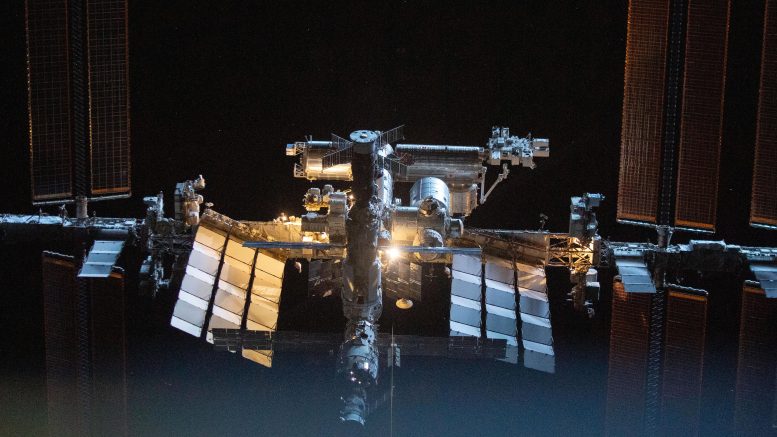
    Space Station Pictured From SpaceX Crew Dragon Crop
    The International Space Station is pictured from the SpaceX Crew Dragon Endeavour during a fly around of the orbiting lab that took place on November 8, 2021. Credit: NASA

    Preparing for a more powerful space station …

    Building a more fuel-efficient aircraft …

    And a way to possibly predict solar flares …

    A few of the stories to tell you about – This Week at NASA!

    Preparing the Space Station for a More Powerful Future

    On January 20, NASA astronaut Nicole Mann and Japan Aerospace Exploration Agency astronaut Koichi Wakata conducted a spacewalk outside the International Space Station to prepare for future upgrades to the station’s power system. The station’s existing power channels are being augmented with new roll-out solar arrays.

    Aircraft With Transonic Truss-Braced Wing Configuration
    Artist concept of commercial aircraft families with a Transonic Truss-Braced Wing configuration from the Sustainable Flight Demonstrator project. Credit: Boeing

    NASA, Boeing to Build a Greener, More Fuel-Efficient Airliner

    On January 18, NASA announced a partnership with Boeing to build, test, and fly an experimental full-scale Sustainable Flight Demonstrator aircraft aimed at lowering emissions.

    “And Boeing’s concept is a Transonic Truss-Braced Wing single-aisle aircraft.” Bill Nelson, NASA Administrator

    Learn more about NASA’s work in aeronautics research at nasa.gov/flight.
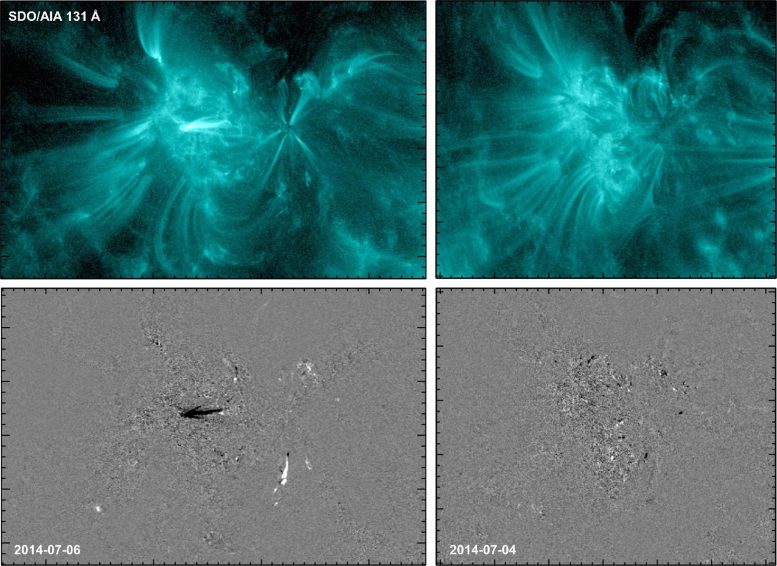
    Solar Active Region (NOAA AR 2109)
    Two images of a solar active region (NOAA AR 2109) taken by SDO/AIA show extreme-ultraviolet light produced by million-degree-hot coronal gas (top images) on the day before the region flared (left) and the day before it stayed quiet and did not flare (right). The changes in brightness (bottom images) at these two times show different patterns, with patches of intense variation (black & white areas) before the flare (bottom left) and mostly gray (indicating low variability) before the quiet period (bottom right). Credit: NASA/SDO/AIA/Dissauer et al. 2022

    Flashes on the Sun Could Help Predict Solar Flares

    NASA’s Solar Dynamics Observatory has identified small-scale flashes in the upper layers of the solar atmosphere, the corona, that could help us predict solar flares, which, in turn, could help us anticipate the disruptive impacts of space weather storms here on Earth.

    NASA Completed Welding of Artemis III Core Stage Tank Dome
    Teams completed the welding of the Artemis III core stage liquid oxygen tank dome at NASA’s Michoud Assembly Facility in New Orleans. Credit: NASA/Michael DeMocker

    Welding of Artemis III Core Stage Tank Dome Completed

    Teams at our Michoud Assembly Facility recently completed welding of the Space Launch System, or SLS core stage liquid oxygen tank dome for Artemis III. The liquid oxygen and the liquid hydrogen tanks hold the propellant used to launch the SLS and the Orion spacecraft into space.

    That’s what’s up this week @NASA

    Never miss a breakthrough: Join the SciTechDaily newsletter.
    Follow us on Google and Google News.

    NASA
    Share. Facebook Twitter Pinterest LinkedIn Email Reddit

    Related Articles

    NASA’s Psyche Could Reveal the Secret Inside This Metal World

    Mars Was Once Warm and Wet. NASA’s ESCAPADE Is About to Learn What Went Wrong

    NASA’s Curiosity Rover Discovers Spiderweb Ridges on Mars That Hint at Ancient Water

    NASA’s DART Impact Actually Changed an Asteroid System’s Orbit Around the Sun

    NASA’s Webb Telescope Reveals an Eerie Nebula That Looks Like a Giant Brain

    “At First, We Thought Something Was Wrong” – NASA DART Mission Reveals a Cosmic Snowball Fight

    What’s Really Happening on Venus? Scientists Reveal Surprising Patterns

    “Ghost Galaxy” Made of 99% Dark Matter Discovered 300 Million Light Years Away

    Hubble Captures a Dying Star Cracking Open the Egg Nebula

    1 Comment

    1. bhakta_joe on January 23, 2023 2:43 am

      That liquid oxygen tank dome is a real work of art.

      Reply
    Leave A Reply Cancel Reply

    • Facebook
    • Twitter
    • Pinterest
    • YouTube

    Don't Miss a Discovery

    Subscribe for the Latest in Science & Tech!

    Trending News

    Popular Supplement Ingredient Linked to Shorter Lifespan in Men

    Scientists May Have Found a Way To Repair Nerve Damage in Multiple Sclerosis

    “Totally Unexpected” – Scientists Discover Pancreatic Cancer’s Fatal Addiction

    A Strange Quantum Effect May Explain One of Biology’s Greatest Mysteries

    James Webb Telescope Reveals the Universe’s Hidden Cosmic Web in Stunning Detail

    Scientists Identify Simple Supplement That Greatly Reduces Alzheimer’s Damage

    You May Have a Dangerous Type of Cholesterol Even if Your Tests Look Normal

    Your Blood Pressure Reading Could Be Wrong Because of One Simple Mistake

    Follow SciTechDaily
    • Facebook
    • Twitter
    • YouTube
    • Pinterest
    • Newsletter
    • RSS
    SciTech News
    • Biology News
    • Chemistry News
    • Earth News
    • Health News
    • Physics News
    • Science News
    • Space News
    • Technology News
    Recent Posts
    • Scientists Say a 40-Year-Old Childhood Obesity Warning May Be Completely Wrong
    • Marijuana Use May Raise Lung Cancer Risk, Researchers Warn
    • This Common Type of Food May Be Raising Your Risk of Heart Disease
    • Fur Seals’ Hearts Suddenly Spike Hours After Returning to Land
    • Scientists Say Cognitive Decline Isn’t Inevitable — Your Brain Can Improve at Any Age
    Copyright © 1998 - 2026 SciTechDaily. All Rights Reserved.
    • Science News
    • About
    • Contact
    • Editorial Board
    • Privacy Policy
    • Terms of Use

    Type above and press Enter to search. Press Esc to cancel.