
Close Menu
    Facebook X (Twitter) Instagram
    SciTechDaily
    • Biology
    • Chemistry
    • Earth
    • Health
    • Physics
    • Science
    • Space
    • Technology
    Facebook X (Twitter) Pinterest YouTube RSS
    SciTechDaily
    Home»Space»This Week @NASA: Following the Shadow of the Total Solar Eclipse, Astronaut Returns, VIPER Moon Rover
    Space

    This Week @NASA: Following the Shadow of the Total Solar Eclipse, Astronaut Returns, VIPER Moon Rover

    By NASAApril 14, 2024No Comments4 Mins Read
    Facebook Twitter Pinterest Telegram LinkedIn WhatsApp Email Reddit
    Share
    Facebook Twitter LinkedIn Pinterest Telegram Email Reddit
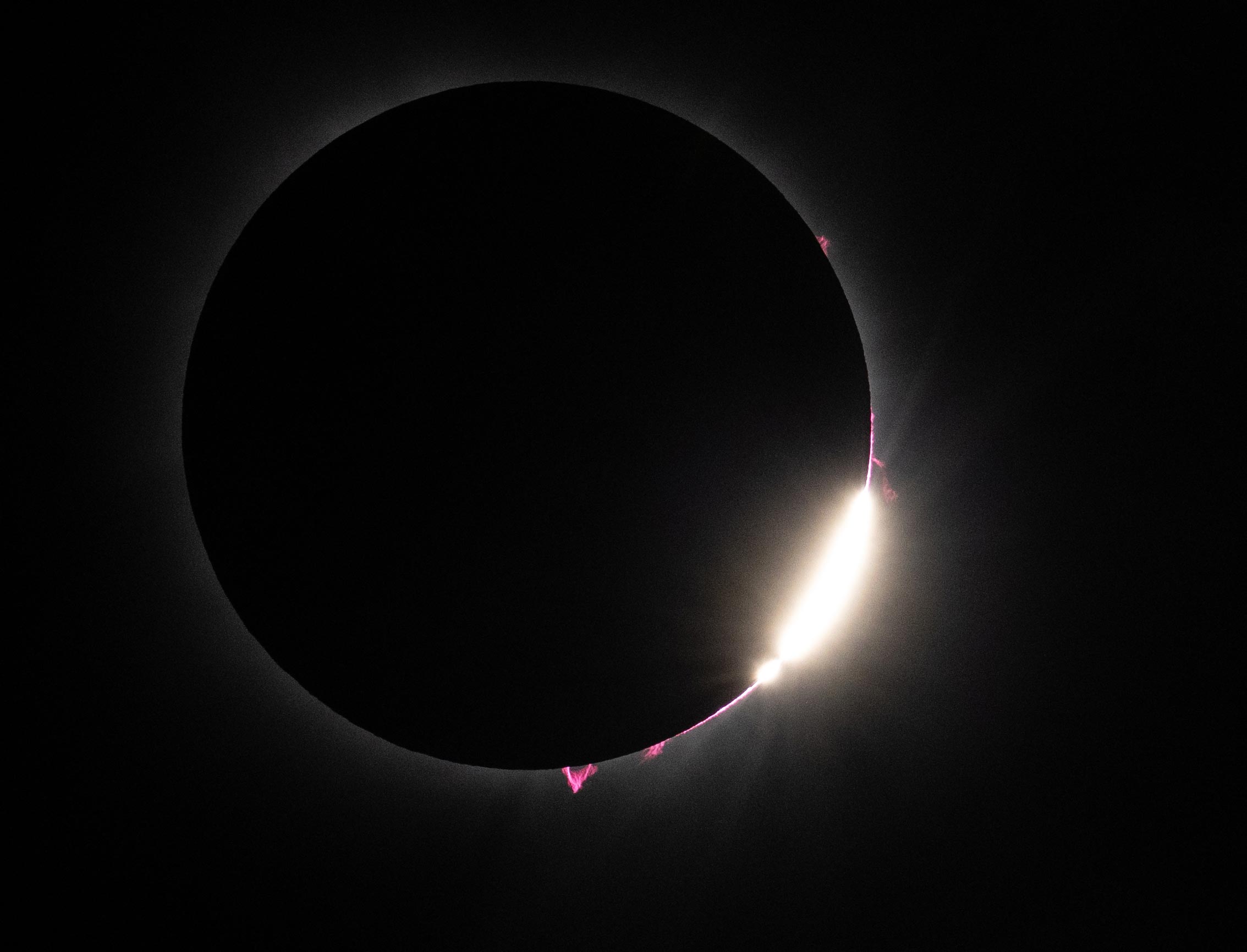
    2024 Total Solar Eclipse 1
    Bailey’s Beads and solar prominences are seen just after totality in Dallas, Texas on Monday, April 8, 2024. A total solar eclipse swept across a narrow portion of the North American continent from Mexico’s Pacific coast to the Atlantic coast of Newfoundland, Canada. A partial solar eclipse was visible across the entire North American continent along with parts of Central America and Europe. Credit: NASA/Keegan Barber

    Following the shadow of the total solar eclipse…

    A NASA astronaut returns safely from the space station…

    And NASA’s lunar-roving robot gets some new hardware…

    A few of the stories to tell you about – This Week at NASA!

    Covering the 2024 Total Solar Eclipse

    NASA provided extensive coverage of the April 8 total solar eclipse from various locations across North America as the Moon’s shadow traveled from Mexico, across the U.S. from Texas to Maine, and through parts of Canada. In addition to views from the ground, views of Earth from a NASA science aircraft, and even from the International Space Station showed the Moon’s shadow passing over cities and towns situated along the path of totality.

    A total solar eclipse happens when the Moon passes between the Sun and Earth, completely blocking the face of the Sun.
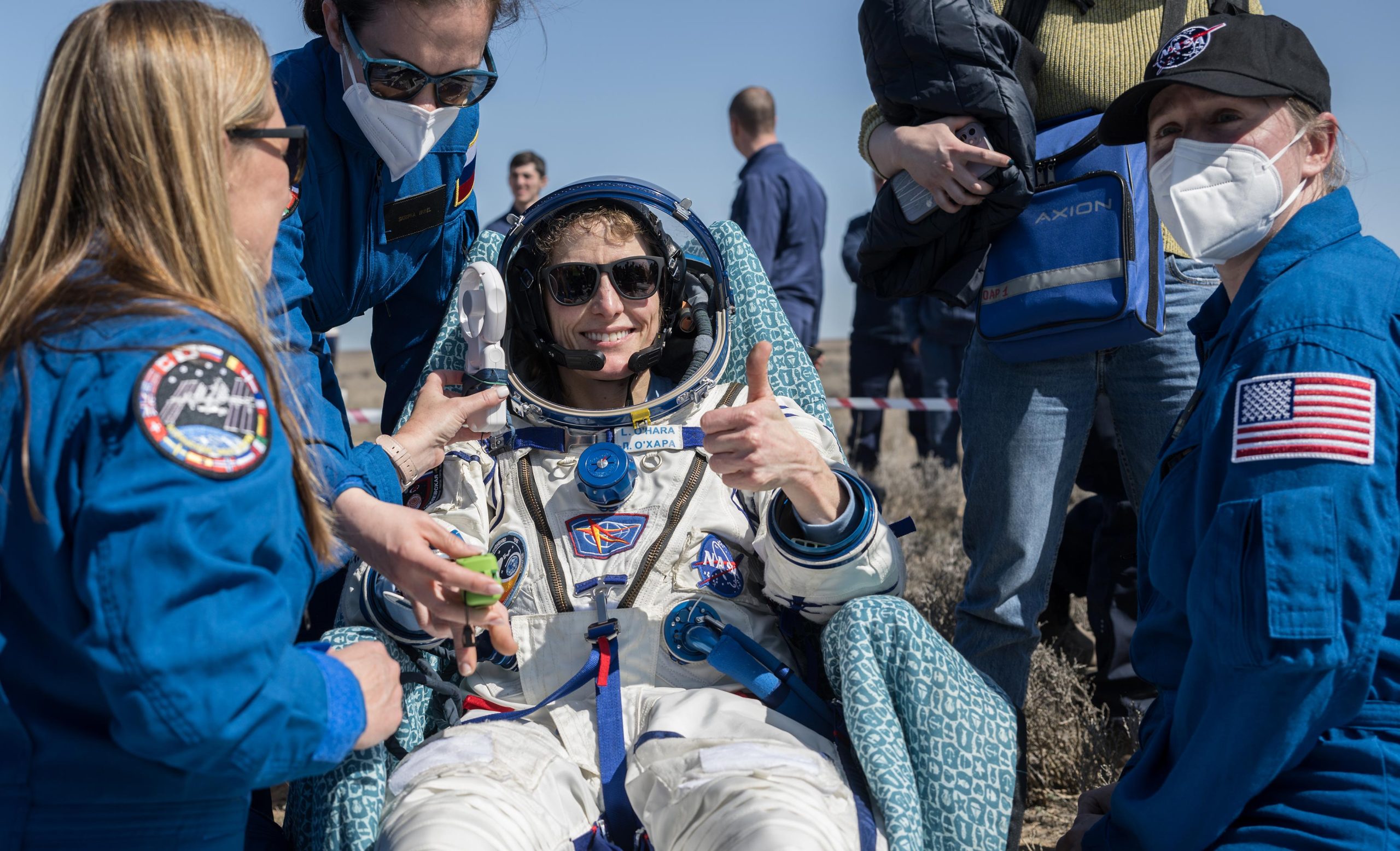
    Expedition 70 Soyuz Landing NASA Astronaut Loral O’Hara
    Expedition 70 NASA astronaut Loral O’Hara is seen outside the Soyuz MS-24 spacecraft after she, Roscosmos cosmonaut Oleg Novitskiy, and Belarus spaceflight participant Marina Vasilevskaya landed in a remote area near the town of Zhezkazgan, Kazakhstan on Saturday, April 6, 2024. O’Hara is returning to Earth after logging 204 days in space as a member of Expeditions 69-70 aboard the International Space Station and Novitskiy and Vasilevskaya return after having spent the last 14 days in space. Credit: NASA/Bill Ingalls

    NASA Astronaut Loral O’Hara Returns From Space Station

    On April 5, NASA astronaut Loral O’Hara and two crewmates boarded a Soyuz spacecraft and undocked from the International Space Station. The next day, the trio made a safe, parachute-assisted landing in Kazakhstan.

    O’Hara spent six months aboard the station supporting NASA’s Artemis campaign and working on various scientific activities. This was her first spaceflight.
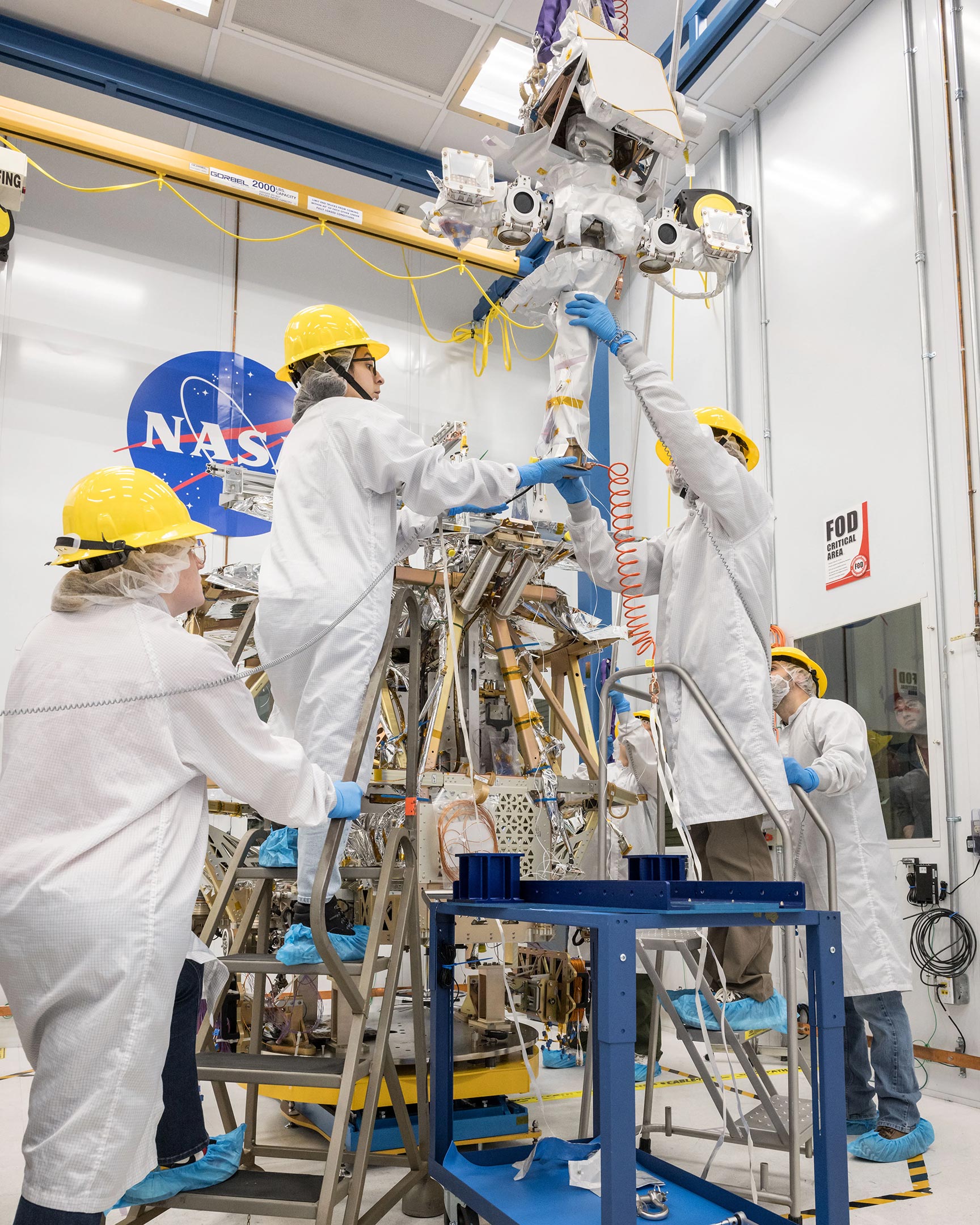
    NASA VIPER Robotic Moon Rover Mast Install
    A team of engineers lifts the mast into place atop NASA’s VIPER robotic Moon rover in a clean room at NASA’s Johnson Space Center in Houston. Credit: NASA/Helen Arase Vargas

    VIPER Robotic Moon RoverTeam Raises Its Mighty Mast

    The team building NASA’s lunar-roving VIPER robot recently installed its mast. Rover drivers and researchers will use the suite of instruments affixed to the mast, along with several science payloads, to scout the South Pole region of the Moon during the rover’s upcoming mission.

    VIPER seeks to help us better understand the origin of water and other resources in that region prior to sending astronauts to the Moon as part of NASA’s Artemis campaign.
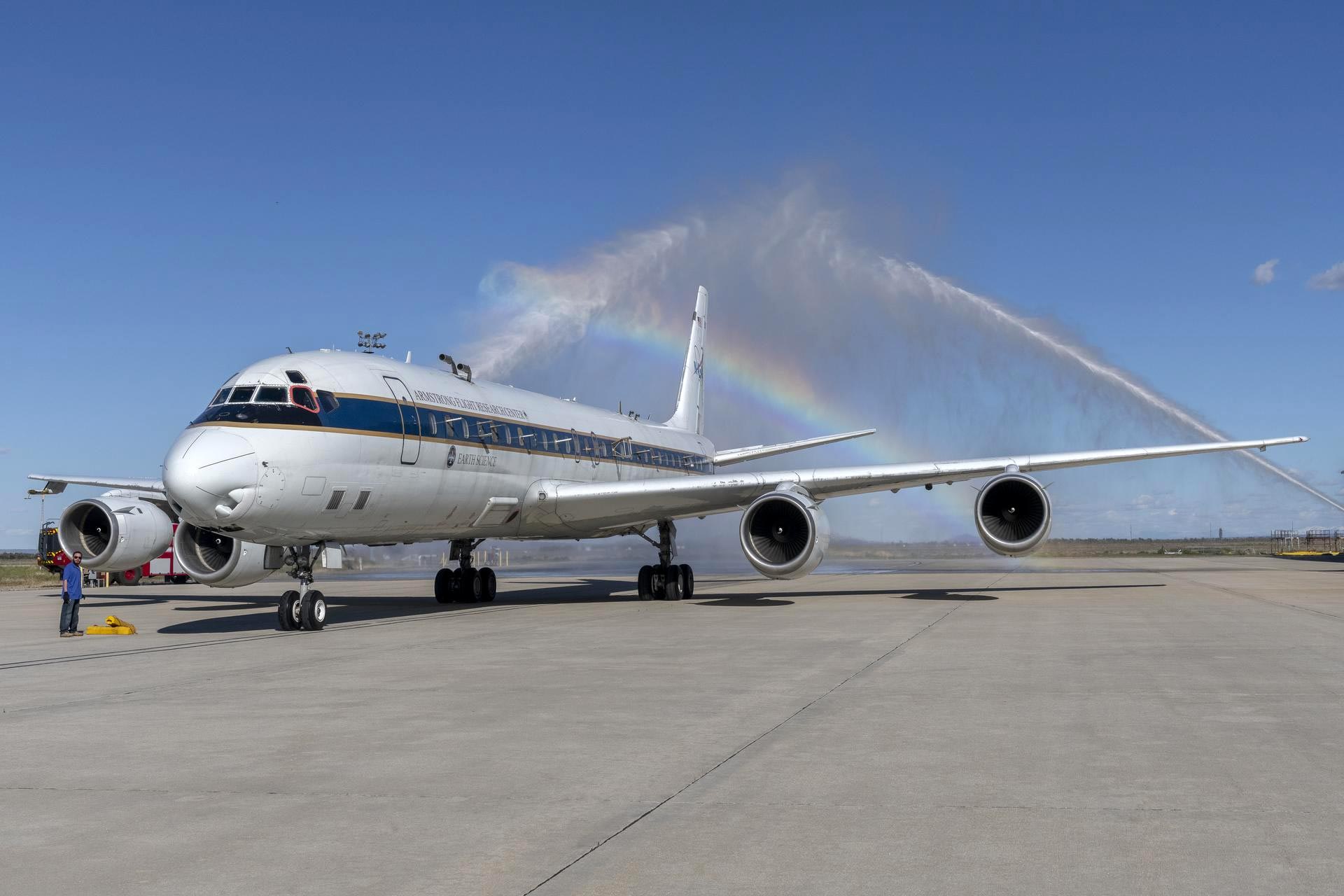
    DC-8 Aircraft Retirement
    The DC-8 aircraft returned to NASA’s Armstrong Flight Research Center Building 703 in Palmdale, California, on April 1, 2024, after completing its final mission supporting Airborne and Satellite Investigation of Asian Air Quality (ASIA-AQ). The aircraft and crew were welcomed back with a celebratory water salute by the U.S. Air Force Plant 42 Fire Department. Credit: NASA/Steve Freeman

    NASA’s DC-8 Completes Final Mission

    NASA’s DC-8 aircraft was welcomed back to the agency’s Armstrong Flight Research Center recently after completing its final mission. As the largest flying science laboratory in the world, the DC-8 has been used to support the agency’s Airborne Science missions since 1987.

    It has helped collect data for countless scientific projects conducted by the global scientific community. The DC-8 will be retired to Idaho State University, where it will be used to train future aircraft technicians.

    That’s what’s up this week @NASA!

    Never miss a breakthrough: Join the SciTechDaily newsletter.
    Follow us on Google and Google News.

    NASA
    Share. Facebook Twitter Pinterest LinkedIn Email Reddit

    Related Articles

    “At First, We Thought Something Was Wrong” – NASA DART Mission Reveals a Cosmic Snowball Fight

    Astronomers Discover an Earth-Like Planet With a Dangerous Temperature Problem

    NASA Prepares Its First Crewed Moon Orbit in Over 50 Years

    A Record-Setting NASA Astronaut Says Goodbye

    NASA’s Artemis II Is on the Launch Pad and the Moon Is Next

    NASA Executes Rare Medical Evacuation From the International Space Station

    NASA Powers Up a Massive Solar Engine for the Moon

    A Massive Rocket Is Rolling and NASA’s Return to the Moon Is Getting Real

    Don’t Miss: Jupiter at Its Biggest and Brightest

    Leave A Reply Cancel Reply

    • Facebook
    • Twitter
    • Pinterest
    • YouTube

    Don't Miss a Discovery

    Subscribe for the Latest in Science & Tech!

    Trending News

    The Universe Is Expanding Too Fast and Scientists Can’t Explain Why

    “Like Liquid Metal”: Scientists Create Strange Shape-Shifting Material

    Early Warning Signals of Esophageal Cancer May Be Hiding in Plain Sight

    Common Blood Pressure Drug Shows Surprising Power Against Deadly Antibiotic-Resistant Superbug

    Scientists Uncover Dangerous Connection Between Serotonin and Heart Valve Disease

    Scientists Discover a “Protector” Protein That Could Help Reverse Hair Loss

    Bone-Strengthening Discovery Could Reverse Osteoporosis

    Scientists Uncover Hidden Trigger Behind Stem Cell Aging

    Follow SciTechDaily
    • Facebook
    • Twitter
    • YouTube
    • Pinterest
    • Newsletter
    • RSS
    SciTech News
    • Biology News
    • Chemistry News
    • Earth News
    • Health News
    • Physics News
    • Science News
    • Space News
    • Technology News
    Recent Posts
    • 5 Common Myths About Learning a New Language, Debunked
    • The Neanderthal “Love Story” Isn’t What It Seems
    • Scientists Unlock Hidden Secrets of 2,300-Year-Old Mummies Using Cutting-Edge CT Scanner
    • Men vs. Women: Scientists Uncover Dramatic Differences in How the Immune System Ages
    • Eating Chili Peppers Linked to Longer Life
    Copyright © 1998 - 2026 SciTechDaily. All Rights Reserved.
    • Science News
    • About
    • Contact
    • Editorial Board
    • Privacy Policy
    • Terms of Use

    Type above and press Enter to search. Press Esc to cancel.