
Ancient fossils from South China reveal the earliest bony fishes and shed new light on how jaws, teeth, and key vertebrate features evolved before the major fish lineages diverged.
A research team led by Profs. Min Zhu, Jing Lu, and You’an Zhu from the Institute of Vertebrate Paleontology and Paleoanthropology (IVPP) at the Chinese Academy of Sciences reported the findings in two consecutive cover articles published in the journal Nature. Their work reveals major new clues about the origin of bony fishes.
The scientists uncovered the oldest-known fossils belonging to bony fishes. These fossils preserve important anatomical details, including jaws, teeth, and braincases, from two early species that lived hundreds of millions of years ago.
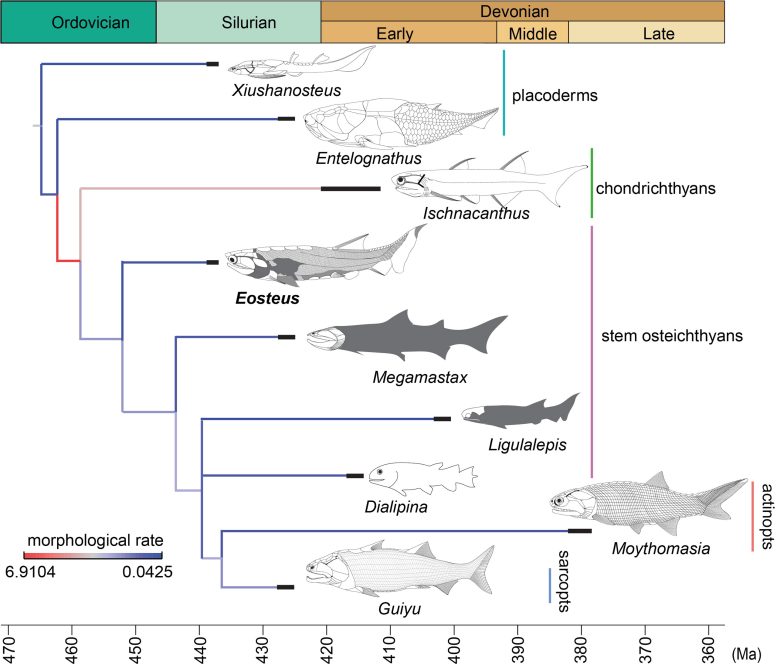
Phylogenetic analysis indicates that both species belong to a previously poorly understood stem group of bony fishes. They represent the most primitive examples identified so far from the time before the evolutionary split between the two main branches of bony fishes: ray-finned fishes and lobe-finned fishes.
The discoveries help fill an important gap in the evolutionary story connecting early fishes to humans and strengthen evidence that southern China played a key role in early vertebrate evolution.
Why the Origin of Bony Fishes Matters for Vertebrate Evolution
Bony fishes occupy a central position in the vertebrate tree of life. Today, they are represented by two major lineages: ray-finned fishes and lobe-finned fishes, which adapted to different environments in water and on land.
Ray-finned fishes include more than 30,000 living species and account for most of the fish species people recognize today. According to the study, one branch of lobe-finned fishes eventually moved onto land during the Devonian period and ultimately gave rise to tetrapods, including humans.
Despite their importance, the origins of bony fishes have long been unclear. Most early fossils studied by scientists already belong to specialized ray-finned or lobe-finned fishes from the Devonian period. Fossils representing earlier primitive forms of bony fishes, known as stem osteichthyans that existed before the two lineages diverged, have been extremely rare. This absence left scientists uncertain about the appearance of the common ancestor of these two groups.
After more than ten years of fieldwork and laboratory analysis, the research team made two major discoveries. In Early Silurian deposits in Xiushan, Chongqing, they uncovered Eosteus chongqingensis, the oldest complete fossil of a bony fish found anywhere in the world.
Eosteus Discovery Pushes Back the Timeline of Bony Fish Evolution
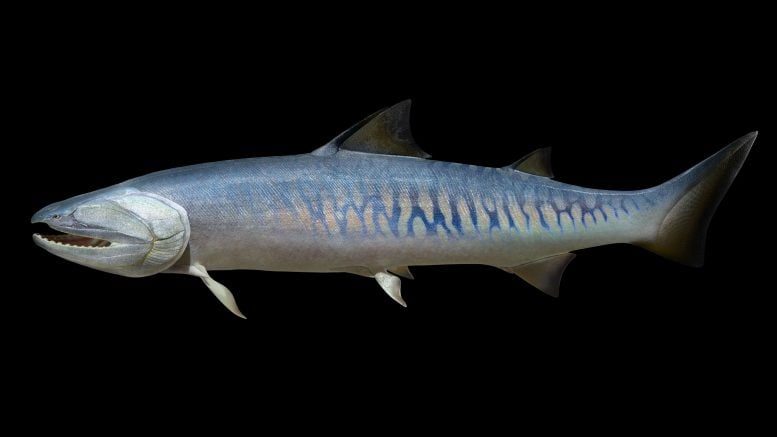
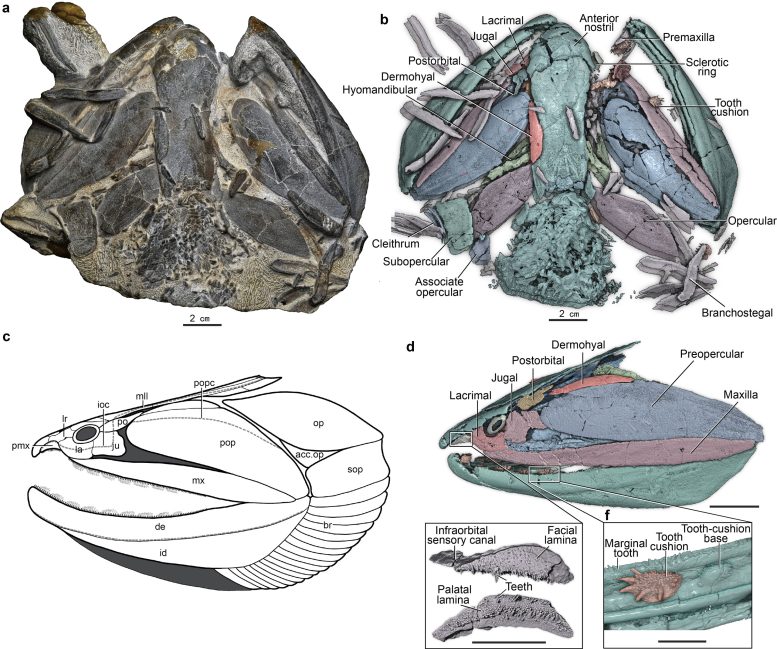
The researchers also used high-resolution computed tomography (HRCT) to reconstruct the skull anatomy and teeth of Megamastax amblyodus, the largest known vertebrate from the Silurian period. This fossil comes from the Late Silurian Kuanti Formation in Qujing, Yunnan. The newly obtained anatomical data has solved a puzzle that had persisted for more than fifty years regarding the origin of its tooth plates.
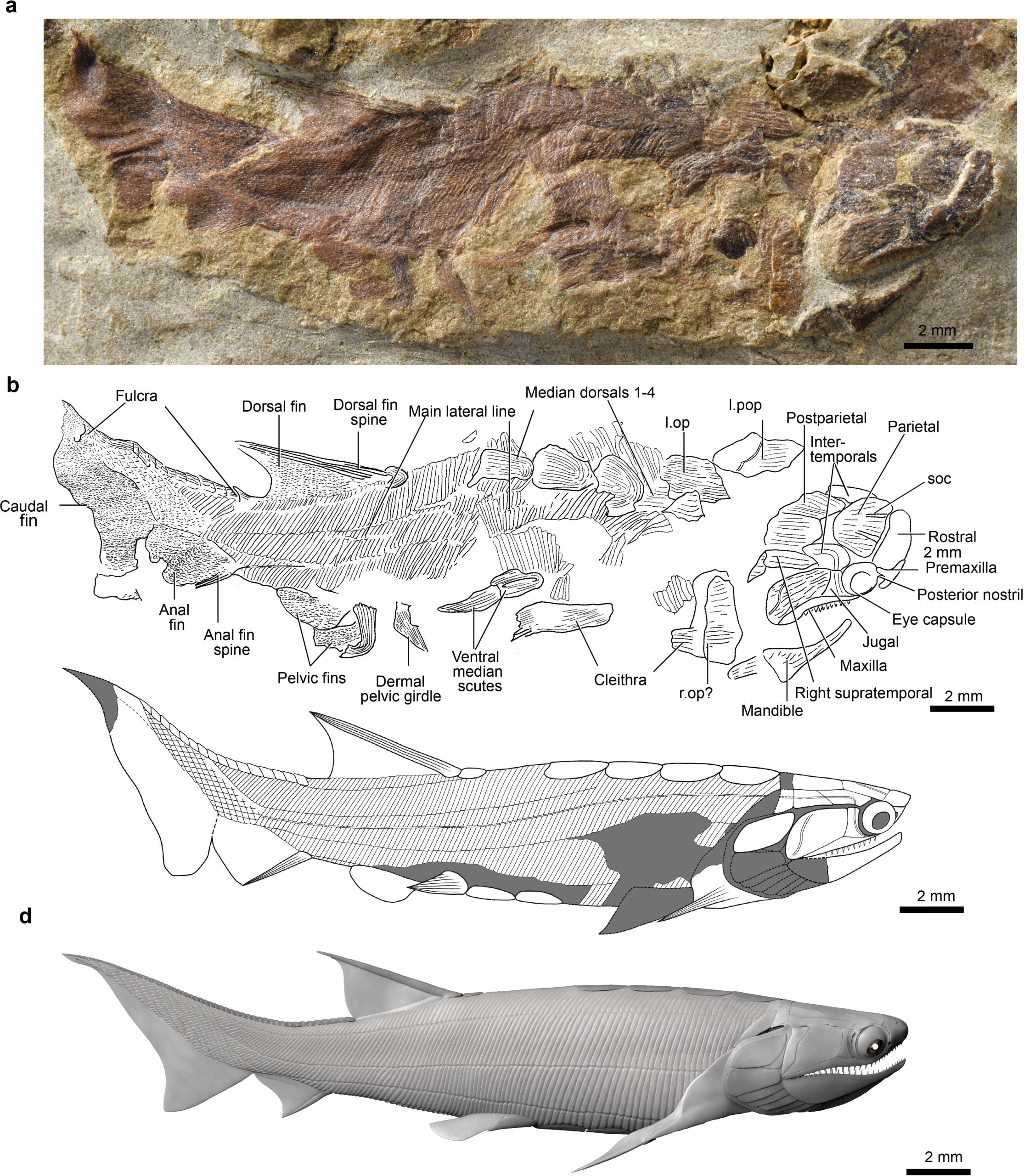
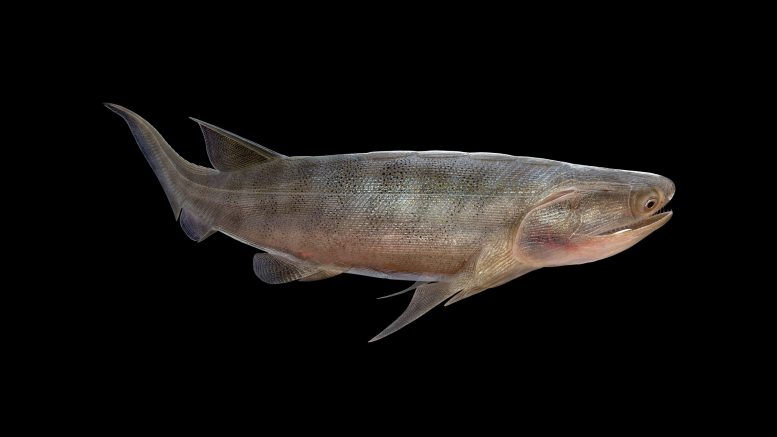
Eosteus chongqingensis lived around 436 million years ago and was tiny, measuring only about 3 centimeters long. Despite its size, the fossil is remarkably well preserved and shows the entire body from head to tail. It is older than all previously described large bony fish fossils and even predates the earliest known microfossils of bony fishes.
The fossil reveals a mixture of primitive and more advanced characteristics. Its streamlined body, single dorsal fin, and specialized scales called caudal fulcra resemble those seen in early ray-finned fishes. However, it lacks the lepidotrichia (bony fin rays) normally associated with bony fishes and possesses an anal fin spine that had previously been observed only in cartilaginous fishes and placoderms.
These traits indicate that key features of bony fishes developed earlier than scientists had previously believed.
Megamastax Anatomy Solves Long-Standing Tooth Plate Puzzle
Megamastax amblyodus lived during the Late Silurian (about 423 million years ago) in what is now Qujing, Yunnan. It could grow to more than 1 meter in length, making it the largest known vertebrate of its time. After nearly a decade of study and numerous attempts, researchers used advanced imaging techniques and three-dimensional (3D) computer reconstruction to reveal the animal’s full cranial structure and internal anatomy.
Its teeth are arranged in inner and outer rows known as dental arcades. The inner row contains tooth cushions that sit on blunt bases, representing a primitive form of bony fish dentition. This anatomical structure resolves a long-standing debate about isolated tooth cushions discovered in Silurian rocks in the Baltic region and clarifies how those fossils should be classified.
Phylogenetic analysis places both Eosteus and Megamastax within the stem group of bony fishes. They represent an ancestral condition that existed before ray-finned and lobe-finned fishes diverged. These fossils, therefore, help reveal the ancestral body plan of modern bony fishes, a group that includes most living fish species and all tetrapods, including humans.
South China Confirmed as a Cradle of Early Vertebrate Evolution
The discoveries provide new insight into the early diversification of jawed vertebrates. They challenge the idea that the earliest bony fish resembled lobe-finned fishes and help clarify how jaws and teeth evolved in this important group.
According to the researchers, the findings also strengthen evidence that South China was a major center for the origin and early evolution of bony fishes and jawed vertebrates.
References:
“The oldest articulated bony fish from the early Silurian period” by You-An Zhu, Yang Chen, Qiang Li, Wen-Jin Zhao, Zheng-Da Zhou, Lian-Tao Jia, Yi-Lun Yu, Han-Xin Yu, Guang-Biao Wei, Per E. Ahlberg, Jing Lu and Min Zhu, 4 March 2026, Nature.
DOI: 10.1038/s41586-026-10125-2
“Largest Silurian fish illuminates the origin of osteichthyan characters” by Jing Lu, Brian Choo, Wenjin Zhao, You-an Zhu, Xindong Cui, Zhaohui Pan, Donglei Chen, Xiaoyue Liu, Yilun Yu, Tuo Qiao, Qiang Li, Liantao Jia, Per Ahlberg and Min Zhu, 4 March 2026, Nature.
DOI: 10.1038/s41586-025-10008-y
This study was supported by the Key Program of the National Natural Science Foundation of China, the International Research Center of Big Data for Sustainable Development Goals, and other funding sources.
Never miss a breakthrough: Join the SciTechDaily newsletter.
Follow us on Google and Google News.
2 Comments
What an awesome discovery and article on 400 million year fish.
thanks for