
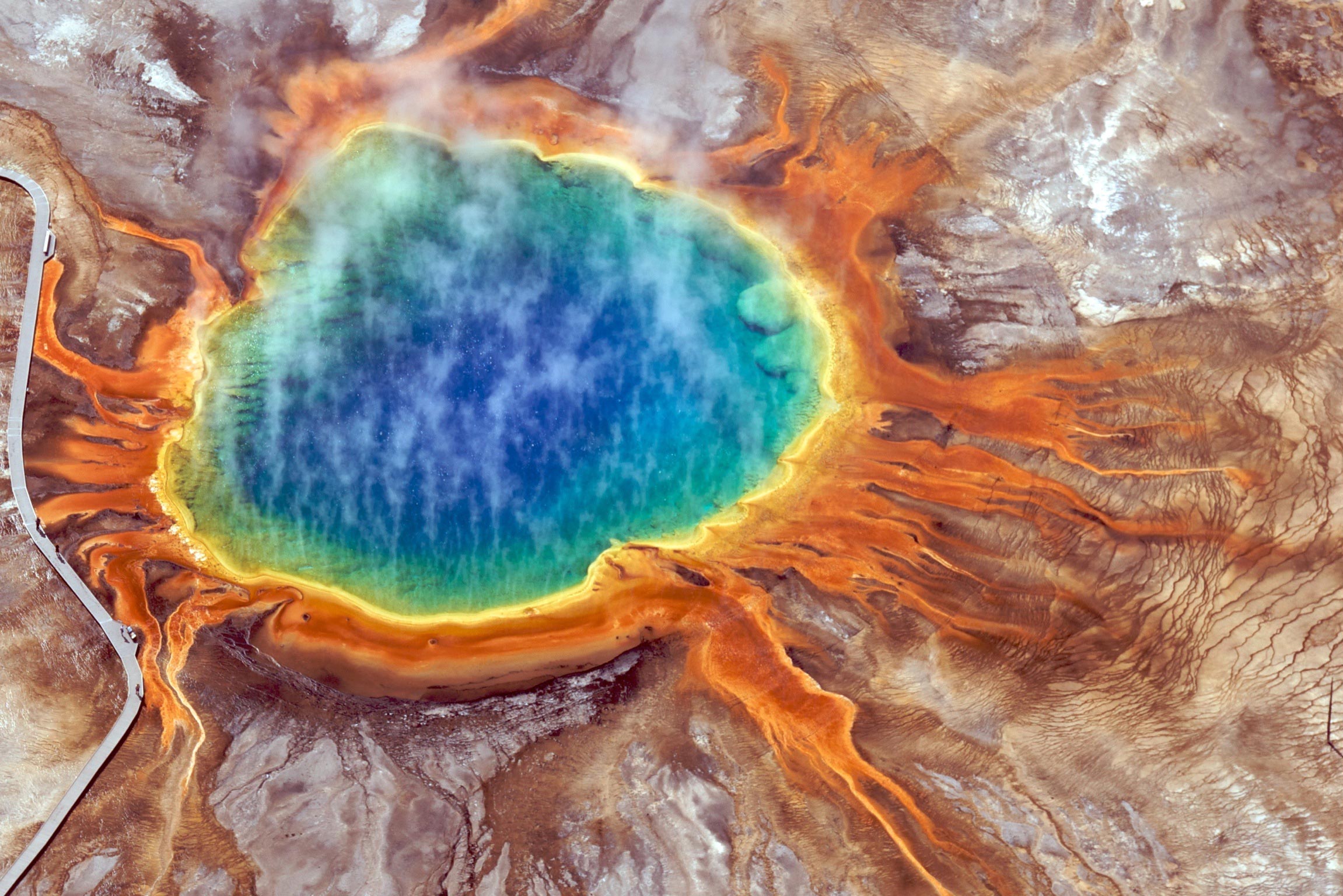
Researchers studying Yellowstone’s depths discovered that small earthquakes can recharge underground microbial life.
The quakes exposed new rock and fluids, creating bursts of chemical energy that microbes can use. Both the water chemistry and the microbial communities shifted dramatically in response. This dynamic may help explain how life survives in deep, dark environments.
A Large Portion of Earth’s Life Lives Underground
Up to 30% of Earth’s total biomass exists below the surface, and this hidden world depends on steady sources of chemical energy. Scientists have long suspected that seismic activity may help replenish that energy, giving deep ecosystems a boost when the ground moves.
How Yellowstone Quakes Disturbed Life Below the Surface
Eric Boyd and his colleagues examined how a cluster of small earthquakes in 2021 affected microbial communities buried within the Yellowstone Plateau Volcanic Field. These organisms rely on chemical reactions that occur when water interacts with surrounding rock, a process that provides the energy needed to support life in dark, isolated environments.
When earthquakes occur, several things can shift at once. Rock layers may fracture and expose fresh mineral surfaces. Fluids that were previously trapped can be pushed out. Water can be redirected into new channels. Together, these changes can trigger new chemical reactions and alter the chemical “menu” that subsurface microbes rely on.
Sampling a Deep Borehole for Signs of Change
To capture these changes, the researchers collected water samples from a nearly 100-meter deep borehole on the western edge of Yellowstone Lake. They sampled the site five times throughout 2021. The data revealed increased levels of hydrogen, sulfide, and dissolved organic carbon after the earthquake swarm, suggesting that the quakes supplied new chemical energy to the system.
These chemical shifts were accompanied by a rise in planktonic cells, indicating that microbial activity or abundance increased alongside the changes in water chemistry. This pattern showed that the quakes had a measurable effect on both the chemical conditions and the biological communities living in the aquifer.
Microbial Communities Respond Dynamically to Seismic Energy
The team also observed notable changes in the types of microbes present over time. This behavior contrasts with the relatively stable microbial populations usually found in aquifers within continental bedrock, where conditions tend to remain consistent for long periods.
According to the authors, the kinetic energy released during earthquakes can alter both the chemical makeup of aquifer waters and the living organisms they support. These findings suggest that seismic energy plays a much more active role in shaping underground ecosystems than previously understood.
A Potential Mechanism for Life on Other Rocky Worlds
The processes observed in the Yellowstone borehole may occur in many subterranean environments that experience regular seismic activity. If earthquakes routinely replenish chemical energy deep underground, they could help maintain hidden ecosystems across Earth.
The researchers also point out that similar mechanisms might operate on other rocky planets that contain water. If seismic shaking can refresh subsurface chemistry elsewhere, it may increase the potential for microbial habitability on worlds such as Mars.
Reference: “Seismic shifts in the geochemical and microbial composition of a Yellowstone aquifer” by Eric S Boyd, Daniel R Colman, Ana Menchaca, Rachel L Spietz, Anna Shoemaker, Carol Finn, David Mencin, Eva Andrade-Barahona, Alysia Cox, Thomas Kieft, Susan Bilek, Jefferson Hungerford and Tullis C Onstott, 25 November 2025, PNAS Nexus.
DOI: 10.1093/pnasnexus/pgaf344
Never miss a breakthrough: Join the SciTechDaily newsletter.
Follow us on Google and Google News.