
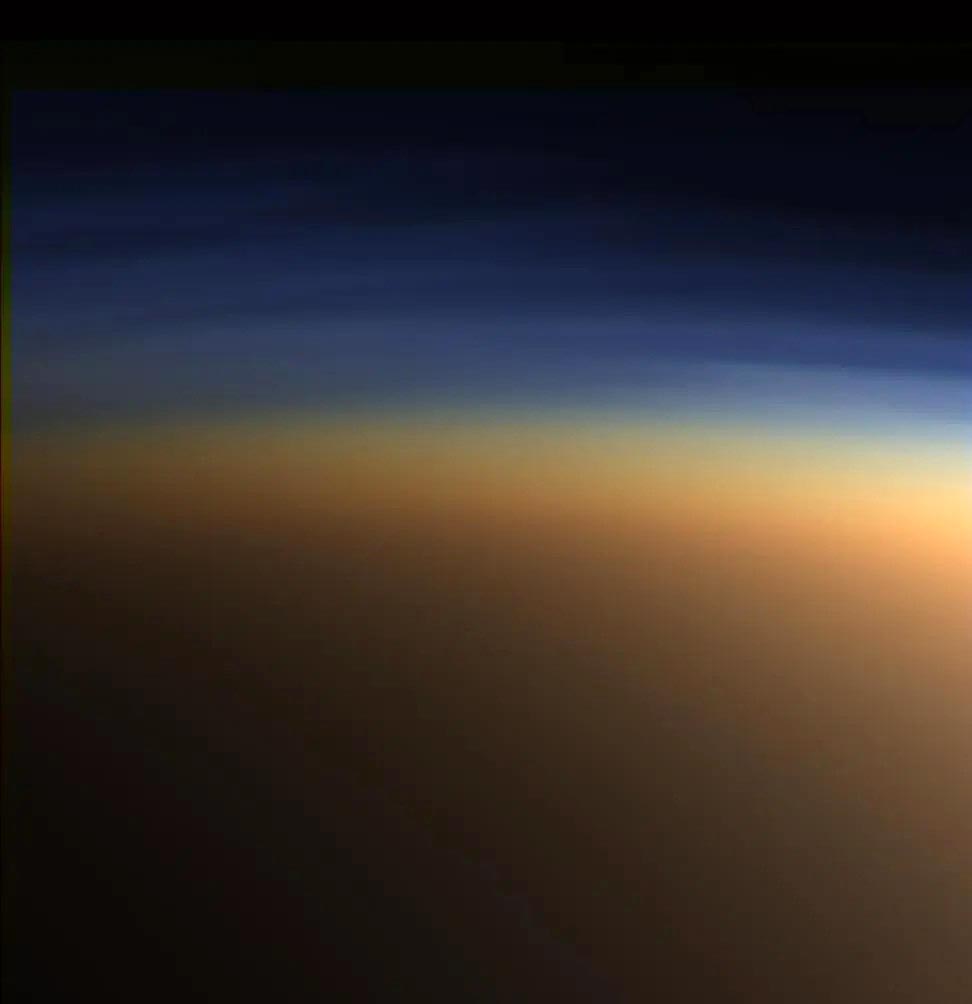
New study uses Titan’s atmosphere as a natural laboratory to delve deeper into the chemistry of the methane molecule – a molecule that, on Earth, may be a byproduct of life.
Titan is the second-largest moon in the Solar System and the only one with a dense atmosphere. At the top of this atmosphere, rich in nitrogen and methane, the Sun’s radiation produces a great diversity of organic molecules, some of which we also find on Earth as constituents of the basic unit of life, the cell.
Groundbreaking Research on Titan’s Atmosphere
An international research team led by Rafael Silva, from the Institute of Astrophysics and Space Sciences and master from the Faculty of Sciences of the University of Lisbon (Ciências ULisboa), analyzed the sunlight reflected by Titan’s atmosphere and identified for the first time almost one hundred signatures that the methane molecule (CH4) inscribes in the visible band of the electromagnetic spectrum, traces that are essential for finding it in other atmospheres.
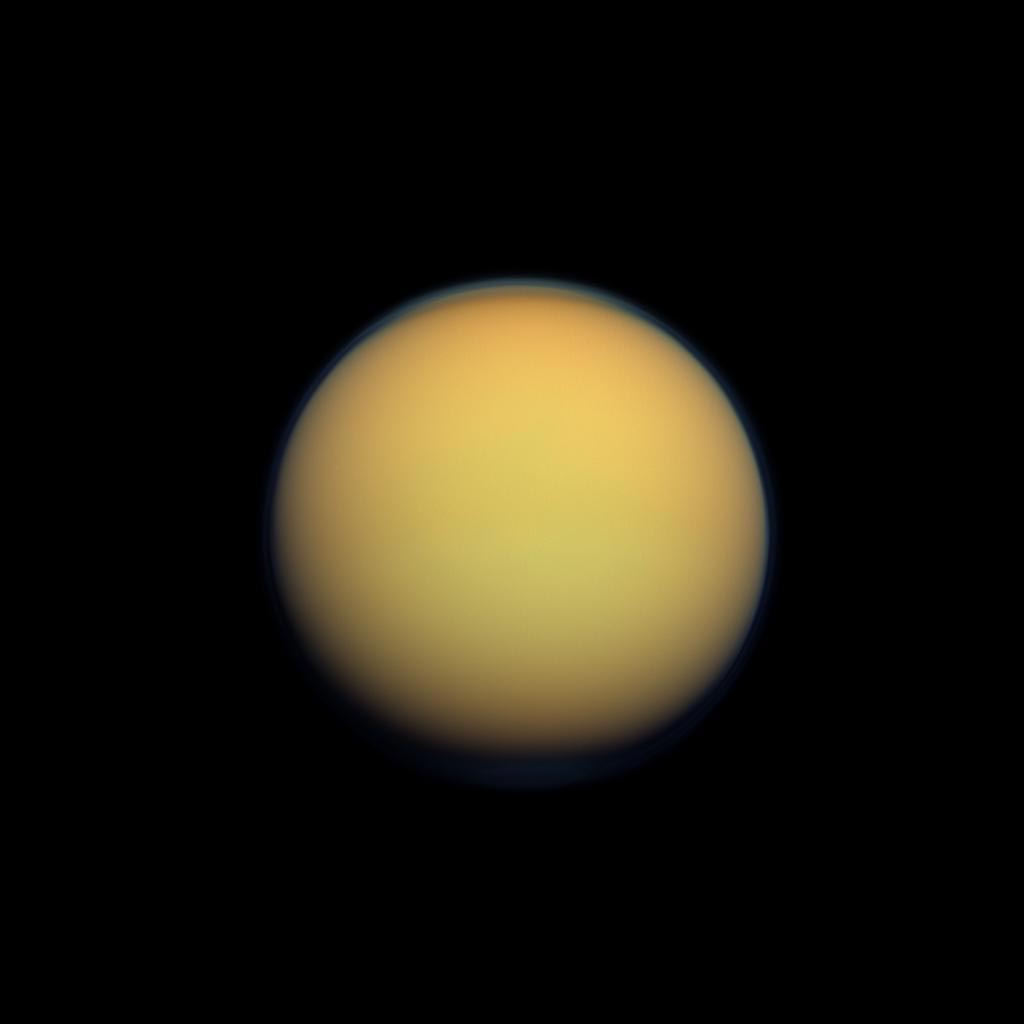
Furthermore, the team found possible evidence of the presence of the tricarbon molecule (C3), a molecule that could participate in the chain of chemical reactions that generate complex molecules of Titan- If confirmed, it will be the first detection of the tricarbon molecule on a planetary body.
“Titan’s atmosphere works like a planetary-sized chemical reactor, producing many complex carbon-based molecules,” says Rafael Silva, adding: “Of all the atmospheres we know in the Solar System, the atmosphere of Titan is the most similar to the one we think existed on the early Earth.”
Methane’s Role and Spectral Analysis
Methane, which on Earth is a gas, provides information about geological processes and potentially about biological processes. It is a molecule that does not survive long in the atmospheres of Earth or Titan because it is quickly and irreversibly destroyed by solar radiation. For this reason, on Titan, methane must be being replenished by geological processes, such as the release of underground gas.
This work brought new information about the chemistry of methane itself. The 97 new lines of its spectral absorption in wavelengths of visible light – in the orange, yellow, and green color regions – were identified in bands of lines previously associated with absorption by methane but never individualized. For the first time, the wavelength and intensity of each of these lines are known.
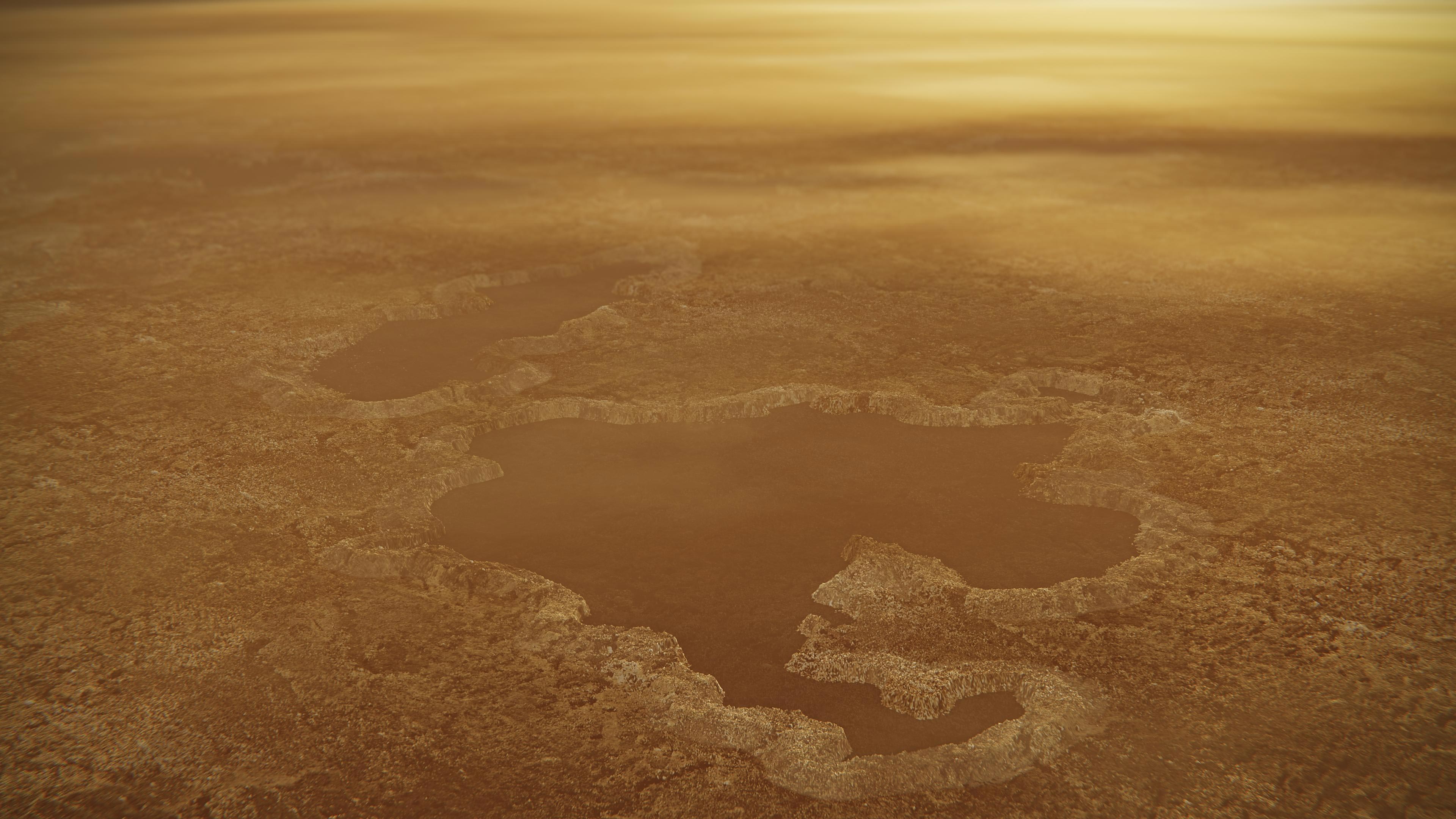
“Even in high-resolution spectra, methane absorption lines are not strong enough with the amount of gas we can have in a laboratory on Earth. But on Titan we have an entire atmosphere, and the path that light travels through the atmosphere can be hundreds of kilometers long. This makes the different bands and lines, which have a weak signal in laboratories on Earth, very evident on Titan,” says Rafael Silva.
Knowing and cataloging all the signatures of the methane molecule will also help to identify new molecules, especially in atmospheres with such complex chemistry, where analyzing the spectra is challenging due to the density of molecular signatures, even with high-resolution instruments.
This is how the team found signs of the possible presence of the tricarbon molecule (C3) in the high layers, at an altitude of 600 kilometers. In the Solar System, this molecule, which manifests itself as a bluish emission, was until now only known in the material surrounding the nucleus of a comet. The absorption lines on Titan that the team associated with tricarbon are few and of low intensity, despite being very specific to this type of molecules, so new observations will be carried out in the future to try to confirm this detection.
“The more we know about the different molecules that participate in the chemical complexity of Titan’s atmosphere, the better we will understand the type of chemical evolution that may have allowed, or be related to, the origin of life on Earth,” says Rafael Silva, and adds: “Some of the organic matter that contributed to the origin of life on Earth is thought to have been produced in its atmosphere by processes relatively similar to those we observed on Titan.”
Enhancing Exoplanetary Research
Currently, this moon of Saturn is a unique world in the Solar System, being a testing ground in preparing future observations of the atmospheres of planets outside our planetary system, the so-called exoplanets. Among these, there may be small, cold bodies like Titan.
“The experience gained in challenging analyses like this could benefit infrared observations with the James Webb space telescope, or the future Ariel space mission, from the European Space Agency (ESA),” comments Pedro Machado, second author of this now-published article.
The data used for this work came from observations carried out in June 2018 with the UVES high-resolution visible and ultraviolet spectrograph, installed on ESO’s Very Large Telescope (VLT), in Chile. Archived data collected with the same instrument in 2005 were also used.
Reference: “A study of very high resolution visible spectra of Titan: Line characterisation in visible CH4 bands and the search for C3” by Rafael Rianço-Silva, Pedro Machado, Zita Martins, Emmanuel Lellouch, Jean-Christophe Loison, Michel Dobrijevic, João A. Dias and José Ribeiro, 8 January 2024, Planetary and Space Science.
DOI: 10.1016/j.pss.2023.105836
Never miss a breakthrough: Join the SciTechDaily newsletter.
Follow us on Google and Google News.