
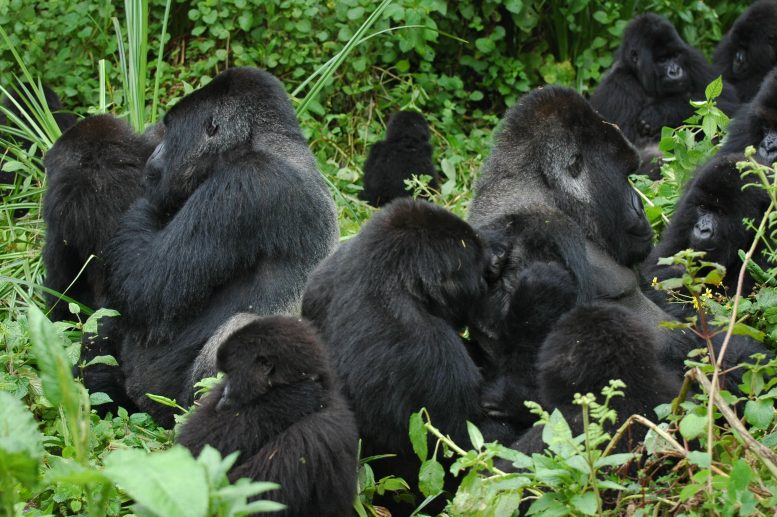
Scientists discover gene flow from an extinct gorilla population to eastern gorillas.
An international research study, recently published in the journal Nature Ecology and Evolution, provides a better insight into the evolutionary history of gorillas. The scientists, led by the University of Vienna (Austria) and the Institute of Evolutionary Biology (IBE) in Barcelona (Spain), analyzed the genomes of gorillas using modern statistical methods, including neural networks.
The team discovered a gene flow event in this species of apes, which is closely related to humans, from an already extinct lineage to gorillas living today. This is similar to how modern humans and bonobos have preserved genes from extinct groups, which can still be found in our genomes.
Humans and gorillas share an exciting aspect in common: In both species, their DNA was mixed during evolution by mating with individuals from other groups which are already extinct today – and for this reason, there was an introgression of genes from one group to another. In the course of evolutionary history, modern humans have exchanged genes with Neanderthals and Denisovans.
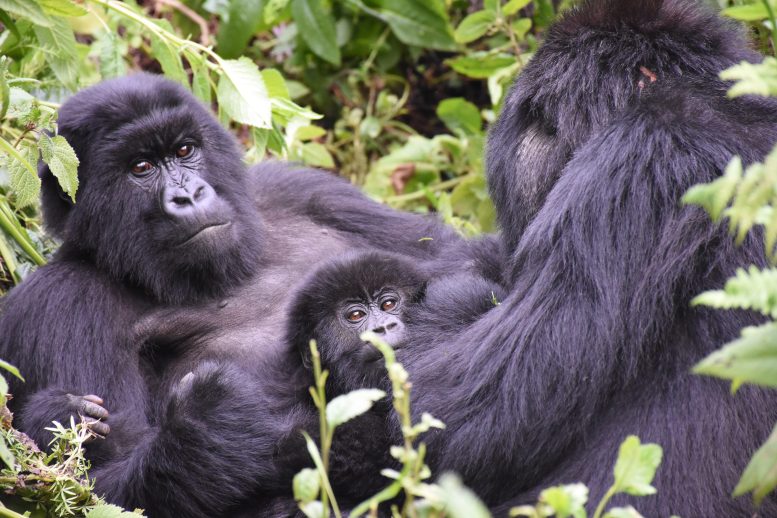
Their legacy can still be found in the genome of many humans nowadays. There are few similar studies addressing this question in great apes, especially gorillas, because there are only a few fossils of our close living relatives, unlike the Homo sapiens, from which ancient DNA could be extracted for analysis. Therefore, the genomes of individuals living today are the only way to reconstruct their evolutionary history, which is of particular importance, because gorillas are threatened with extinction in the wild.
Gene flow from ghost population provides new insights into evolutionary history
Gorillas are composed of two species (western and eastern gorillas), each of which has two subspecies: Western gorillas include the western lowland gorillas and the cross-river gorillas, while eastern gorillas include the eastern lowland gorillas and the closely related mountain gorillas. In the current study, the leading teams of Tomas Marques-Bonet at the IBE and Martin Kuhlwilm at the University of Vienna, with collaboration of Chris Tyler-Smith and Yali Xue, from the Sanger Institute, analyzed whole genomes of individuals from all four subspecies, including newly sequenced mountain gorilla genomes from Bwindi National Park in Uganda, one of only two places where the few remaining mountain gorillas can be found.
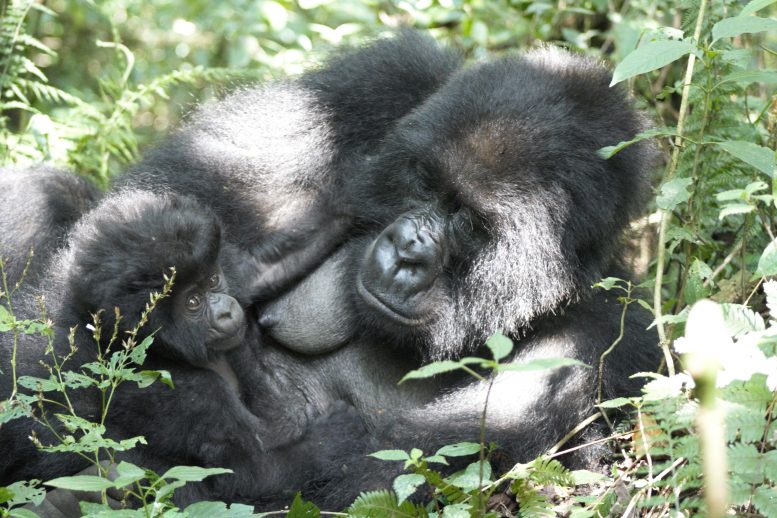
Innovative statistical methods including the integration of neural networks revealed a surprising result: 40,000 years ago, genes were exchanged between a now-extinct gorilla ghost population and the common ancestor of the eastern lowland gorillas and the mountain gorillas. The scientist Martin Kuhlwilm explains, “Up to 3 % of the genome of today’s eastern gorillas includes remains of genes from this ghost population, which separated from the common ancestors of all gorillas more than 3 million years ago.” And he continues, “On the other hand, we were not able to identify any of these DNA segments in the western gorillas.”
Gene flow from ghost population may affect gene functions
The international team was able to impress that the genetic input of already extinct ancestors is not only of interest in evolutionary history but can also have functional effects on present-day species.
They demonstrated this with an example: The researchers found that a gene encoding a bitter taste receptor was introduced from the ghost population into today’s eastern lowland gorillas and mountain gorillas – and may have afterward been under positive selection. This comes in handy for today’s animals, because this kind of taste receptors probably helps avoid eating poisonous (and bitter-tasting) food.
Another interesting result from the analysis is that the eastern gorillas sustain a very small amount of DNA from the ghost population on their X chromosome. Therefore, it seems to be subject to negative selection, which can also be observed in humans and other species. One possible reason for this is that this chromosome exists only in one copy in male individuals, unlike the other chromosomes, and this is why harmful mutations may have a stronger effect.
Tomas Marques-Bonet, also a professor of Genetics at the Department of Medicine and Life Sciences (MELIS) at UPF says, “Our study gives us a better insight into the evolutionary history of gorillas and provides a valuable contribution to help us better understand which effects gene flows from extinct populations can have on current populations.” “Evolutionary genetics is important,” adds Harvinder Pawar, first author of the study, “so that we can learn more about what distinguishes us humans from other apes.”
Reference: “Ghost admixture in eastern gorillas” by Harvinder Pawar, Aigerim Rymbekova, Sebastian Cuadros-Espinoza, Xin Huang, Marc de Manuel, Tom van der Valk, Irene Lobon, Marina Alvarez-Estape, Marc Haber, Olga Dolgova, Sojung Han, Paula Esteller-Cucala, David Juan, Qasim Ayub, Ruben Bautista, Joanna L. Kelley, Omar E. Cornejo, Oscar Lao, Aida M. Andrés, Katerina Guschanski, Benard Ssebide, Mike Cranfield, Chris Tyler-Smith, Yali Xue, Javier Prado-Martinez, Tomas Marques-Bonet and Martin Kuhlwilm, 27 July 2023, Nature Ecology & Evolution.
DOI: 10.1038/s41559-023-02145-2
Never miss a breakthrough: Join the SciTechDaily newsletter.
Follow us on Google and Google News.