
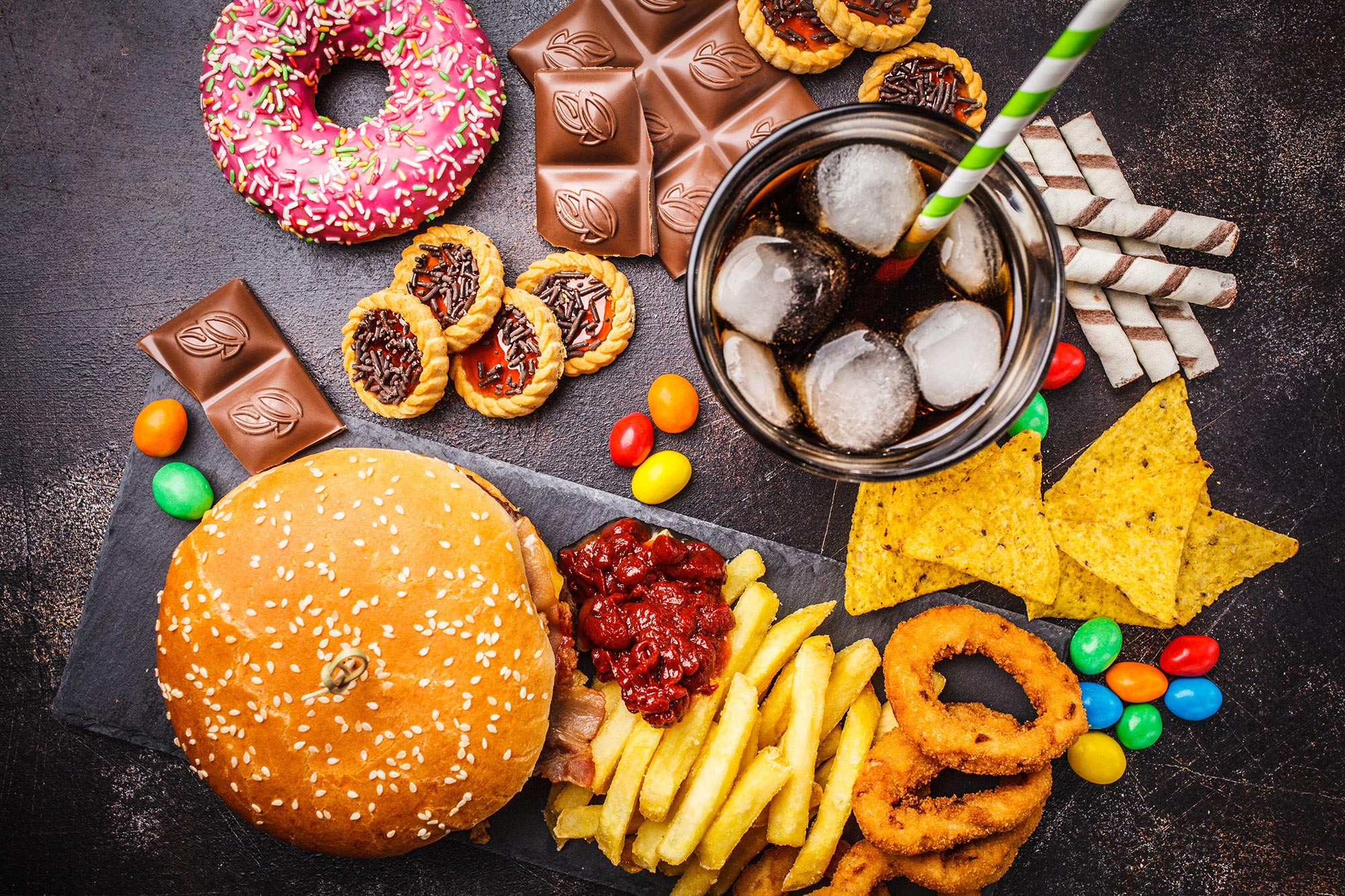
Health experts argue against blanket bans on ultra-processed foods due to potential social harms and insufficient evidence linking them directly to poor health outcomes.
They advocate for a balanced public health strategy that emphasizes reducing known dietary risks.
Ultra-Processed Foods and Public Health
Premature warnings to consumers to avoid eating all ultra-processed food products have likely social costs and may harm the health of people facing food poverty – at least in the short term.
This is the clear message to policymakers in a newly-published perspective article from Professors Alexandra Johnstone from the Rowett Institute of Nutrition and Health, University of Aberdeen and Eric Robinson of the University of Liverpool.
They say that until the link between ultra-processed foods (UPFs) and poor health is better understood, the focus of official public advice should remain on avoiding known threats: high fat, sugar, and salt content.
Reassessing Ultra-Processed Foods in Dietary Guidance
Issuing formal warnings about UPFs in the UK – which some other countries have done – could be counter-productive, leading some people to switch to alternatives that are not classified as ultra-processed but are less nutritious than what they were consuming before, they argue.
And they highlight the potential “social cost for many people with more limited resources” of removing convenient options and the possible negative mental health impacts on “those who worry about their health or live with eating disorders, particularly if social circumstances make avoiding UPFs difficult.”
“We must guard against the possibility that the people in our society who are already most at risk of not being able to afford to eat healthily are not put in an even worse position as we continue to investigate the links between some ultra-processed foods and poor health.”
Professor Alexandra Johnstone
Balancing Evidence and Policy on UPFs
The article – published by PLOS Medicine as part of a collection on the subject of UPFs – concludes: “Based on the balance of current evidence, we do not believe it is appropriate to be advising consumers to avoid all UPFs and we await further evidence to inform consumer guidance on the need to limit consumption of specifics foods based on their degree or type of processing.
“We know with certainty that foods which are energy dense and/or high in saturated fat, salt or sugar are detrimental to health and we should continue to advise consumers to limit consumption of these foods. Likewise, we should be encouraging consumption of health-promoting foods, like fruits, vegetables, and wholegrains.
“Mechanistic uncertainty over food processing and health should not prevent immediate and much needed public health policy to regulate the food industry in order to dramatically reduce the advertisement, availability, and dominance of foods high in energy and/or saturated fat, salt or sugar on national diets.”
“However, mechanistic uncertainty should determine how the public are communicated to and play a central role in determining public advice and emerging national dietary guidance on UPFs and food processing health risks.”
Challenges and Directions for Future Research
Pressure to issue guidance against eating UPFs – which account for a significant part of the national diet – has mounted in the media and elsewhere because of consistent evidence from a growing number of observational studies that they are linked to poor health outcomes.
But many UPFs are also high in fat, sugar, and salt and as yet, the Food Standards Agency believes other possible causes of ill health from consuming them “have not yet been fully explained by the science” and so specific public guidance has not been issued.
Food Standards Scotland (FSS) warned in March that “there is a risk that the emphasis on ultra-processed foods creates a distraction from the key diet issues where there is robust evidence for action, i.e. high fat, salt, and sugar foods, thereby providing further impetus for FSS to provide clear consumer messaging on this issue.” FSS has since published its organizational position on the topic, alongside consumer-facing advice, reaffirming these conclusions.
Professor Johnstone said: “We must guard against the possibility that the people in our society who are already most at risk of not being able to afford to eat healthily are not put in an even worse position as we continue to investigate the links between some ultra-processed foods and poor health.
“We need more high-quality mechanistic research in humans, using controlled diets, to tease out the effects of nutrient profile and ultra-processing per se. Diet reformulation and diet quality are two key aspects of our food environment and alongside affordability, these remain food system challenges.”
Key Takeaways on UPFs and Health Messaging
Professor Robinson said: “Foods classed as ultra-processed which are high in fat, salt and/or sugar should be avoided, but a number of ultra-processed foods are not. We should be thinking very carefully about what advice is being given to the public, as opposed to providing simplified and potentially misleading messages that grab headlines.”
Reference: “Ultraprocessed food (UPF), health, and mechanistic uncertainty: What should we be advising the public to do about UPFs?” by Eric Robinson and Alexandra M. Johnstone, 15 October 2024, PLOS Medicine.
DOI: 10.1371/journal.pmed.1004439
Never miss a breakthrough: Join the SciTechDaily newsletter.
Follow us on Google and Google News.
7 Comments
“But many UPFs are also high in fat, sugar, and salt and as yet, the Food Standards Agency believes other possible causes of ill health from consuming them “have not yet been fully explained by the science” and so specific public guidance has not been issued.” Simply put, the “science” is fatally flawed and they’ve been missing the “bigger picture” for nearly a century.
By 1935 then renowned American immunologist Dr. Arthur F. Coca identified, studied and reported on a (my) kind of nearly subclinical non-IgE-mediated food allergy reactions which could cause tens of chronic conditions (“The Pulse Test,” 1956; Chapter One). Consequently, most (if not all) cohort medical studies since are questionable (at best) and/or invalid (at worst). More than a half century ago the US FDA approved the use of hexane to process phytoestrogen rich soy, with the US female breast cancer epidemic presenting by 1979 (ACS and NCI data). In 1980 the FDA approved the expanded use of added MSG knowing full-well then it would be harmful to some but not “how, how many or how soon?” The US obesity and diabetes epidemics, minimally, presented by 1990 and 1994, respectively (CDC data).
Now eighty years old and again/still not requiring any regular prescription treatments while living independently in four season Wisconsin, USA, I can state with much certainty that most chronic diseases in Americans with reasonable diets and lifestyles are caused by medical ignorance of my/Dr. Coca’s kind of food allergy reactions aggravated (or not) with FDA approved food poisoning and excessive related/resultant medical errors; not calories, carbohydrates, fats, oils, salt or sugars. As to UPFs in the UK (minimally), perhaps it’s about time for some independent and truly objective scientific research?
“But many UPFs are also high in fat, sugar, and salt and as yet, the Food Standards Agency believes other possible causes of ill health from consuming them “have not yet been fully explained by the science” and so specific public guidance has not been issued.”
This statement is masking the volumes of published information that contradict this claim. I don’t mean to suggest the article is lying, but to then say they are waiting to put labels on food products saying “this is not real food” is a shadow game.
Wouldn’t those health “experts” be on the big food corporations’ payroll by any chance?
You know it.
This article is the most ridiculous read. Are you kidding me? Why not, I don’t know, make healthy food more available. I’m sorry that it may cost a multi-millionaire they’re 10th private jet but let’s focus on nutrition. Quit dousing our crops in cancer causing agents, quit forcing upf on the financially desperate. Everyone should have access to nutrition despite their lot in life. At this point the powers that be are writing puff pieces to pacify their ignorance to the slow slaughter of 70% of our population.
Wrong. Chris tulliken in his book ultra processed people explained the how and why UPF invariably hurts us.
This is big food and BIG PHARMA at its worst. They go hand in hand. Eat this junk, gain weight, have high blood pressure, diabetes, diverticulitis, take more medication, rinse and repeat. At some point you’ll may have heart surgery, joint replacement surgery, bowel surgery and/or some form of cancer. It’s time to change our lifestyle.