
Close Menu
    Facebook X (Twitter) Instagram
    SciTechDaily
    • Biology
    • Chemistry
    • Earth
    • Health
    • Physics
    • Science
    • Space
    • Technology
    Facebook X (Twitter) Pinterest YouTube RSS
    SciTechDaily
    Home»Space»Uncovering New Worlds With Amateur Planet-Chasers – Join the Hunt for Alien Worlds From Home
    Space

    Uncovering New Worlds With Amateur Planet-Chasers – Join the Hunt for Alien Worlds From Home

    By NASASeptember 29, 2024No Comments3 Mins Read
    Facebook Twitter Pinterest Telegram LinkedIn WhatsApp Email Reddit
    Share
    Facebook Twitter LinkedIn Pinterest Telegram Email Reddit
    Study Shows Helium-Shrouded Planets May Be Common in Our Galaxy
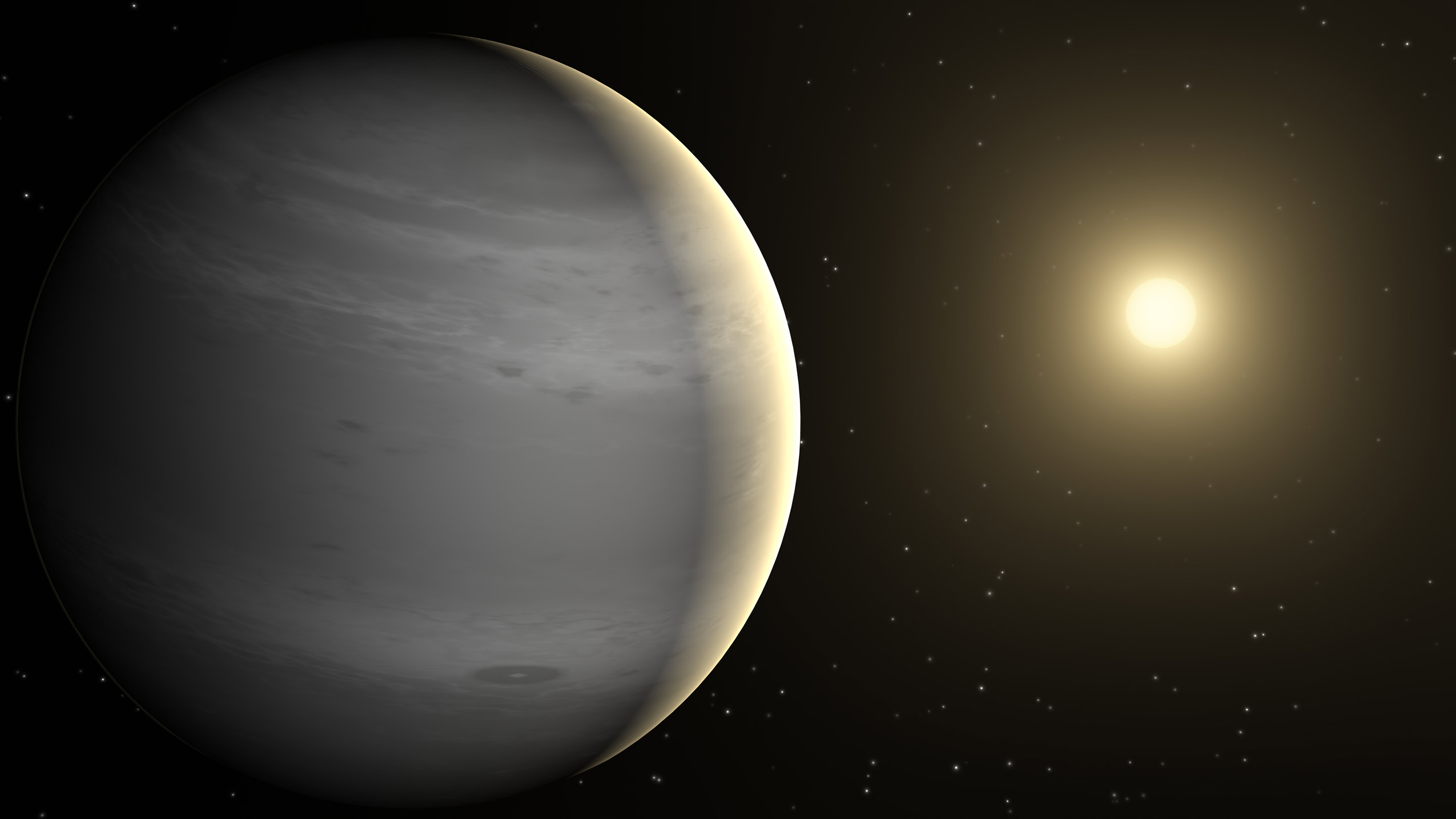
    This artist’s concept depicts a proposed helium-atmosphere planet called GJ 436b, which was found by Spitzer to lack in methane — a first clue about its lack of hydrogen. Credit: NASA/JPL-Caltech

    Through the collaboration of amateur astronomers and NASA researchers, vital details about the exoplanet WASP-77 A b have been uncovered, revealing its size and close orbit to its star.

    This research, facilitated by the efforts of volunteers and citizen scientists, enhances our ability to predict exoplanet transits, crucial for further space exploration and atmospheric studies.

    As a planet passes in front of its star, it momentarily dims the starlight that reaches us. These phenomena, known as transits, are a goldmine of information about exoplanets—planets orbiting stars beyond our Sun. However, forecasting these special occurrences can be challenging…without the aid of volunteer astronomers.

    Luckily, a collaboration of multiple teams of amateur planet-chasers, led by researcher Federico R. Noguer from Arizona State University and researchers from NASA’s Jet Propulsion Laboratory (JPL) and Goddard Space Flight Center (GSFC), has taken up the challenge. This collaboration has published the most precise physical and orbital parameters to date for an important exoplanet called WASP-77 A b. These precise parameters help us predict future transit events and are crucial for planning spacecraft observations and accurate atmospheric modeling.

    The Power of Citizen Science

    “As a retired dentist and now citizen scientist for Exoplanet Watch, research opportunities like this give me a way to learn and contribute to this amazingly exciting field of astrophysics,” said Anthony Norris, a citizen scientist working on the NASA-funded Exoplanet Watch project.

    The study combined amateur astronomy/citizen science data from the Exoplanet Watch and ExoClock projects, as well as the Exoplanet Transit Database. It also incorporated data from NASA’s Spitzer Space Telescope, the Hubble Space Telescope (HST), the James Webb Space Telescope (JWST), and La Silla Observatory. Exoplanet Watch invites volunteers to participate in groundbreaking exoplanet research, using their own telescopes to observe exoplanets or by analyzing data others have gathered. You may have read another recent article about how the Exoplanet Watch team helped validate a new exoplanet candidate.

    Stellar Comparisons and Opportunities

    WASP-77 A b is a gas giant exoplanet that orbits a Sun-like star. It’s only about 20% larger than Jupiter. But that’s where the similarities to our solar system end. This blazing hot gas ball orbits right next to its star–more than 200 times closer to its star than our Jupiter!

    Want a piece of the action? Join the Exoplanet Watch project and help contribute to cutting-edge exoplanet science! Anyone can participate–participation does not require citizenship in any particular country.

    Never miss a breakthrough: Join the SciTechDaily newsletter.
    Follow us on Google and Google News.

    Astronomy Astrophysics Exoplanet NASA
    Share. Facebook Twitter Pinterest LinkedIn Email Reddit

    Related Articles

    NASA’s Artificial Star To Unlock Secrets of Exoplanets, Dark Energy, and Supernovae

    NASA’s Groundbreaking Artificial Star to Decode Dark Energy Mysteries

    Jupiter’s Twin? Webb Telescope Unveils a Frosty Look-Alike Just 12 Light-Years Away

    Webb Does the “Impossible” – Space Telescope Captures First Glimpse of an Exoplanet’s Interior

    Life Beyond Earth: Webb’s Spectroscopic Hunt for Earth-Like Planets

    Webb Telescope Uncovers a Mysterious Carbon Treasure Trove Around Young Star

    Vulcan Vanishes: Real-Life Star Trek Planet Turns Out To Be Stellar Illusion

    Webb Space Telescope Cracks Case of Puffy “Microwaved Marshmallow” Exoplanet

    Super-Earth Surprise: Webb Finds Atmosphere on Rocky Exoplanet For the First Time

    Leave A Reply Cancel Reply

    • Facebook
    • Twitter
    • Pinterest
    • YouTube

    Don't Miss a Discovery

    Subscribe for the Latest in Science & Tech!

    Trending News

    Scientists May Have Solved a Long-Standing Melanoma Treatment Mystery

    This Flesh-Eating Fly Is Back in the U.S. – Scientists Are Tracking Where It Could Strike Next

    Scientists Have Uncovered a Troubling New Pattern Hidden in America’s Rivers

    “Entirely Surprising” – Scientists Have Found a Martian Meteorite Unlike Any Known Before

    “Find of the Year” – Archaeologists Discover the Smallest Ice Age Figurines Ever Found

    New Research Challenges Common Exercise Advice for Bone Health

    Avoiding These 3 Health Risks in Midlife Linked to 13 More Years Without Dementia

    Where Were All the Tiny Dinosaurs? Scientists May Finally Have an Answer

    Follow SciTechDaily
    • Facebook
    • Twitter
    • YouTube
    • Pinterest
    • Newsletter
    • RSS
    SciTech News
    • Biology News
    • Chemistry News
    • Earth News
    • Health News
    • Physics News
    • Science News
    • Space News
    • Technology News
    Recent Posts
    • Textbooks May Be Wrong: Satellite Data Challenge the Two-Bulge Tide Model
    • Tiny New “Dragon” Discovered High in Thailand’s Mountain Forests
    • Scientists Uncover a Surprising New Route for Stonehenge’s Most Mysterious Stone
    • NASA’s James Webb Telescope Captures a Dying Star Sculpting a Cosmic Lion
    • A Star Near the Milky Way’s Black Hole Is Losing Mass at an Astonishing Rate
    Copyright © 1998 - 2026 SciTechDaily. All Rights Reserved.
    • Science News
    • About
    • Contact
    • Editorial Board
    • Privacy Policy
    • Terms of Use

    Type above and press Enter to search. Press Esc to cancel.