

Close Menu
    Facebook X (Twitter) Instagram
    SciTechDaily
    • Biology
    • Chemistry
    • Earth
    • Health
    • Physics
    • Science
    • Space
    • Technology
    Facebook X (Twitter) Pinterest YouTube RSS
    SciTechDaily
    Home»Technology»Unlocking AI’s Black Box in Genomics: SQUID’s Deep Dive Into DNA Data
    Technology

    Unlocking AI’s Black Box in Genomics: SQUID’s Deep Dive Into DNA Data

    By Cold Spring Harbor LaboratoryJune 21, 2024No Comments4 Mins Read
    Facebook Twitter Pinterest Telegram LinkedIn WhatsApp Email Reddit
    Share
    Facebook Twitter LinkedIn Pinterest Telegram Email Reddit
    Squid AI Black Box
    Artificial intelligence (AI) is increasingly used in genomics to sift through vast amounts of genome data to identify potential therapeutic targets, despite the opaque nature of AI decision-making. To address this, Cold Spring Harbor Laboratory scientists have developed SQUID (Surrogate Quantitative Interpretability for Deepnets), a tool designed to enhance the interpretability of AI models in genomics.

    SQUID, developed by scientists at Cold Spring Harbor Laboratory, improves the interpretability of AI in genomics by using a large library of DNA variants and the MAVE-NN program to analyze their effects.

    This tool helps researchers make more accurate genetic predictions and supports hypothesis development for a better understanding of genomic functions.

    SQUID Pries Open AI Black Box

    Artificial intelligence continues to squirm its way into many aspects of our lives. But what about biology, the study of life itself? AI can sift through hundreds of thousands of genome data points to identify potential new therapeutic targets. While these genomic insights may appear helpful, scientists aren’t sure how today’s AI models come to their conclusions in the first place. Now, a new system named SQUID arrives on the scene armed to pry open AI’s black box of murky internal logic.

    SQUID Computational Pipeline
    An illustration outlining the SQUID computational pipeline. Credit: Koo and Kinney Labs / Cold Spring Harbor Laboratory

    SQUID: Enhancing AI Interpretability

    SQUID, short for Surrogate Quantitative Interpretability for Deepnets, is a computational tool created by Cold Spring Harbor Laboratory (CSHL) scientists. It’s designed to help interpret how AI models analyze the genome. Compared with other analysis tools, SQUID is more consistent, reduces background noise, and can lead to more accurate predictions about the effects of genetic mutations.

    How does it work so much better? The key, CSHL Assistant Professor Peter Koo says, lies in SQUID’s specialized training.

    “The tools that people use to try to understand these models have been largely coming from other fields like computer vision or natural language processing. While they can be useful, they’re not optimal for genomics. What we did with SQUID was leverage decades of quantitative genetics knowledge to help us understand what these deep neural networks are learning,” explains Koo.
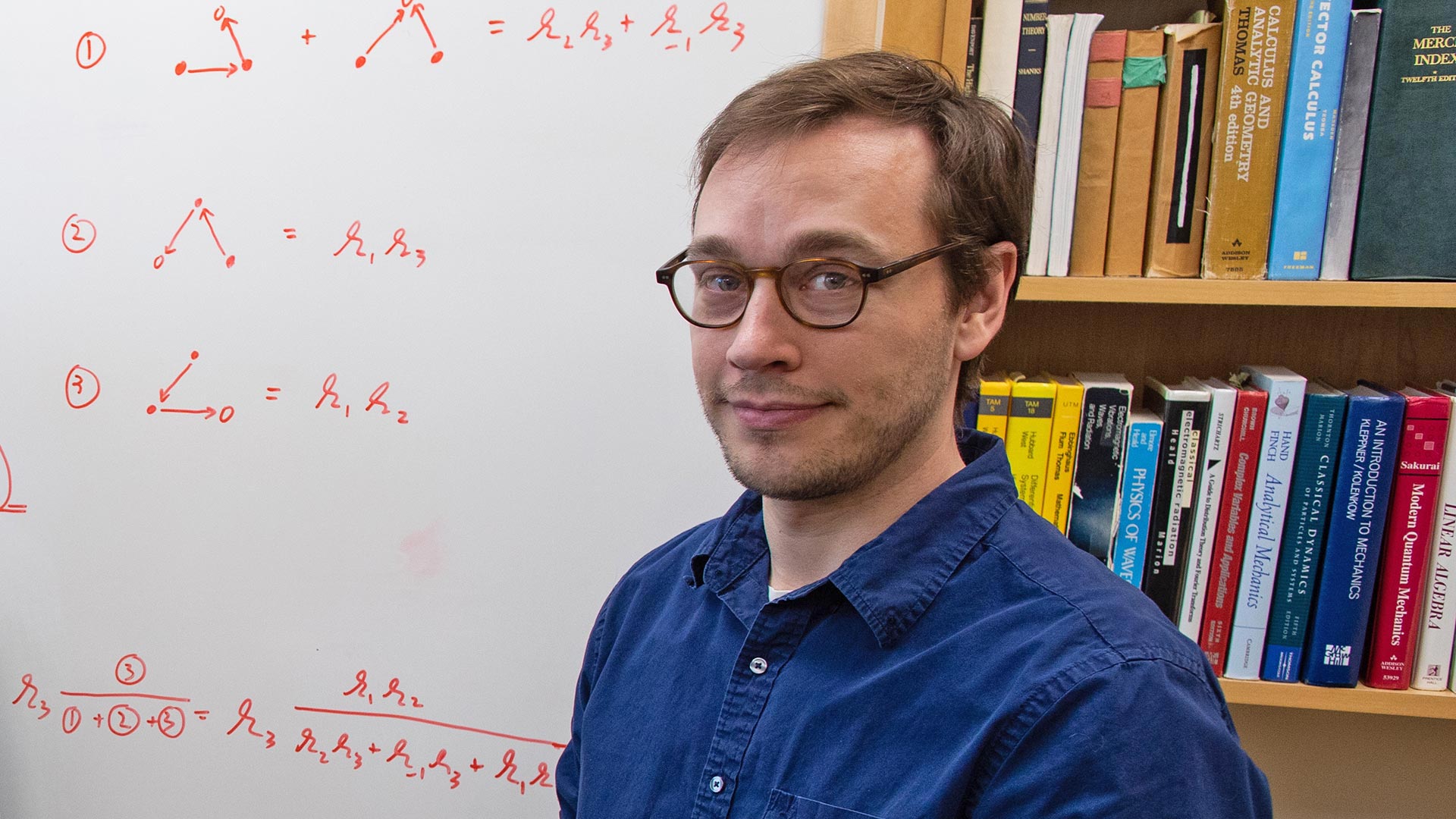
    Evan Seitz
    Evan E. Seitz, the lead author of this study, is a postdoc in the Kinney and Koo labs. Credit: Cold Spring Harbor Laboratory

    SQUID works by first generating a library of over 100,000 variant DNA sequences. It then analyzes the library of mutations and their effects using a program called MAVE-NN (Multiplex Assays of Variant Effects Neural Network). This tool allows scientists to perform thousands of virtual experiments simultaneously. In effect, they can “fish out” the algorithms behind a given AI’s most accurate predictions. Their computational “catch” could set the stage for experiments that are more grounded in reality.

    The Practical Impact of SQUID

    “In silico [virtual] experiments are no replacement for actual laboratory experiments. Nevertheless, they can be very informative. They can help scientists form hypotheses for how a particular region of the genome works or how a mutation might have a clinically relevant effect,” explains CSHL Associate Professor Justin Kinney, a co-author of the study.

    There are tons of AI models in the sea. More enter the waters each day. Koo, Kinney, and colleagues hope that SQUID will help scientists grab hold of those that best meet their specialized needs.

    Though mapped, the human genome remains an incredibly challenging terrain. SQUID could help biologists navigate the field more effectively, bringing them closer to their findings’ true medical implications.

    Reference: “Interpreting cis-regulatory mechanisms from genomic deep neural networks using surrogate models” by Evan E. Seitz, David M. McCandlish, Justin B. Kinney and Peter K. Koo, 21 June 2024, Nature Machine Intelligence.
    DOI: 10.1038/s42256-024-00851-5

    Funding: Simons Foundation, National Institutes of Health, Alfred P. Sloan Foundation

    Never miss a breakthrough: Join the SciTechDaily newsletter.
    Follow us on Google and Google News.

    Artificial Intelligence Cold Spring Harbor Laboratory Genetics Genomics
    Share. Facebook Twitter Pinterest LinkedIn Email Reddit

    Related Articles

    Researchers May Have Solved a Decades-Old Brain Paradox With AI

    CREME: A New AI-Powered Virtual Lab to Help Cure Genetic Diseases

    AI’s Invisible Foe: Confronting the Challenge of Digital “Dark Matter”

    New Technology Exposes the Evolutionary Weak Spots of the Human Genome

    iGenomics: The World’s First DNA “Tricorder” in Your Pocket

    Neuroscientist: Animal Brains Key for Next Generation of Artificial Intelligence

    Amgen to Purchase Icelandic deCODE Genetics

    New Genome Interpreter Aims to Address Privacy Concerns and Aid Clinicians

    Faster Whole-Genome Sequencing May Lead to Routine Use in Neonatal Intensive Care

    Leave A Reply Cancel Reply

    • Facebook
    • Twitter
    • Pinterest
    • YouTube

    Don't Miss a Discovery

    Subscribe for the Latest in Science & Tech!

    Trending News

    Bone-Strengthening Discovery Could Reverse Osteoporosis

    Scientists Uncover Hidden Trigger Behind Stem Cell Aging

    Scientists Find Way to Reverse Fatty Liver Disease Without Changing Diet

    Could Humans Regrow Limbs? New Study Reveals Promising Genetic Pathway

    Scientists Reveal Eating Fruits and Vegetables May Increase Your Risk of Lung Cancer

    Scientists Reverse Brain Aging With Simple Nasal Spray

    Scientists Uncover Potential Brain Risks of Popular Fish Oil Supplements

    Scientists Discover a Surprising Way To Make Bread Healthier and More Nutritious

    Follow SciTechDaily
    • Facebook
    • Twitter
    • YouTube
    • Pinterest
    • Newsletter
    • RSS
    SciTech News
    • Biology News
    • Chemistry News
    • Earth News
    • Health News
    • Physics News
    • Science News
    • Space News
    • Technology News
    Recent Posts
    • Why Are Giant Ants Letting Tiny Ants Crawl All Over Them?
    • Revolutionary Technique Sends Healthy Mitochondria Exactly Where They’re Needed
    • This Student Recreated the Universe in a Bottle. What She Discovered Could Help Reveal How Life Started on Earth
    • Alzheimer’s Symptoms May Start Outside the Brain, Study Finds
    • Cancer’s Secret Weapon? Scientists Reveal How Tumors “Learn” To Survive Treatment
    Copyright © 1998 - 2026 SciTechDaily. All Rights Reserved.
    • Science News
    • About
    • Contact
    • Editorial Board
    • Privacy Policy
    • Terms of Use

    Type above and press Enter to search. Press Esc to cancel.