
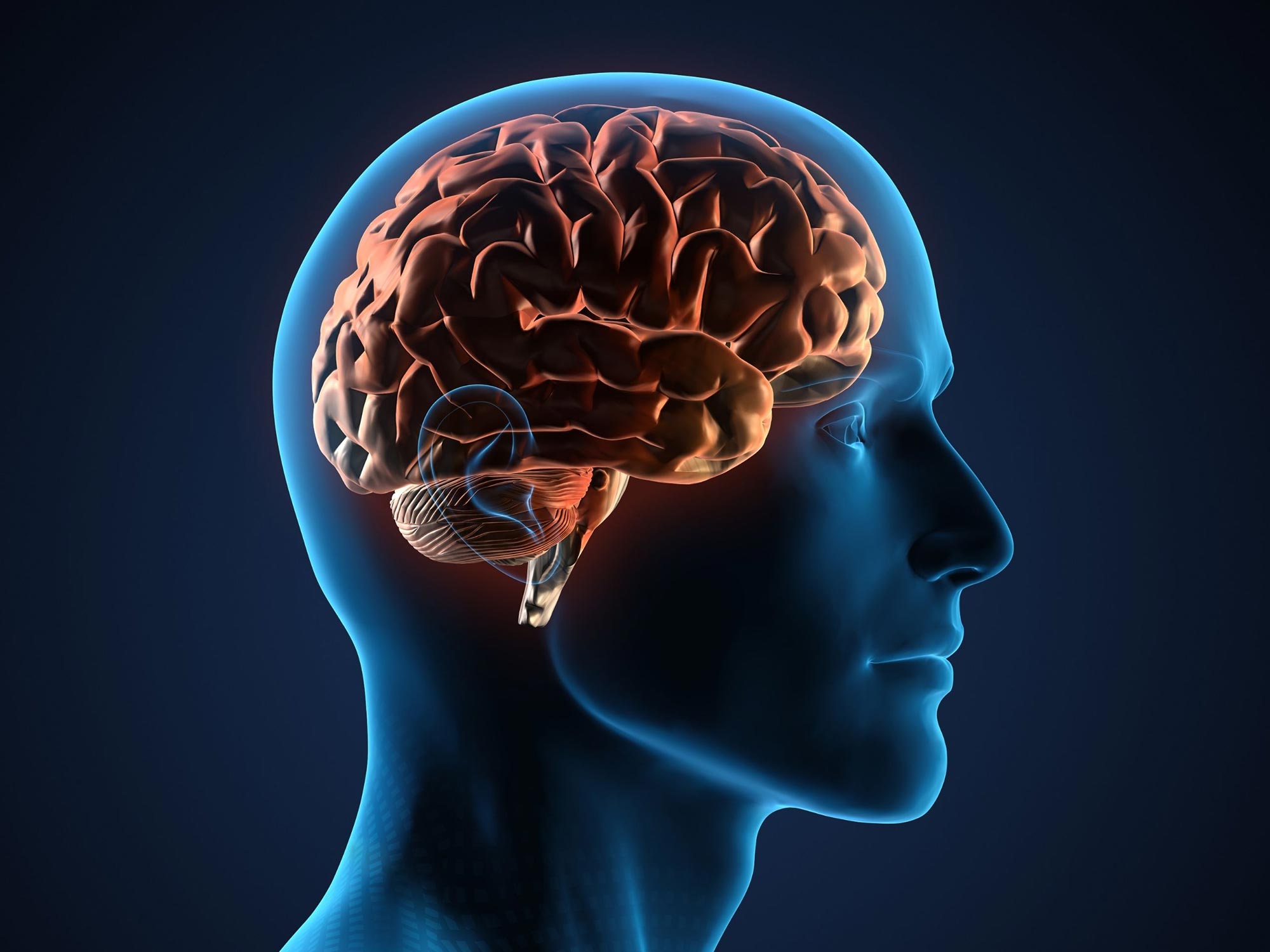
Researchers at Brigham examined data from 144 studies encompassing various brain imaging techniques and substances, uncovering a common brain network associated with addiction.
Researchers at Brigham and Women’s Hospital, part of the Mass General Brigham healthcare system, have conducted a study indicating the presence of a common brain network in individuals with substance use disorder. This conclusion was drawn from an analysis of data from over 144 studies on addiction.
The research revealed that regardless of the substance or lesion location, abnormalities in substance use disorders mapped to a shared brain network. This discovery opens up possibilities for targeting this specific brain circuit with neurostimulation therapies. The study’s findings have been published in the journal Nature Mental Health.
Unified Brain Circuit in Addiction
“Our study found that different brain regions implicated in addiction are all a part of a common brain circuit,” said Michael Fox, MD, PhD, a corresponding author on the paper and founding director of the Center for Brain Circuit Therapeutics at Brigham and Women’s Hospital. “Consistency across different papers means we now have a brain circuit to target addiction with treatments, rather than just a region.”
Fox collaborated with others in the Center for Brain Circuit Therapeutics as well as researchers from British Columbia, Boston Children’s Hospital, Wake Forest School of Medicine, and Philips Healthcare to complete the study. The first author of the paper, Jacob Stubbs, PhD, is a medical student at the University of British Columbia. The study started when Stubbs was a visiting scholar at Brigham and Women’s Hospital under Fox.
The team looked at data from previous studies involving more than 9,000 participants. Within each of those studies, different brain regions were noted as a place to target to treat addiction.
“The best potential targets were unclear because of how many different abnormalities have been found across those previous studies,” Stubbs said.
Network Mapping Approach to Identify Common Circuit
Researchers used a network mapping approach with an average wiring diagram to find the link between the different types of brain imaging lesions that affect addiction. It also looked at different substances and found the network was common, whether someone was addicted to nicotine, alcohol, cocaine, or heroin.
“What’s fascinating is that because there’s so much heterogeneity in the neuroimaging and substance use disorder literature, we thought it was unlikely that we’d find a common circuit. But after much work and collaboration, we found something,” Stubbs said. “It’s exciting science.”
Challenges and Limitations in the Study
One limitation of the study is because the data came from previous studies and the findings are correlative, the authors could not conclude causation. Stubbs also noted there are many ways to look at brain imaging, which makes looking at the data more complicated.
Fox said that despite the extensive data points, narrowing down a specific circuit fills in a gap from previous studies done in the Center for Brain Circuit Therapeutics, bringing targeted neurostimulation to treat addiction, like transcranial magnetic stimulation, closer to patients in a clinical setting.
“This study connects our previous work on lesions that stopped addiction to the last 50 years of research on neuroimaging abnormalities in patients with addiction,” Fox said.
Joseph Taylor, MD, PhD, a psychiatrist and clinical director of transcranial magnetic stimulation at the CBCT, and a co-author of the paper, said that unification is a huge step in the field of brain circuit therapeutics.
“This convergence boosts our confidence that we are starting to understand the circuitry of substance use disorders,” Taylor said.
Reference: “Heterogeneous neuroimaging findings across substance use disorders localize to a common brain network” by Jacob L. Stubbs, Joseph J. Taylor, Shan H. Siddiqi, Frederic L. W. V. J. Schaper, Alexander L. Cohen, William Drew, Colleen A. Hanlon, Amir Abdolahi, Henry Z. Wang, William G. Honer, William J. Panenka and Michael D. Fox, 25 September 2023, Nature Mental Health.
DOI: 10.1038/s44220-023-00128-7
Disclosures: CH is employed by BrainsWay and has financial interest in the company. SHS is a scientific consultant for Magnus Medical, and a clinical consultant for Acacia Mental Health, Kaizen Brain Center, and Boston Precision Neurotherapeutics. SHS has received investigator-initiated research funding from Neuronetics and BrainsWay. SHS has served as a speaker for BrainsWay (branded) and PsychU.org (unbranded, sponsored by Otsuka). SHS owns stock in BrainsWay (publicly traded) and Magnus Medical (not publicly traded). SHS owns intellectual property involving the use of functional connectivity to target TMS. MDF is a consultant for Magnus Medical, Solaris, and Boston Scientific and has intellectual property using connectivity imaging to guide brain stimulation. All other authors report no competing interests.
Funding: JLS was supported by a Canadian Institutes of Health Research Vanier Scholarship and a University of British Columbia Friedman Award for Scholars in Health. JJT was supported by the National Institute of Mental Health (K23MH129829), the Brain and Behavior Research Foundation, Sidney R. Baer Foundation, the Baszucki Brain Research Fund, and Harvard Medical School. FLWVJS was supported by the NIH (R01NS127892). AC was supported by the NIH (K23MH120510), the Child Neurology Foundation, and the Simons Foundation. Data from the Rochester cohort was supported in part by the National Heart, Lung, and Blood Institute Preventive Cardiology Training Grant # T32 HL007937 and by the Clinical and Translational Science Institute Grant # UL1 RR024160 from the National Institutes of Health. WGH was supported by the Jack Bell Chair in Schizophrenia. MDF was supported by grants from the NIH (R01MH113929, R21MH126271, R56AG069086, R21NS123813, R01NS127892), the Kaye Family Research Endowment, the Ellison / Baszucki Family Foundation, and the Manley Family.
Never miss a breakthrough: Join the SciTechDaily newsletter.
Follow us on Google and Google News.