
Occludin Protein Plays Key Role in Spread of Coronavirus Throughout Body’s Cells
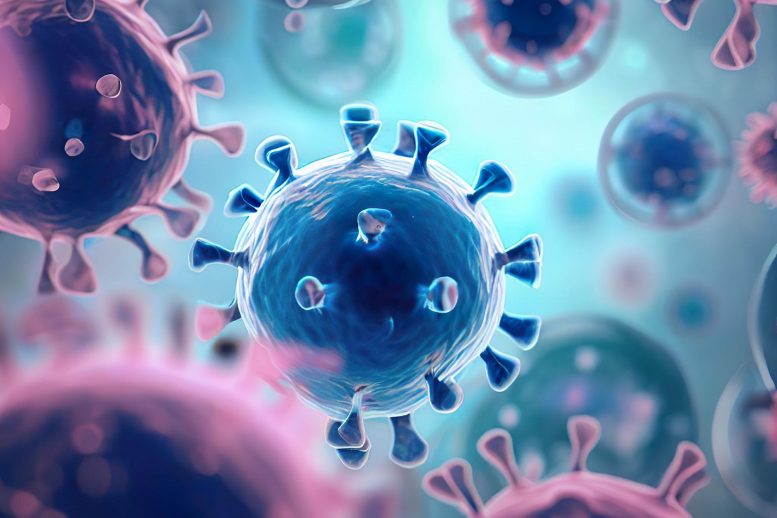
University of Missouri scientists have discovered that the occludin protein in human cells plays a crucial role in COVID-19 transmission. Damage to this protein by the virus leads to rapid virus replication and spreading, offering potential targets for future antiviral drugs.
While the coronavirus continues to infect people around the world, researchers at the University of Missouri have identified a specific protein inside the human body that plays a critical role in how the virus spreads from cell to cell after infection — a discovery that will help better understand the COVID-19 disease and could lead to the development of new antiviral drugs in the future.
The finding provides new insight into how the protein, known as the occludin protein, serves as a mediator for cell-to-cell transmission of the virus.
“Despite all the mitigation strategies implemented since the start of the pandemic, including the vaccines and antiviral drugs, we are still working to effectively control the spread of this disease, which continues to infect people each day, including those who have been vaccinated and exposed to the virus before,” said Wenjun Ma, an associate professor in the MU College of Veterinary Medicine and the MU School of Medicine and lead author of the study. “This basic, scientific research is very important to better understand the underlying mechanisms of disease progression inside the body’s cells so that the proper countermeasures can be identified and developed.”
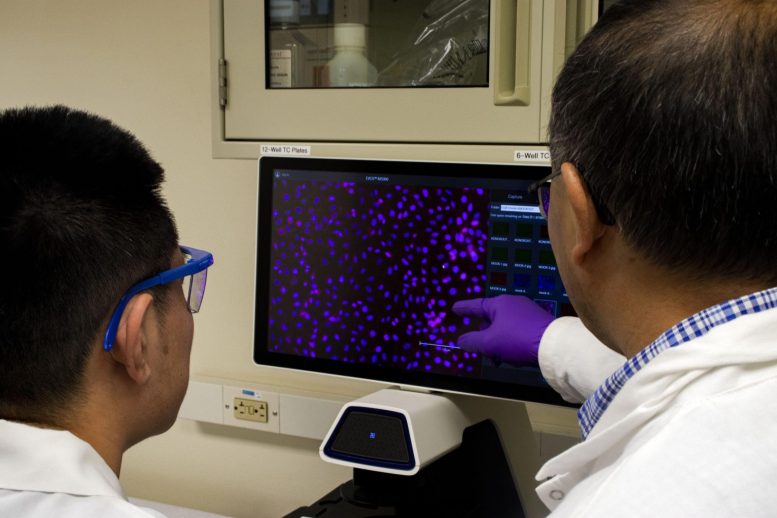
Ma and his team examined how the coronavirus spreads throughout cells by analyzing cell samples at the MU Laboratory for Infectious Disease Research. The lab serves as a critical resource for MU faculty and collaborating scientists who perform research on infectious diseases to help protect public health in the United States and abroad.
Damaged Occludin Protein and Worsening Infection
In the study, Ma found that when the occludin protein in a single cell is damaged by the coronavirus, the virus is able to quickly replicate and spread to neighboring cells throughout the body, making the infection worse and symptoms potentially more severe.
Ma said this newly discovered knowledge could assist developers of antiviral drugs by examining the potential impact the antiviral drugs have in strengthening the occludin protein against infection.
“Whether it is studying how the virus enters the cell in the first place or studying the virus replication process, this basic, scientific research helps us learn more about how the disease progresses,” Ma said. “We learned that the virus may only start off by infecting a singular cell, but cells are incredibly complex, and when the occludin protein gets damaged, the virus quickly replicates and spreads to neighboring cells. For example, if only one cell in the lungs is infected at first, the ability to breathe may not be significantly impacted. However, once the virus spreads to neighboring cells throughout the lungs, it can lead to difficulty breathing and other respiratory problems.”
Going forward, Ma plans to study if other viral infections also impact the occludin protein in an effort to better understand how viruses interact at the cellular level with the hosts they infect.
“Tight junction protein occludin is an internalization factor for SARS-CoV-2 infection and mediates virus cell-to-cell transmission” was recently published in PNAS. Funding for the study was provided by the University of Missouri start-up fund, the National Institutes of Health, the Centers of Excellence in Influenza Research and Response, the Kansas University Medical Center and the Peachtree Collaborative Orthomolecular Medicine, Education, and Research Foundation. Co-authors on the study include Jialin Zhang, Wenyu Yang, Sawrab Roy, Heidi Liu, R. Michael Roberts, Liping Wang, and Lei Shi.
Reference: “Tight junction protein occludin is an internalization factor for SARS-CoV-2 infection and mediates virus cell-to-cell transmission” by Jialin Zhang, Wenyu Yang, Sawrab Roy, Heidi Liu, R. Michael Roberts, Liping Wang, Lei Shi and Wenjun Ma, 17 April 2023, Proceedings of the National Academy of Sciences.
DOI: 10.1073/pnas.2218623120
Funding: NIH/National Institutes of Health
Never miss a breakthrough: Join the SciTechDaily newsletter.
Follow us on Google and Google News.