

Resurgence of Invasive Meningococcal Disease Post-Pandemic
A team of researchers from the Institut Pasteur utilized the National Reference Center for Meningococci’s database to analyze the progression of invasive meningococcal disease in France from 2015 to 2022. Their findings, which were recently published in the Journal of Infection and Public Health, indicate a significant resurgence of the disease following the relaxation of COVID-19 restrictions.
The study highlights a shift in the disease pattern, with a rise in cases caused by meningococcal serogroups that were previously less common before the pandemic. Notably, there has been an increase in infections among individuals aged 16 to 24. The insights gained from this research are expected to inform changes in vaccination strategies to combat this potentially fatal disease.
Impact of COVID-19 Measures on IMD
During the COVID-19 epidemic, health and hygiene measures like wearing masks and social distancing had a positive impact on respiratory infections. This was the case for invasive meningococcal disease (IMD), with the number of infections falling by more than 75% in 2020 and 2021. But what would happen at the end of the pandemic, when the protective measures were eased?
“During the COVID-19 pandemic, two theories emerged,” explains Muhamed-Kheir Taha, co-lead author of the study, Head of the Invasive Bacterial Infections Unit and Director of the National Reference Center for Meningococci at the Institut Pasteur. “The first was that this positive effect would last and that meningococci would stop circulating over the long term. The second was that there would be a rapid resurgence in bacterial activity among a naive population which had not come into contact with the bacteria for a long time.”
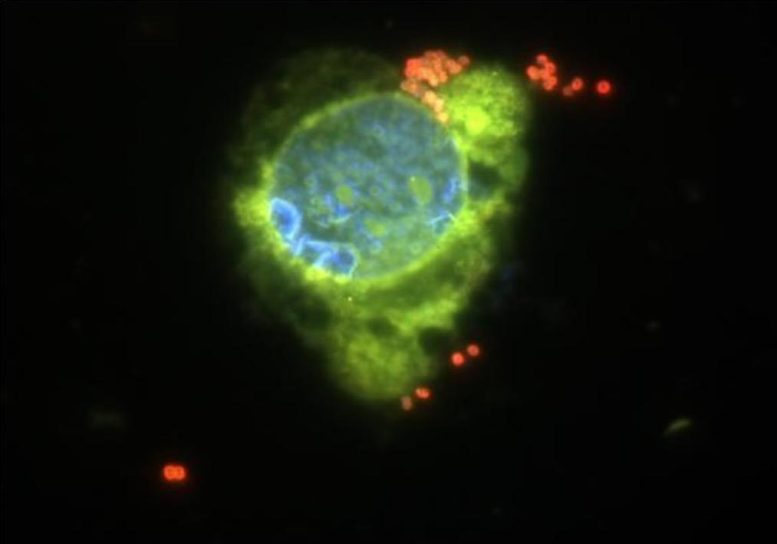
A team of scientists from the Institut Pasteur therefore decided to conduct a detailed study of the evolution of the disease between 2015 and 2022, and they confirmed the second hypothesis.
Analysis of IMD Cases Post-Pandemic
Using samples from the National Reference Center for Meningococci, which has recorded all cases of IMD in France since 1980, the scientists were able to look back over the pandemic period. The first observation was clear.
“There was an unprecedented resurgence in invasive meningococcal disease in autumn 2022, and now, in autumn 2023, the number of cases is higher than in the pre-COVID-19 period,” outlines Samy Taha, first author of the study and a scientist in the Institut Pasteur’s Invasive Bacterial Infections Unit.
Compared with a total of 298 cases recorded between January and September 2019, 421 cases have already been recorded between January and September 2023 – a rise of 36%, even though the winter peak has not yet arrived. The figure for the same period in 2021 was 53 cases.
There are two main explanations for this: general immunity was weaker because strains were circulating less, but there was also a decrease in vaccination, with meningitis C vaccination falling by 20% during the first lockdown, for example. So the population has become naive when faced with bacteria that are constantly evolving – the bacterial genome is highly variable.
Changes in Meningococcal Strains and Age Groups Affected
“Since the pandemic, there has been a particular resurgence in meningococcal serogroups W and Y compared with the other serogroups,” continues Ala-Eddine Deghmane, co-lead author of the study and Deputy Director of the National Reference Center for Meningococci at the Institut Pasteur. “And although all age groups are concerned, we found that those most affected by this new wave of meningitis are young people aged 16 to 24.” In other words, the meningococcal bacterial strains responsible for IMD today are different from those that were circulating before the pandemic, and they target different age groups. “It is almost as if the COVID-19 epidemic has reset the entire system,” says Samy Taha.
Potential Increase in Cases and Vaccine Strategy
This resurgence in meningitis could gather momentum in the coming months with the effect of seasonal influenza. The influenza virus creates a favorable context for the development of meningococcal bacteria. All mass gatherings can be a risk factor for infection in general, and especially for IMD.
In France, only meningitis C vaccination is mandatory; vaccination for meningitis B is merely recommended in infants. But there are not yet any recommendations in the general population for serogroups Y and W. The scientists are therefore in contact with the French National Authority for Health to help adapt the future vaccine strategy. “If the quadrivalent meningococcal vaccine for serogroups A, C, Y, and W were to be recommended for adolescents, it would provide direct protection for them and also indirect protection for other categories of the population,” explains Ala-Eddine Deghmane. Adolescents are the main healthy carriers of meningococci. “We must remember that without treatment, the mortality rate for bacterial meningitis is virtually 100%. Even with proper treatment, there is still a 10% mortality rate. So vaccine prevention is crucial,” concludes Muhamed-Kheir Taha.
Reference: “The rapid rebound of invasive meningococcal disease in France at the end of 2022” by Samy Taha, Eva Hong, Mélanie Denizon, Michael Falguières, Aude Terrade, Ala-Eddine Deghmane and Muhamed-Kheir Taha, 12 October 2023, Journal of Infection and Public Health.
DOI: 10.1016/j.jiph.2023.10.001
Never miss a breakthrough: Join the SciTechDaily newsletter.
Follow us on Google and Google News.