
New research continues to uncover the complexities of Soknopaiou Nesos, focusing on its difficult Demotic texts and the economic roles of its temple, driven by extensive historical documentation and significant funding.
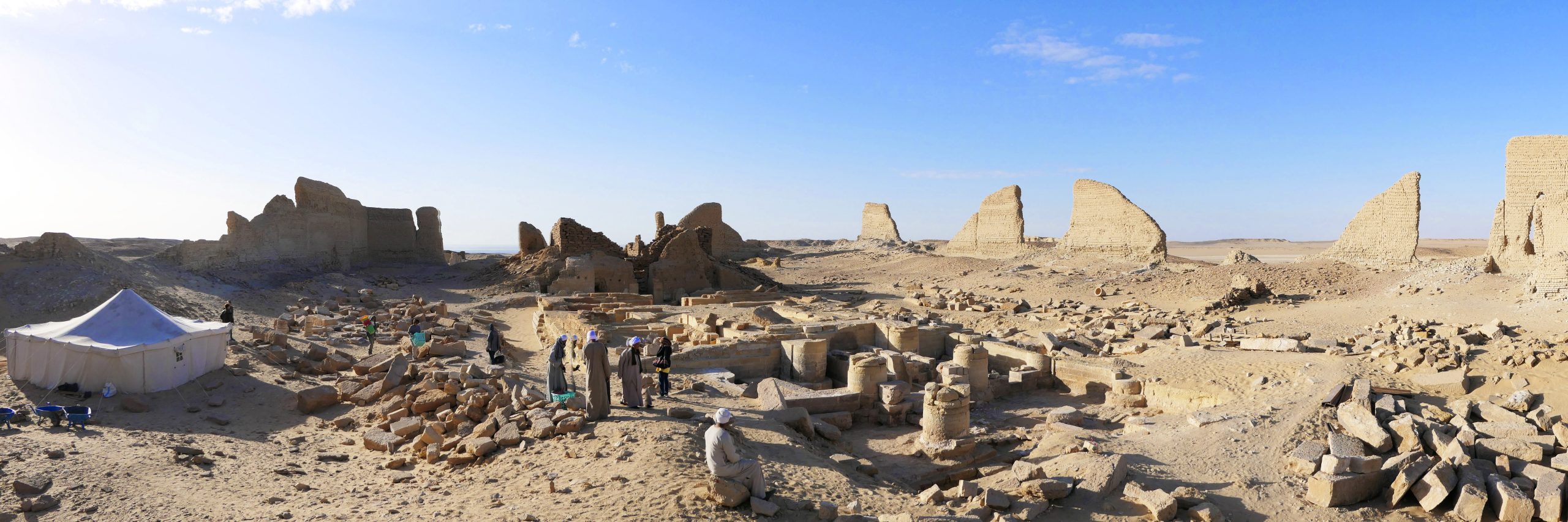
Anyone who has previously shown an interest in research conducted by the Department of Egyptology at Julius Maximilian University Würzburg (JMU) is likely familiar with the name “Soknopaiou Nesos.” This ancient settlement, located in the so-called “Fayum Basin” and known for its temple complex, captured the attention of Würzburg scholars at an early stage.
The former chair Karl-Theodor Zauzich was a pioneer here, being the first to edit documents from the site in 1968. He repeatedly told this anecdote: As experienced a demotist as he was, he began to doubt himself, claiming that while these texts were obviously written in demotic, he did not understand anything at first.
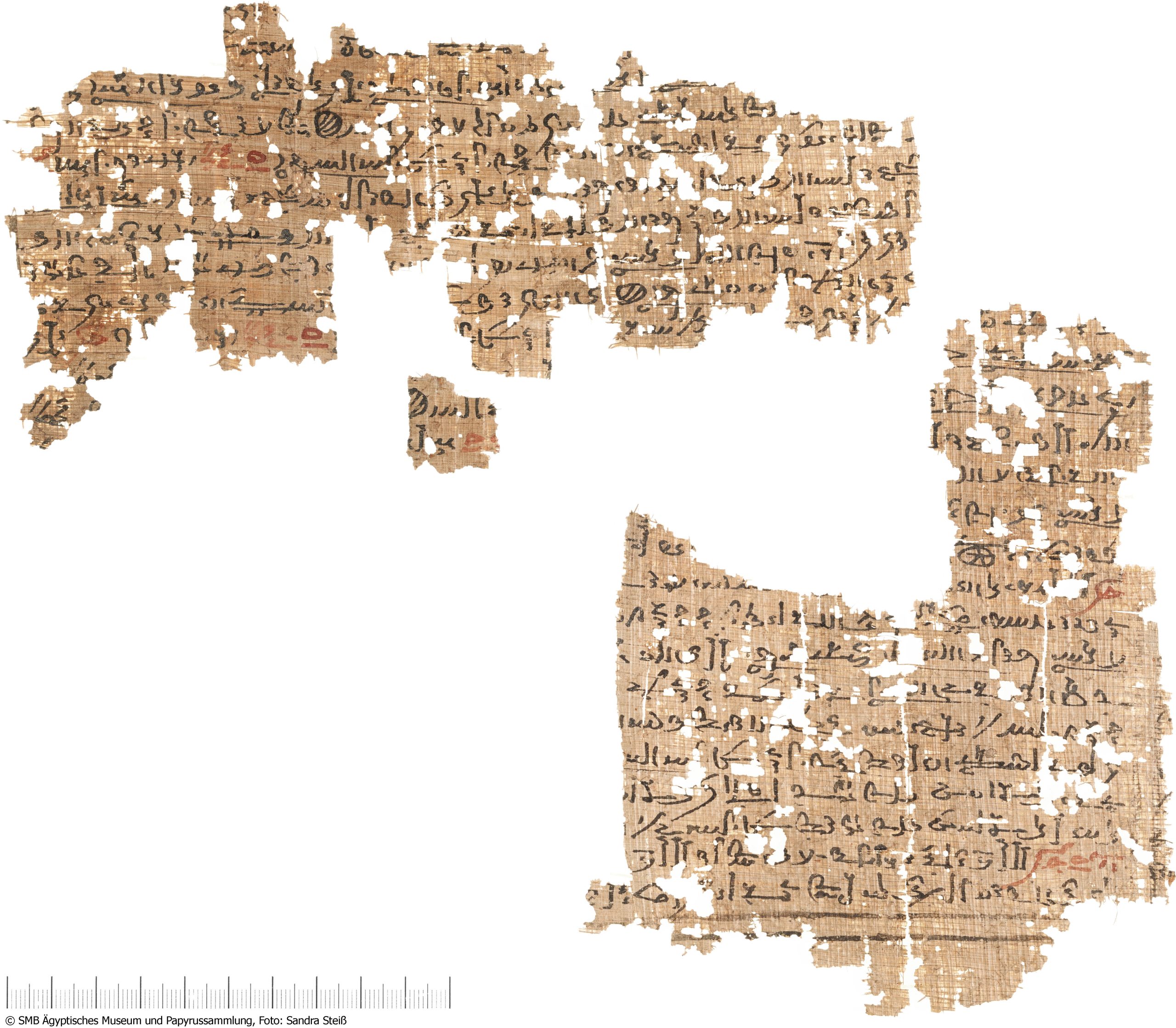
“Demotic” refers to both a stage and a written form of ancient Egyptian, which was in use from around the seventh century BC to the fifth century AD. Demotic, which is difficult to read, has the reputation for being “the most evil of all evil Egyptian scripts” – as the Egyptologist Hermann Grapow put it in 1937. Apparently, the Demotic scribes of Soknopaiu Nesos succeeded in replicating this trend.
Who is fearing the most evil of Egypt’s evil writings?
The current chair and Zauzich’s successor, Professor Martin A. Stadler, can now advance this work after completing two research projects on Soknopaiu Nesos under his leadership. The German Research Foundation (DFG) has granted approximately one million euros for an package proposal to develop this research in three projects over the coming years.
Stadler already attempted to obtain funding from the DFG for a twelve-year, long-term project in 2008. At that time, however, the DFG reviewers did not believe that he had enough material for it. He then acquired a six-year and a three-year project. “After completing my two previous projects over a total of nine years, we are now going to complete the twelve years I originally planned – and this with an interdisciplinary team,” Stadler states happily.
“In the village of Soknopaiou Nesos one of the largest and most comprehensive papyrus corpora for the study of local writing practices has been found,” says Martin Stadler, explaining the background to this research project. Despite the mass of evidence, or perhaps precisely because of it, this material has only ever been systematically processed in part, according to the Egyptologist. The project participants want to make progress in the coming years. They can build on a large number of papyri that have already been identified and published. However, they also need to edit further texts for the first time in order to obtain a more comprehensive picture.
What are these texts? They date from the period between the 2nd century BCE and the early 3rd century CE. They include religious texts, receipts, and accounts by, or relating to, temple staff, Greek documents documenting communication between the temple staff or the head of the temple and the Roman authorities, as well as texts belonging to family or professional archives. They are written partly in demotic and partly in Greek.
A Ptolemaic temple archive from Soknopaiu Nesos
The first sub-project focuses on demotic and Greek documentary texts from the temple archive and their relationship to each other. Here, demotist Carolin Arlt wants to find out who wrote the texts for whom, in which language and for what purpose, and what similarities they have. “Most of the texts were written by the same scribe, a certain Tesenuphis, son of Marres, ‘scribe of the priests’,” explains Carolin Arlt. By these sources, it will be possible to examine the important scribal office in more detail and find out what tasks the scribe had, what kind of texts he wrote, and in what other ways he was involved in the affairs of the temple.
Greek writing practice in Soknopaiu Nesos
The notary’s office, the so-called grapheion, and the archives of the site are the focus of the second sub-project, in which Bianca Borrelli, a specialist in Greek papyri, will be conducting research. “The grapheion can be seen as the institution that helped to create a kind of mediation between Greek and Egyptian cultural traditions,” explains Borrelli. The aim is to shed light on the relationship between the Grapheion and the temple, as well as its role in the larger legal and administrative institutions of the Ptolemaic and Roman states.
180 documents form the core of this study, in addition to internal grapheion documents, texts from related institutions, and other sources known or suspected to have been written by notaries. The results should contribute to a better understanding of the importance of the Greek language in Egypt from the Ptolemaic to the Roman imperial period.
Economy and cult: the cult business for the crocodile god Soknopaios
Demotic and Greek accounting scrolls from Soknopaiou Nesos form the research focus of the third sub-project. The aim is to include as many examples of different types of reckoning as possible in order to better understand the internal temple administration. “One focus will be on the transition between demotic and Greek accounting to determine whether there is significant evidence of internal Greek accounting from the temple of Soknopaios and when and how this possible transition took place,” says Marcel Moser, who is working on the project as a doctoral researcher.
Stadler himself is deciphering religious texts that have not been read for 2000 years. “These works make it clear how interesting Soknopaiou Nesos is from a general Egyptological perspective, beyond the pure framework of demotic studies,” he says. After all, the last manuscript sources for certain cult texts can be found there.
The cult cost money, for which the temple needed income. In this respect, the temple was a cult business. Soknopaiou Nesos now offers the unique opportunity to study two important aspects of the same institution, the ritual and economic sides of the temple, using sources in two different languages. This is so fascinating that the project participants are not even deterred by the most evil of all evil Egyptian writings.
Never miss a breakthrough: Join the SciTechDaily newsletter.
Follow us on Google and Google News.
2 Comments
Evil? Because, maybe some people were fed to crocodiles? Or is this a possible excuse for an invasion?
What exactly is evil about them? I’ve scanned the article twice and it’s not explained. Is it because they’re financial documents? Because those can be pretty evil, even today!