
Close Menu
    Facebook X (Twitter) Instagram
    SciTechDaily
    • Biology
    • Chemistry
    • Earth
    • Health
    • Physics
    • Science
    • Space
    • Technology
    Facebook X (Twitter) Pinterest YouTube RSS
    SciTechDaily
    Home»Science»Unique Snapshot of Ancient Animal Mummification Through Advanced X-ray Imaging
    Science

    Unique Snapshot of Ancient Animal Mummification Through Advanced X-ray Imaging

    By Scientific ReportsAugust 23, 20201 Comment4 Mins Read
    Facebook Twitter Pinterest Telegram LinkedIn WhatsApp Email Reddit
    Share
    Facebook Twitter LinkedIn Pinterest Telegram Email Reddit
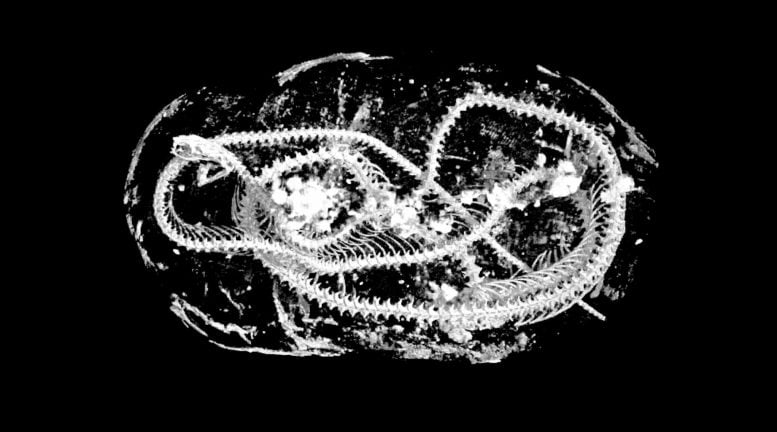
    Coiled Remains of Egyptian Cobra
    The coiled remains of an Egyptian Cobra, undisturbed for thousands of years. Digitally dissected and revealed beneath the wrappings. Credit:
    Swansea University

    Analysis of three mummified animals — a cat, a bird, and a snake — from Ancient Egypt using advanced 3D X-ray imaging is described in a paper published in Scientific Reports. The technique provides insights into the conditions in which the animals were kept, their complex mummification process, and their possible causes of death, without causing damage to the specimens.

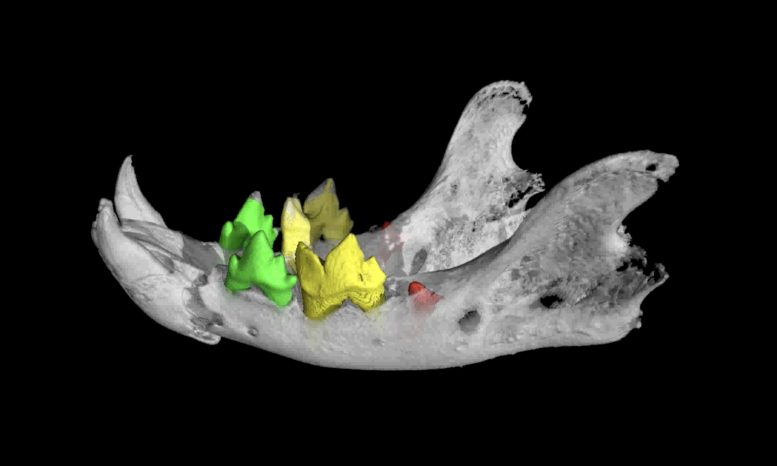
    Richard Johnston and colleagues used non-invasive X-ray microCT imaging to reveal the skull of the cat to be around half the size of the external mummified wrappings. Its morphology suggests that the remains likely belong to an Egyptian domestic cat. Analysis of images of the teeth and skeleton indicate that the cat was less than five months old and may have purposefully had its neck broken at the time of death or during the mummification process to keep the head in an upright position.


    Three mummified animals from ancient Egypt have been digitally unwrapped and dissected by researchers using high-resolution 3D scans that give unprecedented detail about the animals’ lives — and deaths — over 2000 years ago. The three animals — a snake, a bird and a cat — are from the collection held by the Egypt Centre at Swansea University. Previous investigations had identified which animals they were, but very little else was known about what lay inside the mummies. Now, thanks to X-ray micro CT scanning, which generates 3D images with a resolution 100 times greater than a medical CT scan, the animals’ remains can be analyzed in extraordinary detail, right down to their smallest bones and teeth. Credit: Swansea University

    Measurements taken using 3D scans of the mummified bird of prey suggest that the remains most closely resemble the Eurasian kestrel and that the animal did not appear to have died from injuries to the neck. Imaging of the tightly coiled snake suggests that the remains belong to a juvenile cobra, which may have been killed by spinal fracture, consistent with tail capture and whipping methods commonly used to kill snakes. The high-resolution imaging enabled the authors to identify structures found within the mouth of the mummified snake as hardened resin. The precise placement at the opening of the glottis possibly provides evidence for complex ritualistic behavior, similar to the Opening of the Mouth procedure.
    Cat Mummy Teeth
    Digitally dissected lower jaw (mandible) and teeth of the mummified kitten. Reveals fractures and unerupted mandibular first molars (red) indicating it was a kitten at the time of death. Scale: skull total length = 68.9 mm. The cat is one of three mummified animals from ancient Egypt which have been digitally unwrapped and dissected by researchers, using high-resolution 3D scans that give unprecedented detail about the animals’ lives – and deaths – over 2000 years ago. Previous investigations had identified which animals they were, but very little else was known about what lay inside the mummies. Now, thanks to X-ray micro CT scanning, which generates 3D images with a resolution 100 times greater than a medical CT scan, the animals’ remains can be analysed in extraordinary detail, right down to their smallest bones and teeth. Credit: Swansea University

    An improved understanding of animal mummification through scientific imaging may inform future conservation work and shed light on past human-animal relationships.

    Read Egyptian Animal Mummies From Over 2000 Years Ago Digitally Unwrapped With High-Resolution 3D X-rays for more on this research.

    Reference: “Evidence of diet, deification, and death within ancient Egyptian mummified animals” by Richard Johnston, Richard Thomas, Rhys Jones, Carolyn Graves-Brown, Wendy Goodridge and Laura North, 20 August 2020, Scientific Reports.
    DOI: 10.1038/s41598-020-69726-0

    Never miss a breakthrough: Join the SciTechDaily newsletter.
    Follow us on Google and Google News.

    Archaeology Egyptology Mummy
    Share. Facebook Twitter Pinterest LinkedIn Email Reddit

    Related Articles

    What Do Mummies Smell Like? Researchers Finally Have the Answer

    What Does a Mummy Smell Like? Scientists Uncover Surprising Truth

    “Golden Boy” – Researchers Digitally Unwrap 2,300-Year-Old Undisturbed Mummy

    Mummy of Pharaoh Amenhotep I “Unwrapped” for the First Time in 3,000 Years – Here’s What Scientists Found

    Egyptian Animal Mummies From Over 2000 Years Ago Digitally Unwrapped With High-Resolution 3D X-rays

    Ancient Events Could Be “Rewritten” by Fine-Tuning Radiocarbon Dating

    Scientists Use X-Rays and Infrared Light to Explore Egyptian Mummy Bones [Video]

    Egyptologist Discovers Mysterious Head of a Pharaoh

    DNA Sequencing Solves 4,000-Year-Old Egyptian Mummy Mystery

    1 Comment

    1. I’m a on August 31, 2020 6:58 am

      lol

      Reply
    Leave A Reply Cancel Reply

    • Facebook
    • Twitter
    • Pinterest
    • YouTube

    Don't Miss a Discovery

    Subscribe for the Latest in Science & Tech!

    Trending News

    Scientists Uncover Potential Brain Risks of Popular Fish Oil Supplements

    Scientists Discover a Surprising Way To Make Bread Healthier and More Nutritious

    After 60 Years, Scientists Uncover Unexpected Brain Effects of Popular Diabetes Drug Metformin

    New Research Uncovers Hidden Side Effects of Popular Weight-Loss Drugs

    Scientists Rethink Extreme Warming After Surprising Ocean Discovery

    Landmark Study Links Never Marrying to Significantly Higher Cancer Risk

    Researchers Discover Unknown Beetle Species Just Steps From Their Lab

    Largest-Ever Study Finds Medicinal Cannabis Ineffective for Anxiety, Depression, PTSD

    Follow SciTechDaily
    • Facebook
    • Twitter
    • YouTube
    • Pinterest
    • Newsletter
    • RSS
    SciTech News
    • Biology News
    • Chemistry News
    • Earth News
    • Health News
    • Physics News
    • Science News
    • Space News
    • Technology News
    Recent Posts
    • Early Warning Signals of Esophageal Cancer May Be Hiding in Plain Sight
    • Researchers Have Discovered a THC-Free Cannabis Compound That May Replace Opioids
    • Common Blood Pressure Drug Shows Surprising Power Against Deadly Antibiotic-Resistant Superbug
    • Students Build Dark Matter Detector and Set New Experimental Limits
    • Scientists Discover Caffeine Can Repair Key Memory Circuits After Sleep Loss
    Copyright © 1998 - 2026 SciTechDaily. All Rights Reserved.
    • Science News
    • About
    • Contact
    • Editorial Board
    • Privacy Policy
    • Terms of Use

    Type above and press Enter to search. Press Esc to cancel.