
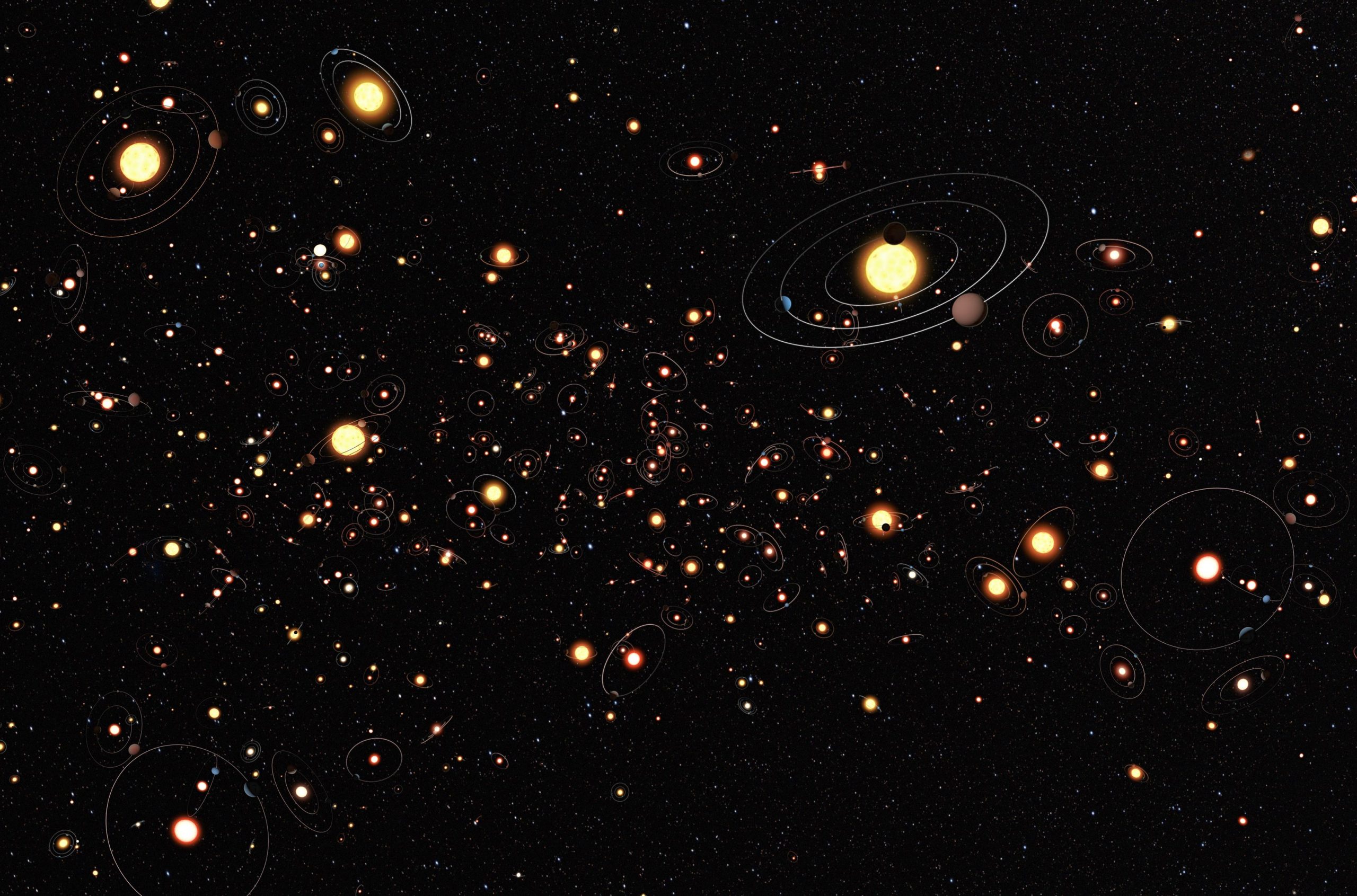
Researchers simulate thousands of worlds to see what happens to planets with hydrogen atmospheres.
When telescopes became powerful enough to find planets orbiting distant stars, scientists were surprised to see that a lot of them didn’t have atmospheres like Earth’s. Instead, they appear to have thick blankets of hydrogen.
In a new study, two University of Chicago scientists investigated how those planets’ atmospheres evolve, and the likelihood of such planets ever acquiring an atmosphere more like ours. By modeling thousands of simulated planets, they estimated that it would be very rare for a planet that started with a hydrogen atmosphere to evolve into one like Earth’s—and that such planets often wind up losing their atmospheres entirely.
Published on July 21, 2020, in the Proceedings of the National Academy of Sciences, the results deepen our understanding of how planetary atmospheres form and grow, and can help astronomers narrow down the best places to search for planets with Earth-like atmospheres.
“The habitable zone for planets is on a line—a cosmic shoreline between too much and too little atmosphere,” said Asst. Prof. Edwin Kite, first author of the study and an expert on the history of Mars and the climates of other worlds. “Are there lots of planets sitting along that shoreline, or are they rare? This is a big question in planetary science right now.”
“We know very little about the atmospheres of rocky exoplanets,” said Megan Barnett, a graduate student and second author of the paper. “The planets we’re looking at in this study are too close to their stars to host life, but studying them helps us understand the overall processes that make or destroy atmospheres.”
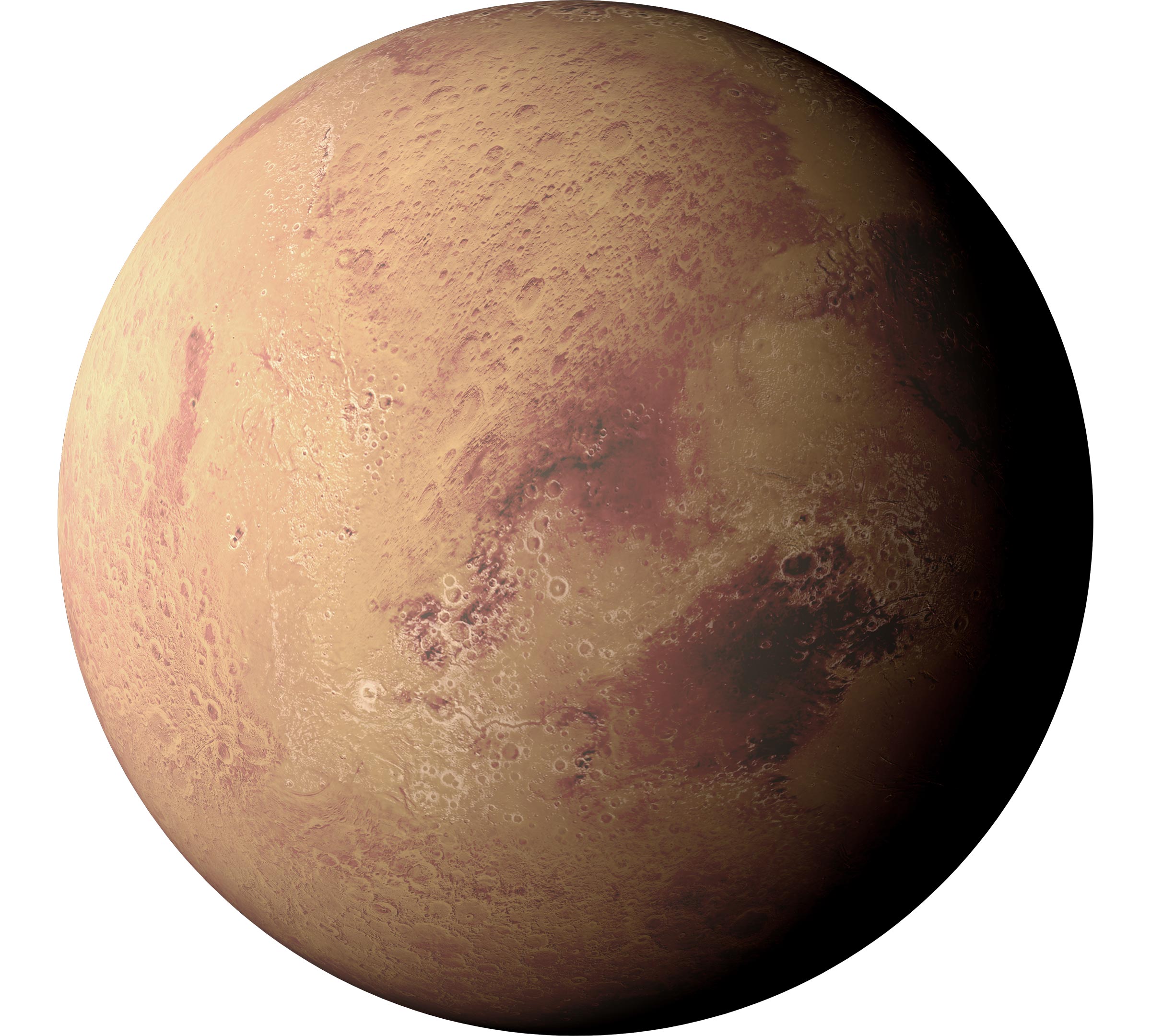
For example, scientists know that many rocky planets form with hydrogen atmospheres, but what happens after that initial formation is much less clear. Do they keep that atmosphere, transition to another kind of atmosphere, or lose it entirely?
Kite and Barnett took the information we do know, and fed it into a program to run simulations with planets of different sizes and with different kinds of atmospheres. Then they posed different scenarios and observed what would happen to the atmospheres if, say, the nearby star’s brightness changes, changing the amount of radiation received by the planet; or the star dims and the rock of the planet cools down; or volcanoes erupt on the surface.
Their results suggested that if a planet starts out with a hydrogen-rich atmosphere, there are very few combinations of conditions under which it could eventually transition into an Earth-like atmosphere. “That really just doesn’t happen in our model,” said Kite. “By far the most common outcome is that it loses its atmosphere and stays a bare rock forever.”
In a handful of cases, however, a planet a little larger than Earth’s size managed to acquire and keep an Earth-like atmosphere by having a lot of volcanic eruptions that pour out gases.
Kite and Barnett also found that a planet that started out with an initial Earth-like atmosphere was more likely to keep it.
The results, the scientists said, will help guide searches for habitable planets by new telescopes such as the James Webb Space Telescope, scheduled to launch next year.
“From our findings, it looks like if we want to find warm exoplanets with Earth-like atmospheres, we should target worlds that started out without hydrogen atmospheres, that orbit less active stars, or are unusually large,” said Kite.
Reference: “Exoplanet secondary atmosphere loss and revival” by Edwin S. Kite and Megan N. Barnett, 21 July 2020, Proceedings of the National Academy of Sciences.
DOI: 10.1073/pnas.2006177117
Funding: NASA
Never miss a breakthrough: Join the SciTechDaily newsletter.
Follow us on Google and Google News.
2 Comments
Interesting.
Was wondering what can be done to inject Oxygen into the mix with Hydrogeen atmosphere. After all water is the basis of all life as we know it currently. Other life forms based on different elements may exist and we may not be able to recognise such life forms. Is there an absolute standard for recognising the existence of Life?
What technologies would we need to invent/master to ensure that such Hydrogen environment planets retain there atmosphere and can be made nto habitable planets.
No, there doesn’t seem to be any agreed on definition of life or ways of always recognizing them – even micro-fossil studies here on Earth have complicated schemes for already known types.
That said:
– Since evolution is the process of life you *could* schematically identify life as evolving populations of organisms.
– NASA has a different working definition for identifying individual organisms as metabolizing replicators that can evolve.
– There are suggestions for identifying life products based on metabolic patterns (say, the tendency to grow lipids by 2 carbon atoms at a time).
– There are suggestions for astronomical identification based on that biospheres would skew atmospheres out of equilibrium (but so would volcanism, say).