
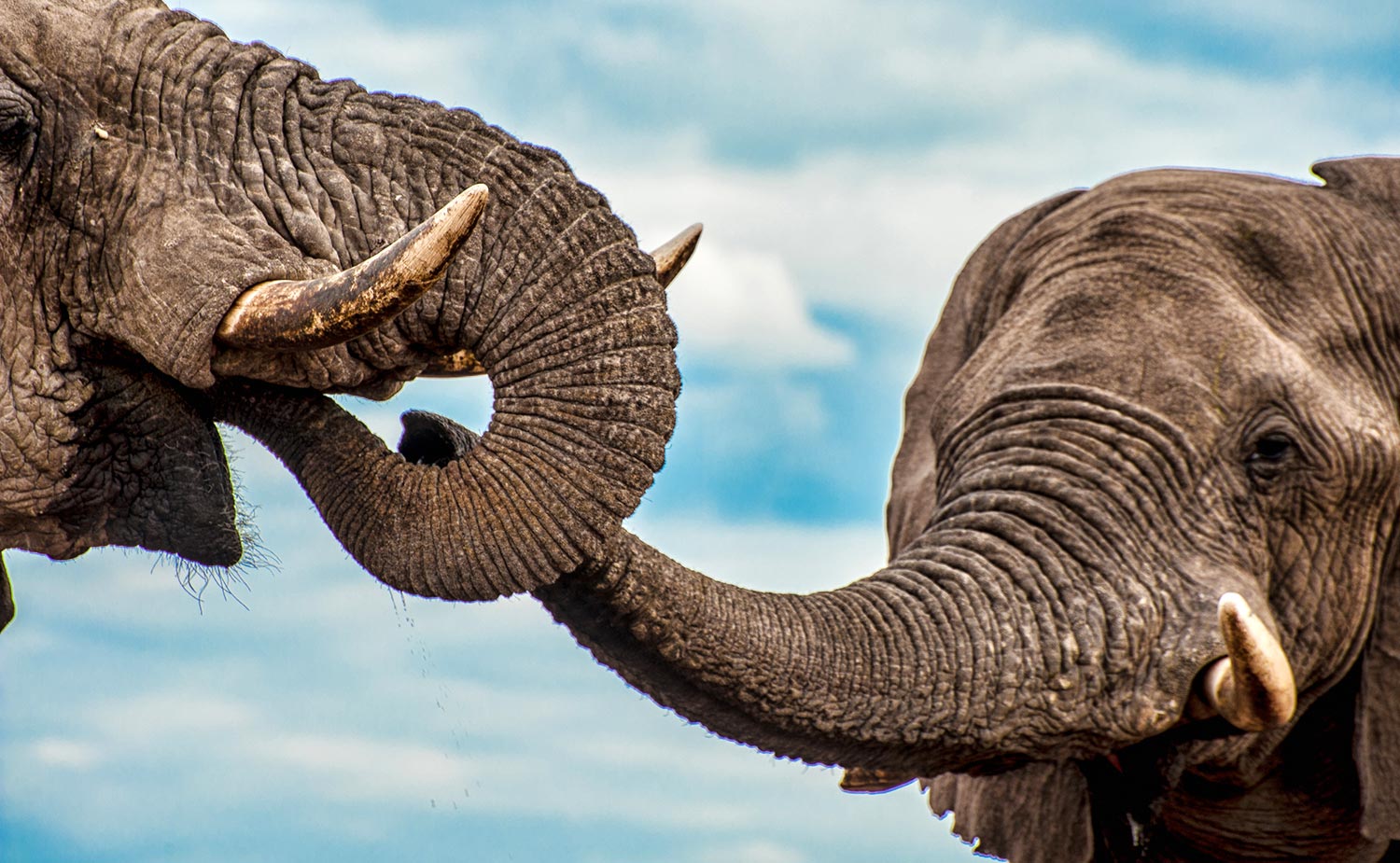
Male African elephants exhibit consistent yet flexible personality traits influenced by social context.
Observations of 34 elephants in Namibia identified five character traits, including aggression and friendliness. Dominant males balanced behaviors effectively, and younger males showed more similar temperaments, indicating development over time. Insights could enhance conservation and management practices.
Male Elephants and Their Social Behavior
Male African elephants exhibit distinct personality traits while also adjusting their behavior to fit different social situations, according to a study published today (December 4) in the open-access journal PLOS ONE. The research was led by Caitlin O’Connell-Rodwell of Stanford University and the Harvard University Center for the Environment, alongside Jodie L. Berezin of Utopia Scientific and their colleagues.
Many animals demonstrate consistent behavioral differences, often referred to as “personality” or “temperament.” Elephants, known for their intelligence and complex social structures, are no exception. Previous studies have shown that captive elephants display unique personality types. In the wild, female elephants remain within their family groups for life, while males leave upon reaching adulthood to form more fluid, all-male groups organized by dominance hierarchies.
Observations in Namibia
To expand our understanding of personality traits in wild elephants, researchers observed the behavior of 34 male African savannah elephants (Loxodonta africana) in Etosha National Park in Namibia between 2007 and 2011. They identified five types of behavior that were consistently different between individuals, including aggression and dominance behaviors, friendly social interactions, and self-comforting. However, the elephant’s behavior was also influenced by the social context. When younger males were present, other males were more likely to perform friendly and dominance behaviors.
In contrast, when a socially influential male was present, the other males performed fewer friendly social interactions. The most dominant and socially influential male elephants in the society performed aggressive and friendly social behaviors equally frequently. Younger males were more similar in temperament than older males, suggesting that their unique personalities develop as they age.
Key Findings and Conservation Implications
The study is the first to show that adult male elephants display distinct personality traits in the wild. Although they showed consistency over time, male elephants were also flexible, adjusting their behavior depending on the social context. The results also suggest that the most socially successful male elephants are those that strike a balance between aggression and friendliness, and that having mixed age groups within male elephant populations was extremely important to their wellbeing. A deeper understanding of wild elephant behavior could inform better conservation decision-making and improve the management of captive elephants, the authors say.
The authors add: “Male elephants display five distinct character traits (affiliative, aggressive, dominant, anxious, and calm) consistently across time and context, and are also distinct from each other in how they display these five character traits.”
Reference: “Consistency and flexibility of character in free-ranging male African elephants across time, age, and social contexts” by Caitlin E. O’Connell-Rodwell, Jodie L. Berezin, Colleen Kinzley, Patrick T. Freeman, Monica N. Sandri, Dustin Kieschnick, Timothy C. Rodwell, Mariana Abarca and Virginia Hayssen, 4 December 2024, PLOS ONE.
DOI: 10.1371/journal.pone.0311780
Field work for this research was funded by Utopia Scientific Donor Volunteers and anonymous donors (support to CEO, JLB, CK, PTF, MNS, TCR). Specific individual support was provided by the Stanford University Vice Provost Office for Undergraduate Education Faculty and Student Grants (grants to CEO, PTF), the Smith College Horner Fund Endowment (grant to JLB), as well as the Oakland Zoo Conservation Fund (grant to CK and zoo volunteers). The Elephant Sanctuary provided salary support for the analysis of data related to this study (to MNS), as well as currently providing financial support for field work and sanctuary interns (to CEO and sanctuary employees). The funders had no role in study design, data collection and analysis, decision to publish, or preparation of the manuscript.
Never miss a breakthrough: Join the SciTechDaily newsletter.
Follow us on Google and Google News.