
Close Menu
    Facebook X (Twitter) Instagram
    SciTechDaily
    • Biology
    • Chemistry
    • Earth
    • Health
    • Physics
    • Science
    • Space
    • Technology
    Facebook X (Twitter) Pinterest YouTube RSS
    SciTechDaily
    Home»Biology»Unveiling the Ocean’s Hidden Green: Robot Explorers Reveal Missing Half of Phytoplankton
    Biology

    Unveiling the Ocean’s Hidden Green: Robot Explorers Reveal Missing Half of Phytoplankton

    By Dalhousie UniversityOctober 28, 20241 Comment2 Mins Read
    Facebook Twitter Pinterest Telegram LinkedIn WhatsApp Email Reddit
    Share
    Facebook Twitter LinkedIn Pinterest Telegram Email Reddit
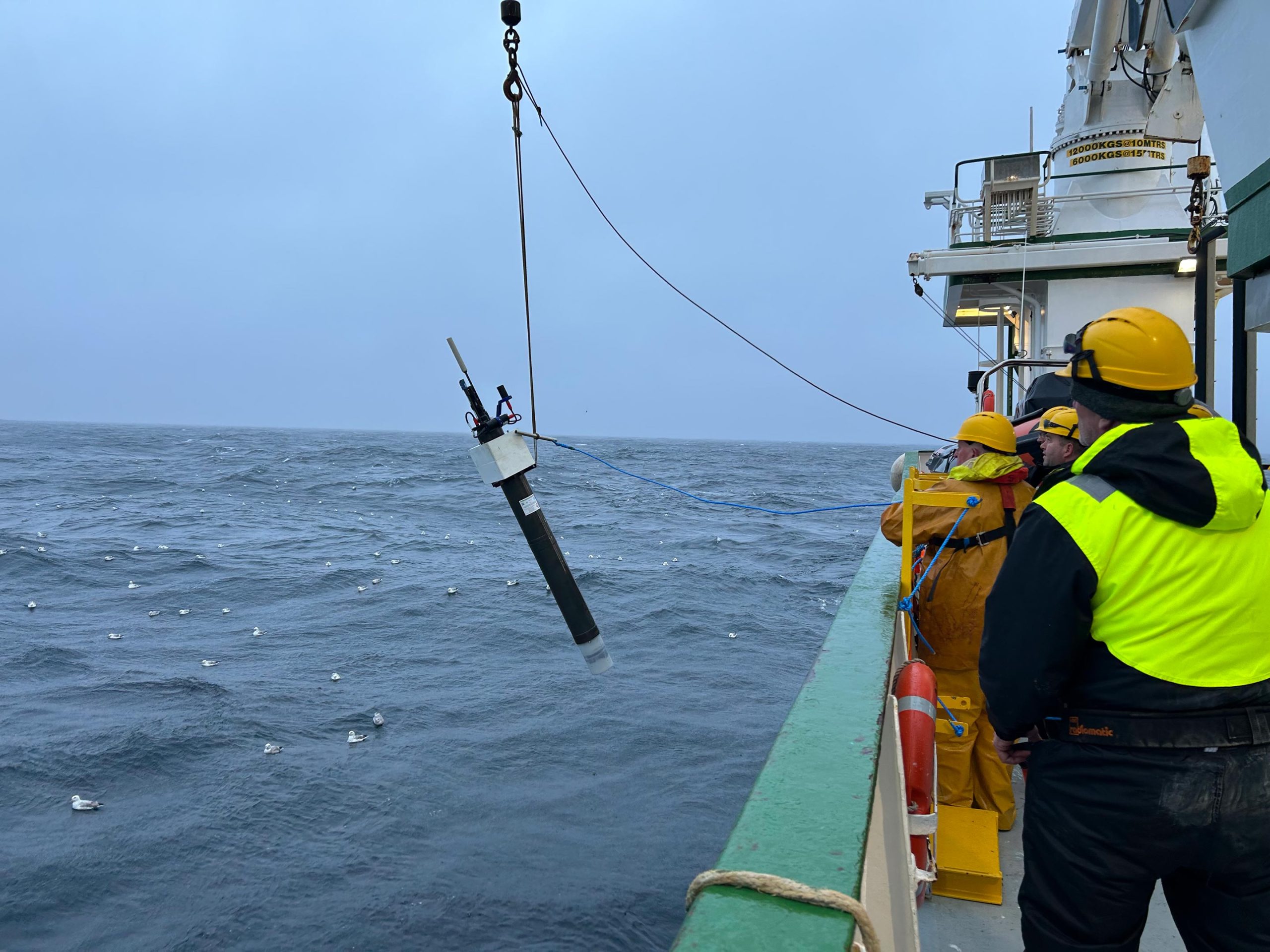
    BGC-Argo Float Deployment in the Labrador Sea
    Deploying a BCG-Argo float in the Labrador Sea in May 2024. Credit: Adam Stoer

    Researchers calculate phytoplankton biomass on Earth: About 346 million tonnes or around 250 million elephants.

    Using data from BGC-Argo floats, scientists have mapped the global distribution of phytoplankton carbon biomass, totaling approximately 314 Tg C. This approach reveals that traditional satellite methods, focusing only on surface chlorophyll, significantly underrepresent the total biomass, particularly subsurface layers, and misjudge the seasonal peak times in much of the oceans.

    Marine phytoplankton play a crucial role in Earth’s ecology and biogeochemistry. Traditionally, our understanding of large-scale phytoplankton biomass dynamics has come from satellite-based ocean color observations, which estimate chlorophyll-a (Chla) as a proxy for carbon biomass. However, satellites can only capture surface data, leaving subsurface phytoplankton largely unmonitored. Additionally, Chla is an imperfect measure of carbon biomass, as variations in cellular physiology cause the Chla-to-carbon ratio to fluctuate significantly.

    The global Biogeochemical (BGC)-Argo float network now complements satellite data by addressing these gaps. This study used approximately 100,000 water-column profiles from BGC-Argo to map Earth’s phytoplankton carbon biomass and its variations across time and space. Researchers estimate a global open ocean phytoplankton biomass of roughly 314 Tg C, with nearly half occurring at depths beyond satellite detection. Comparing seasonal cycles of carbon biomass and surface Chla, investigators found that surface Chla fails to accurately capture peak biomass timing in about two-thirds of the ocean.

    Deploying a BGC-Argo Float in the Labrador Sea
    Deploying a BGC-Argo float in the Labrador Sea in May 2024. Credit: Adam Stoer

    This study demonstrates the feasibility of global, depth-resolved monitoring of phytoplankton, a critical step toward better understanding climate-related changes and assessing the potential impacts of geoengineering interventions on ocean ecosystems.

    Reference: “Carbon-centric dynamics of Earth’s marine phytoplankton” by Adam C. Stoer and Katja Fennel, 28 October 2024, Proceedings of the National Academy of Sciences.
    DOI: 10.1073/pnas.2405354121

    Never miss a breakthrough: Join the SciTechDaily newsletter.
    Follow us on Google and Google News.

    Dalhousie University Marine Biology Oceanography Phytoplankton
    Share. Facebook Twitter Pinterest LinkedIn Email Reddit

    Related Articles

    “Groundbreaking” Findings – Previously Unknown Process Could Be Responsible for 12% of Earth’s Total Oxygen Production

    Scientists Uncover a “Missing Link” – Sea Secrets Surface in the Great Australian Bight

    New Blood-Red Species of Octocoral Discovered in Panama

    Researchers Shed Light on the Mysterious Lives of Narwhals

    Biologists Explore the Effect of Coral Restoration on Caribbean Reef Fish Communities

    Three New Species of Zoantharians Discovered Across the Indo-Pacific

    “Coughing” Scallops Are Early Warning System for Worsening Water Quality

    Carnivorous Deep Sea Sponge Discovered Off Coast of California

    Jellyfish Bloom in Marine Ecologies As Ocean Health Declines

    1 Comment

    1. Clyde Spencer on October 29, 2024 5:56 pm

      “Researchers calculate phytoplankton biomass on Earth: … around 250 million elephants.”

      Are those optimal-weight zoo elephants or drought-stressed real-world elephants? Why do writers feel a need to convert scientific weights into some other poorly defined units that humans really don’t have a subjective appreciation for? When was the last time you picked up an elephant and hefted it?

      Reply
    Leave A Reply Cancel Reply

    • Facebook
    • Twitter
    • Pinterest
    • YouTube

    Don't Miss a Discovery

    Subscribe for the Latest in Science & Tech!

    Trending News

    New “Nanozyme Hypothesis” Could Rewrite the Story of Life’s Origins

    Anatomy Isn’t Finished: The Human Body Still Holds Secrets

    “Pretty Close to Home”: The Hidden Earthquake Threat Beneath Seattle

    The Surprising Reason You Might Want To Sleep Without a Pillow

    Scientists Say This Natural Hormone Reverses Obesity by Targeting the Brain

    35-Million-Year-Old Mystery: Strange Arachnid Discovered Preserved in Amber

    Is AI Really Just a Tool? It Could Be Altering How You See Reality

    JWST Reveals a “Forbidden” Planet With a Baffling Composition

    Follow SciTechDaily
    • Facebook
    • Twitter
    • YouTube
    • Pinterest
    • Newsletter
    • RSS
    SciTech News
    • Biology News
    • Chemistry News
    • Earth News
    • Health News
    • Physics News
    • Science News
    • Space News
    • Technology News
    Recent Posts
    • Scientists Capture Hidden Electron Patterns Inside Quantum Materials
    • New Study Challenges Alzheimer’s Theories: It’s Not Just About Plaques
    • Scientists Discover Way To Treat Lung Cancer and Its Deadly Side Effect Together
    • Artificial Sweeteners May Harm Future Generations, Study Suggests
    • The Ocean Current Stronger Than All Rivers Changed Earth Forever
    Copyright © 1998 - 2026 SciTechDaily. All Rights Reserved.
    • Science News
    • About
    • Contact
    • Editorial Board
    • Privacy Policy
    • Terms of Use

    Type above and press Enter to search. Press Esc to cancel.