
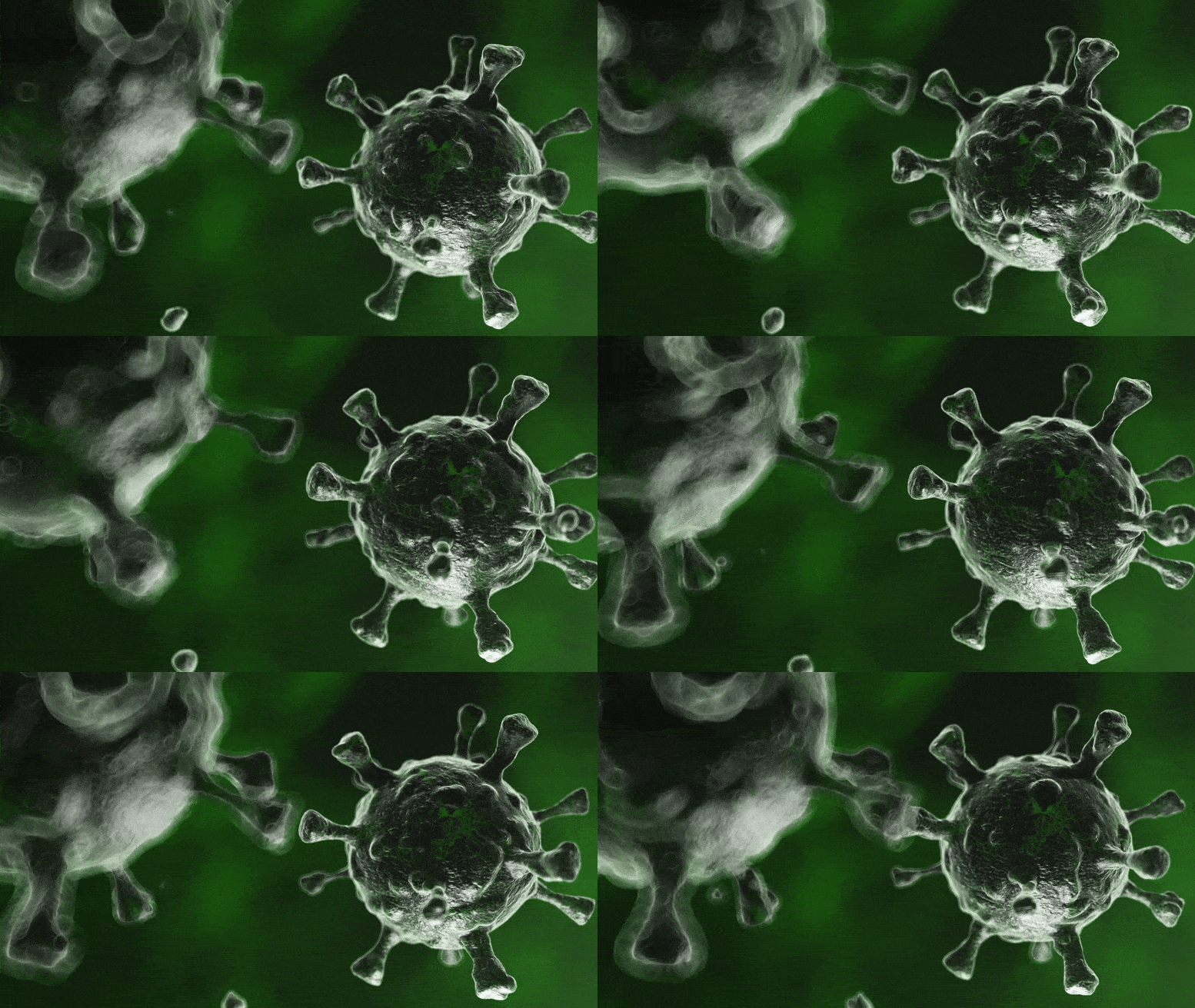
COVID-19 variants may spread more easily and resist some antibodies, but current vaccines still protect against severe illness.
Recently, media reports and pre-print scientific papers on SARS-CoV-2 variants have discussed various genetic mutations in the virus that have occurred. SARS-CoV-2 is the virus that causes COVID-19. Viral variants are not unexpected, as all viruses evolve and mutate over time. Variants are more likely to occur if a virus transmits unabated in a population. SARS-CoV-2 variants are a concern if they are more transmissible, cause more severe disease, or can evade immune responses to a greater extent than other SARS-CoV-2 strains, such that vaccines or antibody products are less effective.
To date, three key SARS-CoV-2 variants have been identified that are of potential concern. The variant (B.1.1.7 lineage) was first detected in the United Kingdom (UK) in September 2020; the variant (B.1.351 lineage) was first detected in October 2020 in the Republic of South Africa (RSA); and the variant (P.1 lineage) was first detected in Brazil in December 2020.
Currently, 47 countries, including the United States have recorded viral genetic sequences from cases involving the B.1.1.7 lineage (UK). In the United States, 293 cases involving the B.1.1.7 lineage have been reported in 25 states. The B.1.351 lineage (RSA) has been recorded in 20 countries, and the P1 lineage (Brazil) has been found in five countries. There are no known cases of RSA lineage in the United States. There has been one reported case of P1 lineage in the United States.
Some scientific data suggest that the new variants may be more transmissible, prompting concerns that they could become more common in the population. Additionally, emerging data from the U.K suggest that the B.1.1.7 lineage may cause more severe disease, but further confirmatory studies are needed.
A new variant evades the human immune response through a process called antigenic variation, whereby the virus changes its surface spike protein in a way that prevents antibodies from binding to and neutralizing the virus. Antigenic variation to SARS-CoV-2 is measured using known monoclonal antibodies to the spike protein on the virus surface or using sera from people who have either recovered from COVID-19 or who have been vaccinated with one of the FDA authorized COVID-19 vaccines currently available. Over the past several weeks, data have emerged to indicate that both the UK variant (B.1.1.7 lineage) and the RSA variant (B.1.351 lineage) are able to evade binding by some monoclonal antibodies to the spike protein.
Vaccine Effectiveness Against COVID-19 Variants
In addition, studies of sera from individuals vaccinated with the FDA authorized mRNA COVID-19 vaccines suggest that the vaccines continue to induce a high level of neutralization when tested against the UK variants. When tested against the RSA variant, the mRNA vaccines induced a somewhat lower level of neutralization. Although this decrease is of concern, the FDA authorized COVID-19 vaccines are expected to continue to protect against symptomatic and severe COVID-19 disease. This is because these vaccines induce a more powerful immune response to SARS-CoV-2 than what results when someone is naturally infected. These vaccines are 95 percent effective against symptomatic COVID-19 and nearly 100 percent effective against severe COVID-19 disease. Therefore, even if these variants cause a modest reduction in the antibody levels generated by vaccination, these vaccines should continue to provide a significant level of protection against illness. Further, neutralizing antibodies generated by the FDA authorized COVID-19 vaccines are just one way that the immune system protects against severe disease. These vaccines also induce T-cell responses, which likely contribute protection against symptomatic and severe COVID-19 disease in concert with neutralizing antibodies.
The National Institute of Allergy and Infectious Diseases (NIAID), part of the NIH, supports a comprehensive research program to better understand the effects of the SARS-CoV-2 variants on vaccine and monoclonal antibody efficacy through laboratory-based, animal challenge and clinical research. Additionally, NIAID is working with the Centers for Disease Control and Prevention, other federal partners, and the World Health Organization to track SARS-CoV-2 variants and to increase surveillance as new variants of concern emerge.
The best protection against the emergence of new SARS-CoV-2 variants or COVID-19 disease caused by these variants is to widely administer the current FDA authorized vaccines as quickly as possible. If the virus does not have the opportunity to spread, it does not have the opportunity to mutate. Additionally, it is extremely important to continue to practice good public health measures to protect against SARS-CoV-2 infection: wear a mask, wash hands frequently with soap and water, maintain six feet apart from others who do not live with you, avoid crowds, and avoid poorly ventilated indoor spaces.
Never miss a breakthrough: Join the SciTechDaily newsletter.
Follow us on Google and Google News.