
Close Menu
    Facebook X (Twitter) Instagram
    SciTechDaily
    • Biology
    • Chemistry
    • Earth
    • Health
    • Physics
    • Science
    • Space
    • Technology
    Facebook X (Twitter) Pinterest YouTube RSS
    SciTechDaily
    Home»Chemistry»Using Red Blood Cells, Light, and a Honey Bee Peptide to Deliver Therapeutic Proteins to Specific Areas of the Body
    Chemistry

    Using Red Blood Cells, Light, and a Honey Bee Peptide to Deliver Therapeutic Proteins to Specific Areas of the Body

    By American Chemical SocietyDecember 9, 20201 Comment2 Mins Read
    Facebook Twitter Pinterest Telegram LinkedIn WhatsApp Email Reddit
    Share
    Facebook Twitter LinkedIn Pinterest Telegram Email Reddit
    Orange-Red Dye Blood Clots
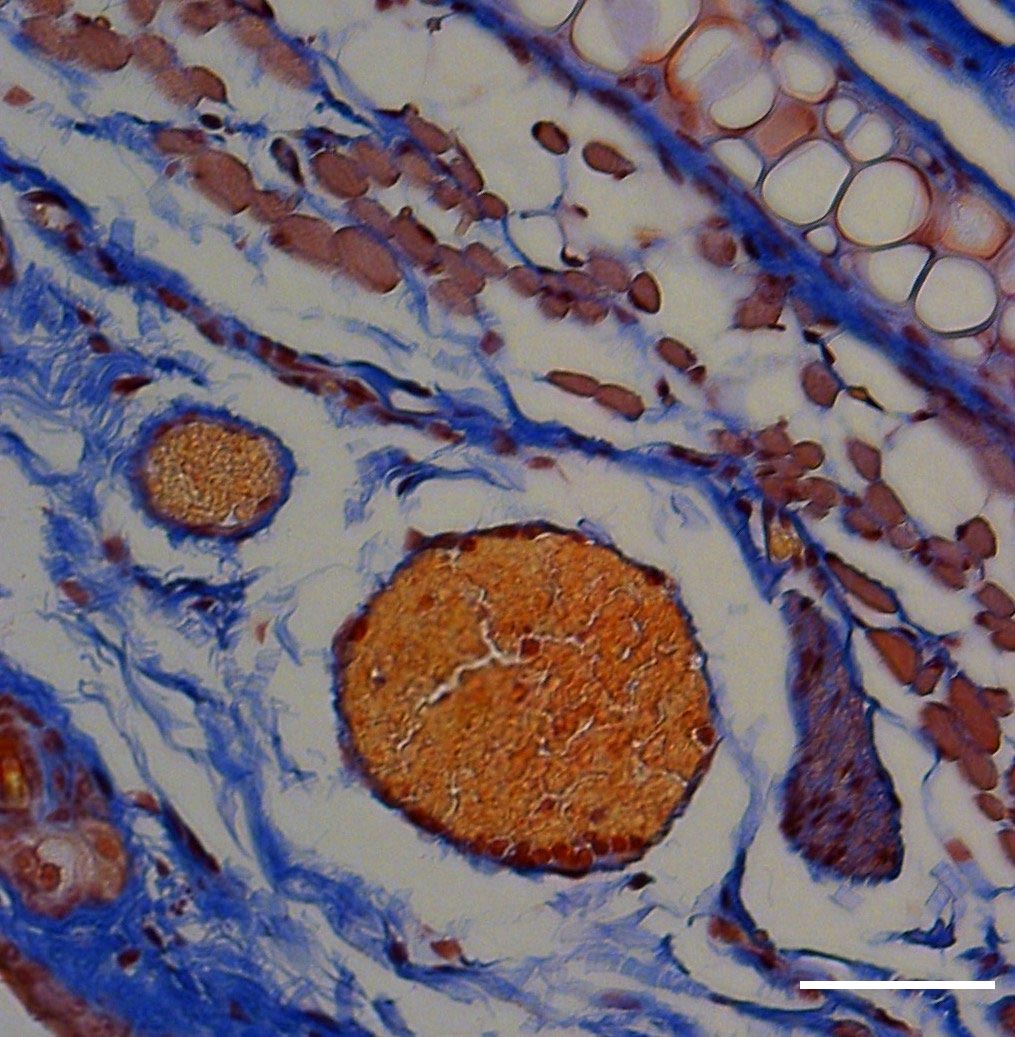
    An orange-red dye shows that blood clots formed in a mouse ear in which thrombin was released from light-triggered RBCs. Scale bar, 50 μm. Credit: Adapted from ACS Central Science 2020, DOI: 10.1021/acscentsci.0c01151

    Protein therapies are often more potent and selective toward their biochemical targets than other types of drugs, particularly small molecules. However, proteins are also more likely to be quickly degraded by enzymes or cleared from blood by the kidneys, which has limited their clinical use. Now, researchers reporting in ACS Central Science have engineered red blood cell (RBC) carriers that release therapeutic proteins when stimulated by light, with the help of a honey bee peptide.

    Because protein drugs are unstable in the body, they must be given at high levels, which can cause side effects. Scientists have tried to protect protein therapies from degradation by encapsulating them in carriers, such as liposomes, nanoparticles and RBCs. But it has been challenging to make the carriers release their cargo at the appropriate place and time. Brianna Vickerman, David Lawrence and colleagues wanted to engineer RBCs to release therapeutic proteins at specific regions of the body when triggered by certain wavelengths of light.

    The researchers embedded a peptide, called melittin, into the cell membrane of RBCs. A component of European honey bee venom, melittin normally causes RBCs to rupture. But the team modified the peptide so that it would do so only when illuminated by a specific wavelength of light. As a proof of concept, the researchers loaded thrombin – a blood-clotting enzyme that is used to prevent excessive bleeding – into the engineered RBCs and injected them into mice. They then shone a light on a small region of each mouse’s ear and examined sections of the tissue. The analysis showed thrombin-related blood clotting only at the illuminated sites. The strategy could prove useful for the light-triggered release of protein, peptide and nucleic acid therapeutics from a variety of lipid-based carriers, the researchers say.

    Reference: “Light-Controlled Release of Therapeutic Proteins from Red Blood Cells” by Brianna M. Vickerman, Colin P. O’Banion, Xianming Tan and David. S. Lawrence, 9 December 2020, ACS Central Science.
    DOI: 10.1021/acscentsci.0c01151

    The authors acknowledge funding from the Eshelman Institute for Innovation and the American Heart Association.

    Never miss a breakthrough: Join the SciTechDaily newsletter.
    Follow us on Google and Google News.

    American Chemical Society Biochemistry Blood Pharmaceuticals
    Share. Facebook Twitter Pinterest LinkedIn Email Reddit

    Related Articles

    AI Machine Learning Innovation to Develop Chemical Library for Drug Discovery

    Chemists Discover a Sulfur Molecule to Block the SARS-CoV-2 Coronavirus

    Stretchable Conductive Hydrogel Developed That Could Help Repair Damaged Nerves

    Small Molecule Identified That Targets Genes of COVID-19 Virus for Destruction

    Scientists Discover Sugar Molecules in SARS-CoV-2 Coronavirus Spike Protein Play Active Role in Infection

    Pharma Aims to Make a Better CBD – Up to 50 Times More Potent

    Efficiently Creating “Building Blocks” of Pharmaceuticals to Accelerate Drug Discovery Research

    MIT Automated Tabletop Fast Protein Synthesis Machine May Accelerate Drug Development

    Human Cells Made Magnetic With Engineered Protein Crystals

    1 Comment

    1. Sekar Vedaraman on January 30, 2021 11:16 pm

      Very Interesting.

      Directed treatment of infected site, by activating the same using light to neutralise the same by ensuring that it reaches the site unaffected and is activated only after it has reached the site.

      Delivery of netutralizing agent in a controlled manner is likeely to be more effective not just in protien threapeutics.. but other methods of treatment for all pathogens, viruses and bacterial infections. Use of protected / encapsulated enzymes in treatment of diseaes.

      Generalise and build treatment methodologies for use globally.

      Reply
    Leave A Reply Cancel Reply

    • Facebook
    • Twitter
    • Pinterest
    • YouTube

    Don't Miss a Discovery

    Subscribe for the Latest in Science & Tech!

    Trending News

    Millions Take These IBS Drugs, But a New Study Finds Serious Risks

    Scientists Unlock Hidden Secrets of 2,300-Year-Old Mummies Using Cutting-Edge CT Scanner

    Bread Might Be Making You Gain Weight Even Without Eating More Calories

    Scientists Discover Massive Magma Reservoir Beneath Tuscany

    Europe’s Most Active Volcano Just Got Stranger – Here’s Why Scientists Are Rethinking It

    Alzheimer’s Symptoms May Start Outside the Brain, Study Finds

    Millions Take This Popular Supplement – Scientists Discover a Concerning Link to Heart Failure

    The Universe Is Expanding Too Fast and Scientists Can’t Explain Why

    Follow SciTechDaily
    • Facebook
    • Twitter
    • YouTube
    • Pinterest
    • Newsletter
    • RSS
    SciTech News
    • Biology News
    • Chemistry News
    • Earth News
    • Health News
    • Physics News
    • Science News
    • Space News
    • Technology News
    Recent Posts
    • Simple Blood Test May Predict Alzheimer’s Years Before Brain Scans Show Signs
    • Scientists Say Adding This Unusual Seafood to Your Diet Could Reverse Signs of Aging
    • U.S. Waste Holds $5.7 Billion Worth of Crop Nutrients
    • Scientists Say a Hidden Structure May Exist Inside Earth’s Core
    • Doctors Surprised by the Power of a Simple Drug Against Colon Cancer
    Copyright © 1998 - 2026 SciTechDaily. All Rights Reserved.
    • Science News
    • About
    • Contact
    • Editorial Board
    • Privacy Policy
    • Terms of Use

    Type above and press Enter to search. Press Esc to cancel.