
Close Menu
    Facebook X (Twitter) Instagram
    SciTechDaily
    • Biology
    • Chemistry
    • Earth
    • Health
    • Physics
    • Science
    • Space
    • Technology
    Facebook X (Twitter) Pinterest YouTube RSS
    SciTechDaily
    Home»Biology»Wang’s Garden Lizard – Scientists Discover Unique New Iguana Species
    Biology

    Wang’s Garden Lizard – Scientists Discover Unique New Iguana Species

    By Pensoft PublishersDecember 30, 2023No Comments2 Mins Read
    Facebook Twitter Pinterest Telegram LinkedIn WhatsApp Email Reddit
    Share
    Facebook Twitter LinkedIn Pinterest Telegram Email Reddit
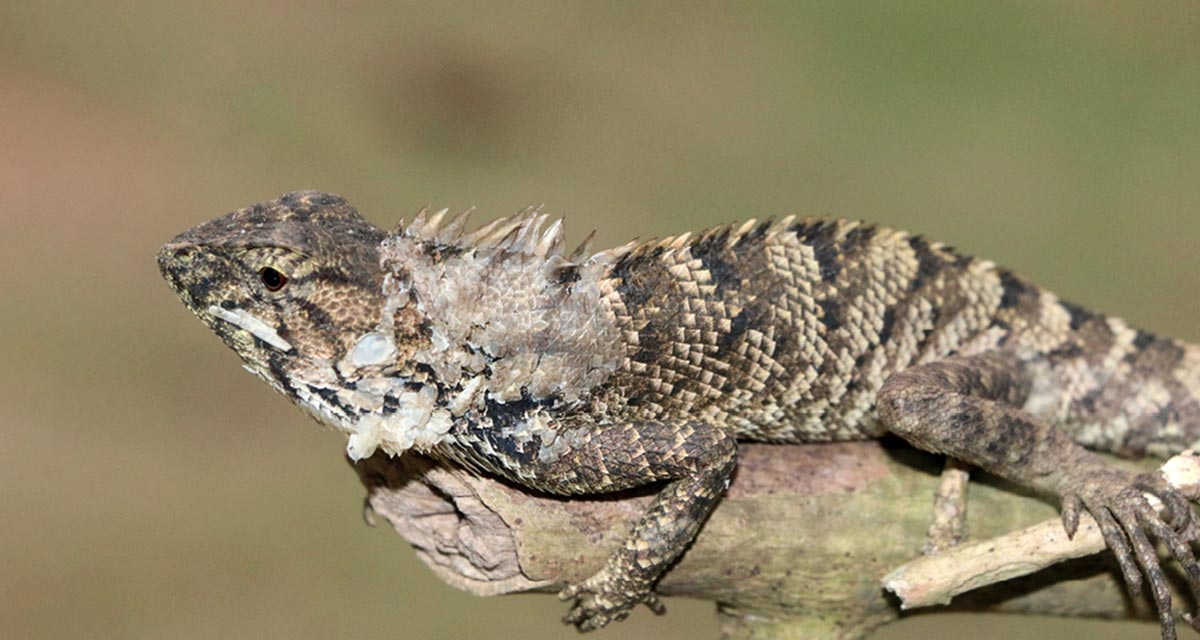
    New Iguana Species Calotes wangi
    A new iguana species, Wang’s garden lizard, has been identified in Asia, featuring unique characteristics and a diverse diet. While not currently threatened, conservation concerns have been raised due to habitat fragmentation and human exploitation. Credit: Huang et al.

    A newly discovered iguana species adds to Asia’s diverse reptile population, having been formally recognized in the scientific community through its description in the open-access journal ZooKeys.

    “From 2009 to 2022, we conducted a series of field surveys in South China and collected a number of specimens of the Calotes versicolor species complex, and found that the population of what we thought was Calotes versicolor in South China and Northern Vietnam was a new undescribed species and two subspecies,” says Yong Huang, whose team described the new species.

    Unique Characteristics of Wang’s Garden Lizard

    Wang’s garden lizard (Calotes wangi) is less than 9 cm long, and one of its distinguishing features is its orange tongue.

    “Calotes wangi is found in subtropical evergreen broad-leaved forests and tropical monsoon forests in southern China and northern Vietnam, mostly in mountainous areas, hills and plains on forest edges, arable land, shrub lands, and even urban green belts. It is active at the edge of the forest, and when it is in danger, it rushes into bushes or climbs tree trunks to hide. Investigations found that the lizards lie on sloping shrub branches at night, sleeping close to the branches,” says Yong Huang.
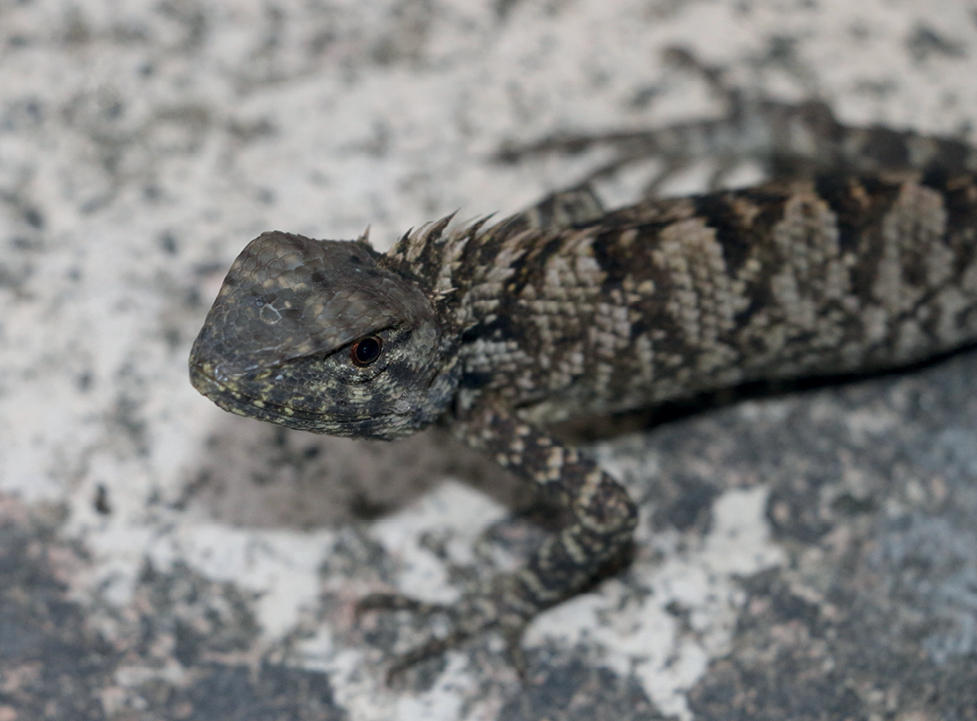
    Calotes wangi Close Up
    Calotes wangi. Credit: Huang et al.

    Seasonal Activity and Diet

    It is active from April to October every year, while in the tropics it is active from March to November or even longer, and eats a variety of insects, spiders, and other arthropods.

    For now, the researchers estimate that the new species is not threatened, but they do note that in some areas its habitat is fragmented.

    “In addition, their bodies are used medicinally and the lizards are also eaten,” they write in their research paper.

    This is why they suggest that the local government strengthen the protection of their ecological environment and pay close attention to the population dynamics.

    Reference: “Taxonomic review of the Calotes versicolor complex (Agamidae, Sauria, Squamata) in China, with description of a new species and subspecies” by Yong Huang, Hongyu Li, Yilin Wang, Maojin Li, Mian Hou and Bo Cai, 20 December 2023, ZooKeys.
    DOI: 10.3897/zookeys.1187.110704

    Never miss a breakthrough: Join the SciTechDaily newsletter.
    Follow us on Google and Google News.

    Biodiversity Lizard New Species Pensoft Publishers Reptiles
    Share. Facebook Twitter Pinterest LinkedIn Email Reddit

    Related Articles

    Web of Wonders: Expedition Discovers Four New Tarantula Species in Colombia’s Biodiversity Hotspot

    Scientists Discover Two Striking New Species of Carnivorous Plants

    Highly Threatened New Species of Owl Discovered in the Rainforests of Príncipe Island, Central Africa

    Striking New Species of Snake Discovered in Paraguay – Previously Unknown to Science

    Serbian Tennis Player Novak Djokovic Now Has a Tiny New Snail Species Named After Him

    New Centipede Discovered on Top of Food Chain in Hellish Ecosystem of a Sulfur-Soaked Romanian Cave

    New Diamond Frog From Northern Madagascar – “As Soon as I Saw This Frog, I Knew It Was a New Species!”

    A Tale of Two Iguanas: New Species Found Hiding in Plain Sight

    New Green Pit Viper From India Named After Salazar Slytherin From Harry Potter

    Leave A Reply Cancel Reply

    • Facebook
    • Twitter
    • Pinterest
    • YouTube

    Don't Miss a Discovery

    Subscribe for the Latest in Science & Tech!

    Trending News

    Scientists Discover Bizarre 100-Million-Year-Old Insect With Giant Claws

    Scientists Discover “Good” Gut Microbes That Could Protect Against Autism and ADHD

    Scientists Reveal That Eating Almonds Every Day Could Transform Your Gut, Metabolism, and Appetite

    Scientists May Have Solved Two of Fusion Energy’s Biggest Problems at Once

    Scientists Discover Hidden “Switch” That Burns Fat and Could Treat Bone Disease

    After 50 Years of Mystery, Researchers Identify New Human Blood Group

    Beyond Pain Relief: Scientists Discover a Protein That Could Stop Osteoarthritis in Its Tracks

    Scientists Discover Why Alcohol Prevents the Liver From Healing, Even After You Quit

    Follow SciTechDaily
    • Facebook
    • Twitter
    • YouTube
    • Pinterest
    • Newsletter
    • RSS
    SciTech News
    • Biology News
    • Chemistry News
    • Earth News
    • Health News
    • Physics News
    • Science News
    • Space News
    • Technology News
    Recent Posts
    • Scientists Discover “Immature” Brain Cells That May Defy Alzheimer’s
    • Children of Centenarians Share One Surprising Habit That May Boost Longevity
    • Scientists Discover Cheap, Natural Remedy for High Blood Pressure
    • Archaeologists Discover Prehistoric Mountain Cave Packed With Mysterious Green Mineral
    • This Common Houseplant Is Secretly Using Advanced Geometry
    Copyright © 1998 - 2026 SciTechDaily. All Rights Reserved.
    • Science News
    • About
    • Contact
    • Editorial Board
    • Privacy Policy
    • Terms of Use

    Type above and press Enter to search. Press Esc to cancel.