

A Stanford Medicine study used artificial intelligence to discover a naturally occurring molecule, specifically, a peptide, that reduced appetite and promoted weight loss in both mice and pigs.
Researchers at Stanford Medicine have identified a naturally occurring molecule that mimics the appetite-suppressing and weight-reducing effects of semaglutide, the active ingredient in Ozempic. In animal studies, this molecule, called BRP, demonstrated similar benefits without some of semaglutide’s common side effects, such as nausea, constipation, and significant muscle loss.
BRP works through a distinct but related metabolic pathway and activates different neurons in the brain, suggesting it may offer a more precise and potentially safer approach to weight management.
“The receptors targeted by semaglutide are found in the brain but also in the gut, pancreas, and other tissues,” said assistant professor of pathology Katrin Svensson, PhD. “That’s why Ozempic has widespread effects including slowing the movement of food through the digestive tract and lowering blood sugar levels. In contrast, BRP appears to act specifically in the hypothalamus, which controls appetite and metabolism.”
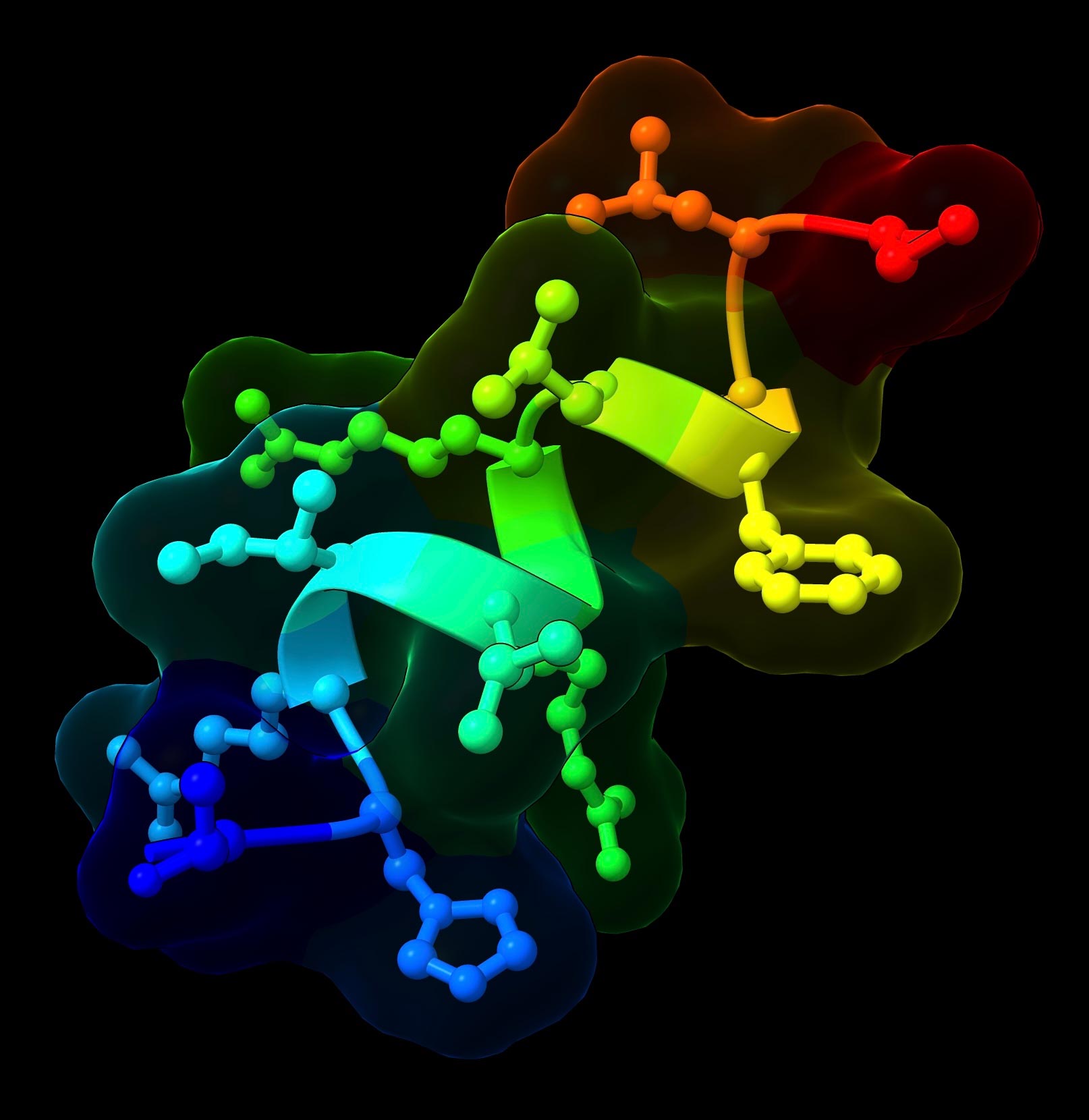
Svensson, the senior author of the study published on March 5 in Nature, has co-founded a company to begin clinical trials of the newly discovered molecule in humans in the near future. The study’s lead author is Laetitia Coassolo, PhD, a senior research scientist.
The research was made possible by the use of artificial intelligence, which helped analyze dozens of proteins from a class known as prohormones. Prohormones are biologically inert molecules that become active when they are cleaved by other proteins into smaller pieces called peptides; some of these peptides then function as hormones to regulate complex biological outcomes, including energy metabolism, in the brain and other organs.
Each prohormone can be divided in a variety of ways to create a plethora of functional peptide progeny. But with traditional methods of protein isolation, it’s difficult to pick peptide hormones (which are relatively rare) out of the biological soup of the much more numerous natural byproducts of protein degradation and processing.
The researchers focused on the prohormone convertase 1/3, which separates prohormones at specific amino acid sequences and is known to be involved in human obesity. One of the peptide products is glucagon-like peptide 1, or GLP-1, which regulates appetite and blood sugar levels; semaglutide works by mimicking the effect of GLP-1 in the body. The team turned to artificial intelligence to help them identify other peptides involved in energy metabolism.
Peptide Predictor
Instead of manually isolating proteins and peptides from tissues and using techniques like mass spectrometry to identify hundreds of thousands of peptides, the researchers designed a computer algorithm they named Peptide Predictor to identify typical prohormone convertase cleavage sites in all 20,000 human protein-coding genes. They then focused on genes that encode proteins that are secreted outside the cell — a key characteristic of hormones — and that have four or more possible cleavage sites. Doing so narrowed down the search to 373 prohormones, a manageable number to screen for their biological effects.

“The algorithm was absolutely key to our findings,” Svensson said.
Peptide Predictor predicted that prohormone convertase 1/3 would generate 2,683 unique peptides from the 373 proteins. Coassolo and Svensson focused on sequences likely to be biologically active in the brain. They screened 100 peptides, including GLP-1, for their ability to activate lab-grown neuronal cells.
As expected, the GLP-1 peptide had a robust effect on the neuronal cells, increasing their activity threefold over control cells. But a small peptide made up of just 12 amino acids bumped up the cells’ activity tenfold over controls. The researchers named this peptide BRP based on its parent prohormone, BPM/retinoic acid inducible neural specific 2, or BRINP2 (BRINP2-related-peptide).
When the researchers tested the effect of BRP on lean mice and minipigs (which more closely mirror human metabolism and eating patterns than mice do) they found that an intramuscular injection of BRP prior to feeding reduced food intake over the next hour by up to 50% in both animal models. Obese mice treated with daily injections of BRP for 14 days lost an average of 3 grams — due almost entirely to fat loss — while control animals gained about 3 grams over the same period. The mice also demonstrated improved glucose and insulin tolerance.
Behavioral studies of the mice and pigs found no differences in the treated animals’ movements, water intake, anxiety-like behavior, or fecal production. And further studies of physiological and brain activity showed that BRP activates metabolic and neuronal pathways separate from those activated by GLP-1 or semaglutide.
The researchers hope to identify the cell-surface receptors that bind BRP and to further dissect the pathways of its action. They are also investigating how to help the peptide’s effects last longer in the body to allow a more convenient dosing schedule if the peptide proves to be effective in regulating human body weight.
“The lack of effective drugs to treat obesity in humans has been a problem for decades,” Svensson said. “Nothing we’ve tested before has compared to semaglutide’s ability to decrease appetite and body weight. We are very eager to learn if it is safe and effective in humans.”
Reference: “Prohormone cleavage prediction uncovers a non-incretin anti-obesity peptide” by Laetitia Coassolo, Niels B. Danneskiold-Samsøe, Quennie Nguyen, Amanda Wiggenhorn, Meng Zhao, David Cheng-Hao Wang, David Toomer, Jameel Lone, Yichao Wei, Aayan Patel, Irene Liparulo, Deniz Kavi, Lianna W. Wat, Saranya Chidambaranathan Reghupaty, Julie Jae Kim, Tina Asemi, Ewa Bielczyk-Maczynska, Veronica L. Li, Maria Dolores Moya-Garzon, Nicole A. J. Krentz, Andreas Stahl, Danny Hung-Chieh Chou, Liqun Luo and Katrin J. Svensson, 5 March 2025, Nature.
DOI: 10.1038/s41586-025-08683-y
Researchers from the University of California, Berkeley; the University of Minnesota; and the University of British Columbia contributed to the work.
The study was funded by the National Institutes of Health (grants R01DK125260, P30DK116074, K99AR081618 and GM113854), the SPARK Translational Research Program at Stanford, Stanford Bio-X, the Stanford Maternal and Child Health Research Institute, the American Heart Association, a Stanford Medicine Dean’s Fellowship Award, the Carlsberg Foundation, and the Wu Tsai Human Performance Alliance.
Svensson and Coassolo are inventors on patents regarding BRP peptides for metabolic disorders. Svensson is a co-founder of Merrifield Therapeutics.
Never miss a breakthrough: Join the SciTechDaily newsletter.
Follow us on Google and Google News.
47 Comments
I wonder when this turns into reality. There is always some findings but rarely it is set for use.
It will be patient. O was thinking how are they going to charge? Because big pharmacy on one side natural supplements on the other that are expensive leaves Us out in the cold!! And nobody cold!!🙃😢
Right! There’s alot of publications but where is the translational medicine to put the knowledge in good use.
Just to clarify, you can purchase GLP-1 by CODEAGE on Amazon for about $26. I am sure it is also available on its own website. There are a few other companies that make the same formulation of
1.Clostridium butyricum
2. Akkermansie Muciniphile
3. Bifidobacterium Infantis.
But most are far more expensive or come from companies outside of the US. I am just a person who was fortunate enough to find out about this and find one that is reasonably priced. I hope you can find this too.
Do the right thing like scientists before make it affordable for the actual general public that cannot afford the insurance denials for coverage or a thousand dollar copay like the healers before you that were not interested in money, only the health of of people. Thank you and congratulations on your discovery!
You will never succeed in life if you expect ppl to solve your problems for you. Ozempic is an admission of a failure of character. I’d rather be fat
Lol. You’re going to die alone
Best comment in this thread.
Be fat then! GLP1 is an aid to assist people with diabetes It helps get blood sugar levels down and helps diabetes people loose some weight. It helps achieve better health, like many other drugs. It’s helping save some people’s lives
Wonder if you felt the same way about any drug that helped the heart kidneys or any other organ. After all one crutches the same as another… (And by that I mean seriously useful for certain conditions.) You don’t scold anybody for hopping around with a crutch when they have a broken leg after all.
All you’re doing is trying to belittle people who have tried to lose weight but their body is resistant to it. And now you’re telling them it’s their own fault even though it’s their body hormone composition.
Lol, edgelord..
Right?!
We have the most complicated tool-making processes ever to have even been possible because of what others have been able to learn based upon the learnings of others, but OK why use some fancy hammer for a specific job when a rock might work OK too? 🙄 Edgelord.
The article infers that BRP is natural but does not indicate how the body would receive it, except through lab chemicals. If it were natural, there would be a natural way to ingest it, through diet or vitanutrients. How is BRP natural???
It’s found in brains. Human and mice so far… time to get harvesting!
EXACTLY!
Right
Na bhai Na will have to purchase all new pants.
I would like to be a test subject, where do I sign up?
Eat more vegetables and avoid processed crap and sugar. Walk a lot.
We’ve already found the “secret” to weight loss. Eat REAL food, move your body, get outside and love your life!
That’s a pretty short-sighted and ignorant comment. It is not that easy for many people. It would be nice if it were that simple but as I am sure you are aware, not all bodies are the same. What works for one isn’t guaranteed to work for another, or not in the same way. The point of this research is to make weight loss possible for everyone when traditional methods have not worked.
^^^^^^ Agreed
i agree with you not everyones body is the same. I can eat less then my partner, move more everyday and he can lose weight while I gain or stay the same, So Katrina and Eric before you think you know what you are talking about do your research.
That’s simply because he is a male. Men can generally lose weight faster and easier than females. That is thanks to hormones in women.
I agree Ariel. I’m one of those people! I’m 75, the odds are sort of against me, due to the age restrictions policy that some companies uphold. I have high BP and Cholesterol, and losing weight would lower my numbers. My PCP prescribed Wegovy, but health insurance denied it.
All Ozempic does is suppress your appetite which you ought to be able to do with your mind. I get that everbody’s metabolism is different and that some people can eat whatever they want and stay thin whilst others eating less get fat, but ultimately it’s a simple formula: fat = intake – expenditure. So you don’t need Ozempic, you need stronger will power.
No.
There’s literally these hormones that control your appetite — do you think people can alter their hormones and chemistry by will power? If that were the case, no one would be fat. Do you think we can control our cholesterol levels too with will power?
Can people get rid of diabetes as well, with will power?
They don’t just hand out peptides like candy, to anyone who want to lose weight.
The reason the out of control appetite is there, is because the body is out of control — when you introduce these peptides, it becomes as easy as you suggest, as it should be — that’s literally the point of medication, like sleeping pills — or can we fix that with will power too? “Activate will power – 😴”
Also eat more protein than carbs 3:1 ratio.
Doesn’t work that way for everyone. You be you, others will continue to struggle. AND butt out where your opinion doesn’t belong.
The takeaway should be that since this is naturally occurring peptide, it should be like any other in that some people will naturally make more, or less, than others. And it’s not something a person can control. It just happens. Therefore, weight control IS like any other ailment people cannot control by mere choice. It actually is a disease like cancer or any other. Some people are prone to it. Some are not. This should end the mockery about just eating better as if it is just a choice. It is the same stupidity as telling someone to just get less cancer. Just get less ugly. Just get taller.
Odd that previous generations had the same genes and did not see current levels of obesity… Or that obesity is rising rapidly in Asian countries where their diet is becoming Westernised.
We’ve moved from a farming society to big cities and cars. Then the computer revolution and most people are very seditary. at their jobs. We went from working fields, to driving cars everywhere instead of walking or horse and buggy. Now most people won’t walk 2 blocks, they drive. Evolution has not kept up with the changes in our complete style of living and working. Farming is back breaking work, but there were fat farmers. Technology exploded and we got stuck at a desk all day, burning few calories.
Is it any wonder that bei g overweight became more normal than being a healthy weight? It’s not just in America either. It’s a world wide epidemic. Being overweight has genetic components, our lifestyles have dramatically changed, and soil is tapped out, no longer adding nutrition to food. Being overweight isn’t simple. Many things are at play. To just say eat less, shows a lack of understanding about the body and why people have trouble losing weight.
Right Hypothyroidism is just a hoax!!
Stop being an enabler. Everyones body works the same, more or less. If you consume less calories than you use through the day you will lose weight. It really is that simple.
Basic exercise 2 times a week that takes 30-45 minutes each time and doesn’t require much more than a set of dumbbells or a couple kettlebells.
Do you have 90 minutes a week for your health? If not that’s on you.
I wish I was going to be around to see if you feel the same when you get into your 70s, if you live as long as I have.
100 percent.
Ok, another substance that might be helpful that only the rich will have access to.🥳
No they don’t. Lower caloric intake does not always result in weight loss. Educate yourself before you continue to display your ignorance.
Keep up with the science. They’ve proven this is NOT the case. Stop being an enabler to the fat phobic and the bullies who push an agenda for acceptable discrimination.
Nurse here, and it actually isn’t. Certain conditions, person could be eating 900 calories a day and their body will fight to hold every calorie onto it. Your statement just shows that you really don’t understand the human body and should butt out of other people’s business. 🤷
How much and where to buy
It probably won’t be available for years yet because of all the rigorous testing it’s going to have to undergo. You can’t buy it now but you should invest in your health one way or another.
This ozempic thing is sad and this article is depressing. You lose weight by doing math and understanding psychology. Shave calories and work out 2 hours a day. Avoid cardio as it’s a waste of time. Dropped 50lbs in 4 months while adding significant muscle mass.
Can you tell that to my hypothyroidism, PCOS and endometriosis? For years I have worked out 14hours a week and my caloric intake is 1200cal per day. Home cooked protein and vegetables yet somehow all I’ve managed to do it continue to gain weight? Not everybody is the same.
No. This is patently false. For many obese patients, their metabolism has shifted so far into the over fed state that they no longer respond appropriately to signals for safety and hunger. While some can use “will power” to ignore the constant, of inappropriate, signals to eat more food, this is is direct conflict with your brain telling you that you must eat more food
WHEN IS THIS GOING INTO A TRIAL OR AVAILABLE TO THE PUBLIC?