
Laser spectroscopy has enabled non-invasive chemical analysis of Darwin’s preserved specimens, improving long-term museum conservation.
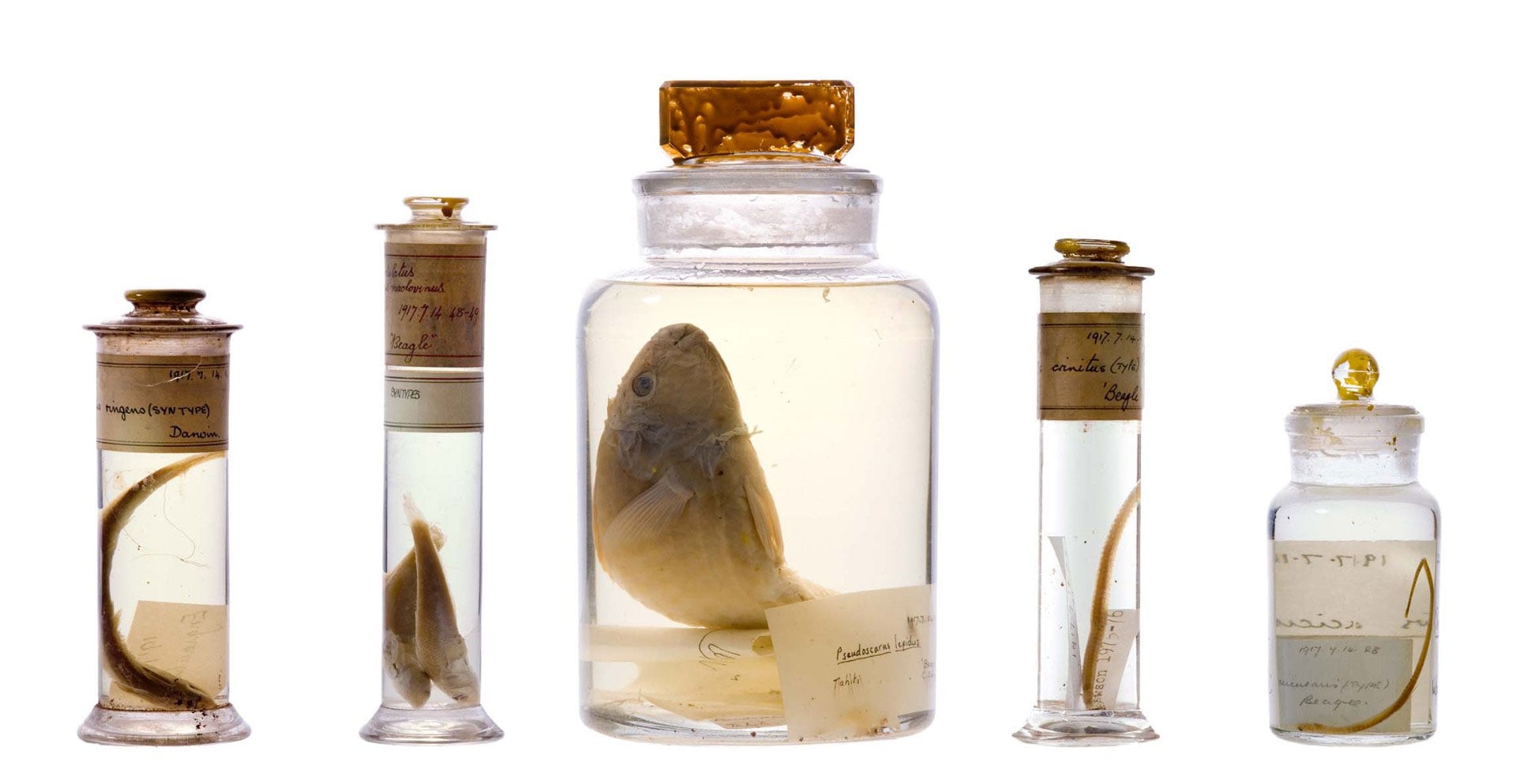
Researchers have carried out a detailed analysis of Charles Darwin’s original specimens from his HMS Beagle voyage (1831 to 1836) to the Galapagos Islands, using a method that does not require opening their centuries-old jars.
In an important step for museum conservation, the team examined the contents of the preservation fluids while the containers remained sealed, avoiding any risk to the fragile material inside.
Examining 46 historic specimens
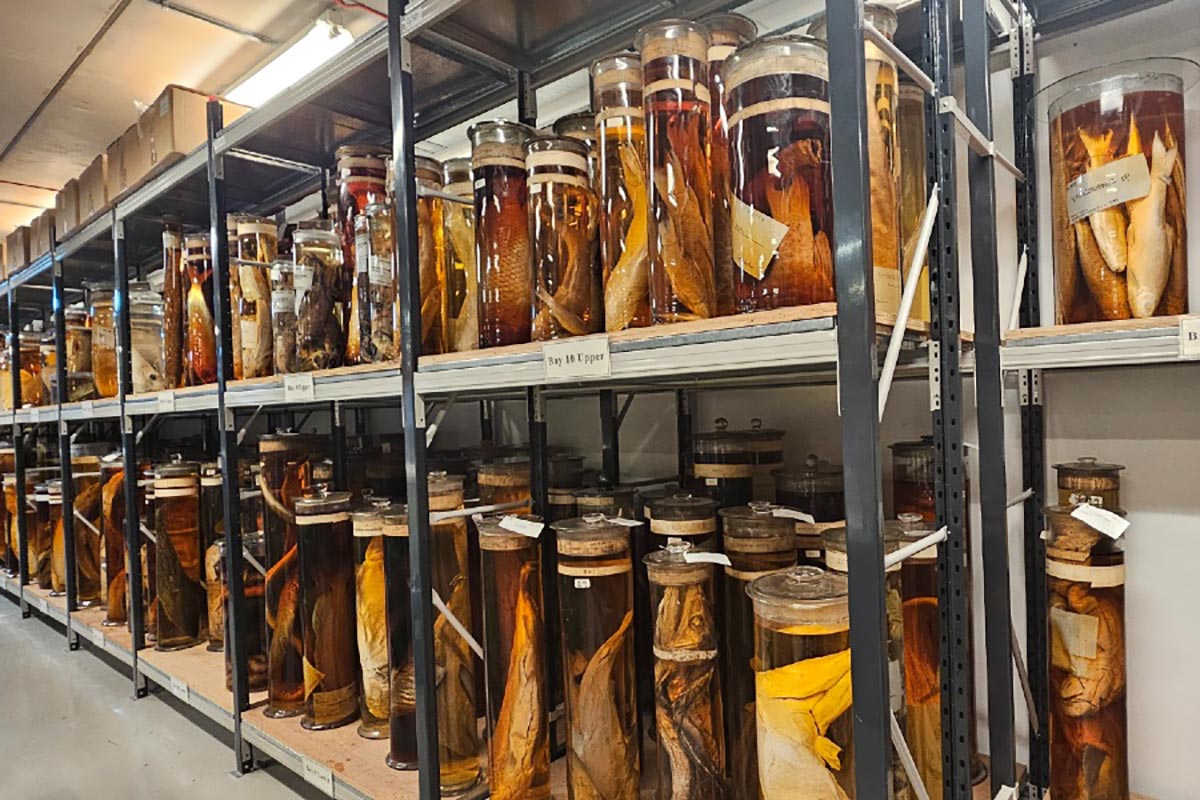
The study focused on 46 historic specimens housed at the Natural History Museum in London. The collection included mammals, reptiles, fish, jellyfish, and shrimps gathered by Darwin and other naturalists during the expedition.
The results showed that preservation practices varied depending on both the type of organism and the period in which it was stored. Mammals and reptiles were generally fixed in formalin before being transferred to ethanol for long-term storage. Invertebrates, by contrast, were sometimes kept in formalin, buffered solutions, or mixtures that included additives such as glycerol.
When tested, the technique successfully identified the preservation fluids in about 80 percent of the specimens, with partial identification achieved in another 15 percent. In addition to analyzing the liquids, the method also revealed whether jars were made of glass or plastic, offering further clues about how conservation approaches have changed over time.
80% of samples correctly identified
The technique correctly identified fluids in approximately 80% of cases tested, with partial identification in another 15%.
It also determined the types of glass or plastic containers used, providing insights into how storage methods have evolved over time.
Portable laser techniques
Researchers used a portable laser spectroscopy method called Spatially Offset Raman Spectroscopy (SORS) to peer through glass and identify the chemical composition of preservation fluids.
SORS performs chemical analysis by shining a laser light into a container and inspecting the changes in wavelength that occur when the light is reflected.
These changes indicate the presence of different chemical components within it.
SORS, originally developed at STFC’s Central Laser Facility, is the same technique which is used in airport scanners all over the world through Agilent Technologies.
Dr. Sara Mosca, STFC Central Laser Facility said: “Until now, understanding what preservation fluid is in each jar meant opening them, which risks evaporation, contamination, and exposing specimens to environmental damage.
This technique allows us to monitor and care for these invaluable specimens without compromising their integrity.”
Impact for museums worldwide
There are over 100 million fluid-preserved specimens housed in museums worldwide.
For collection curators, knowing the exact composition of preservation fluids is essential for monitoring specimen condition.
The ability to analyze preservation fluids non-invasively offers conservators and curators a new tool for monitoring collection health and intervening before problems arise.
Transforming the study of natural history
Wren Montgomery, research technician at the Natural History Museum, says: “As part of NHM Unlocked, here at the Museum, we can analyze jars containing specimens without opening and disturbing their integrity.
This work is the next step in demonstrating the Museum’s commitment to transforming the study of natural history.
Analyzing the storage conditions of precious specimens, and understanding the fluid in which they are kept, could have huge implications for how we care for collections and preserve them for future research for years to come.”
Reference: “In Situ Analysis of Historical Preservation Fluids in Sealed Containers with Spatially Offset Raman Spectroscopy” by Ana Blanco, Wren Montgomery, Sam Walker, Chelsea McKibbin, Robert Stokes, Pavel Matousek and Sara Mosca, 13 January 2026, ACS Omega.
DOI: 10.1021/acsomega.5c09045
Never miss a breakthrough: Join the SciTechDaily newsletter.
Follow us on Google and Google News.