
Close Menu
    Facebook X (Twitter) Instagram
    SciTechDaily
    • Biology
    • Chemistry
    • Earth
    • Health
    • Physics
    • Science
    • Space
    • Technology
    Facebook X (Twitter) Pinterest YouTube RSS
    SciTechDaily
    Home»Earth»When History Repeats: Ancient Octopus Genetics Indicate Potential West Antarctic Ice Sheet Collapse
    Earth

    When History Repeats: Ancient Octopus Genetics Indicate Potential West Antarctic Ice Sheet Collapse

    By American Association for the Advancement of ScienceFebruary 8, 2024No Comments3 Mins Read
    Facebook Twitter Pinterest Telegram LinkedIn WhatsApp Email Reddit
    Share
    Facebook Twitter LinkedIn Pinterest Telegram Email Reddit
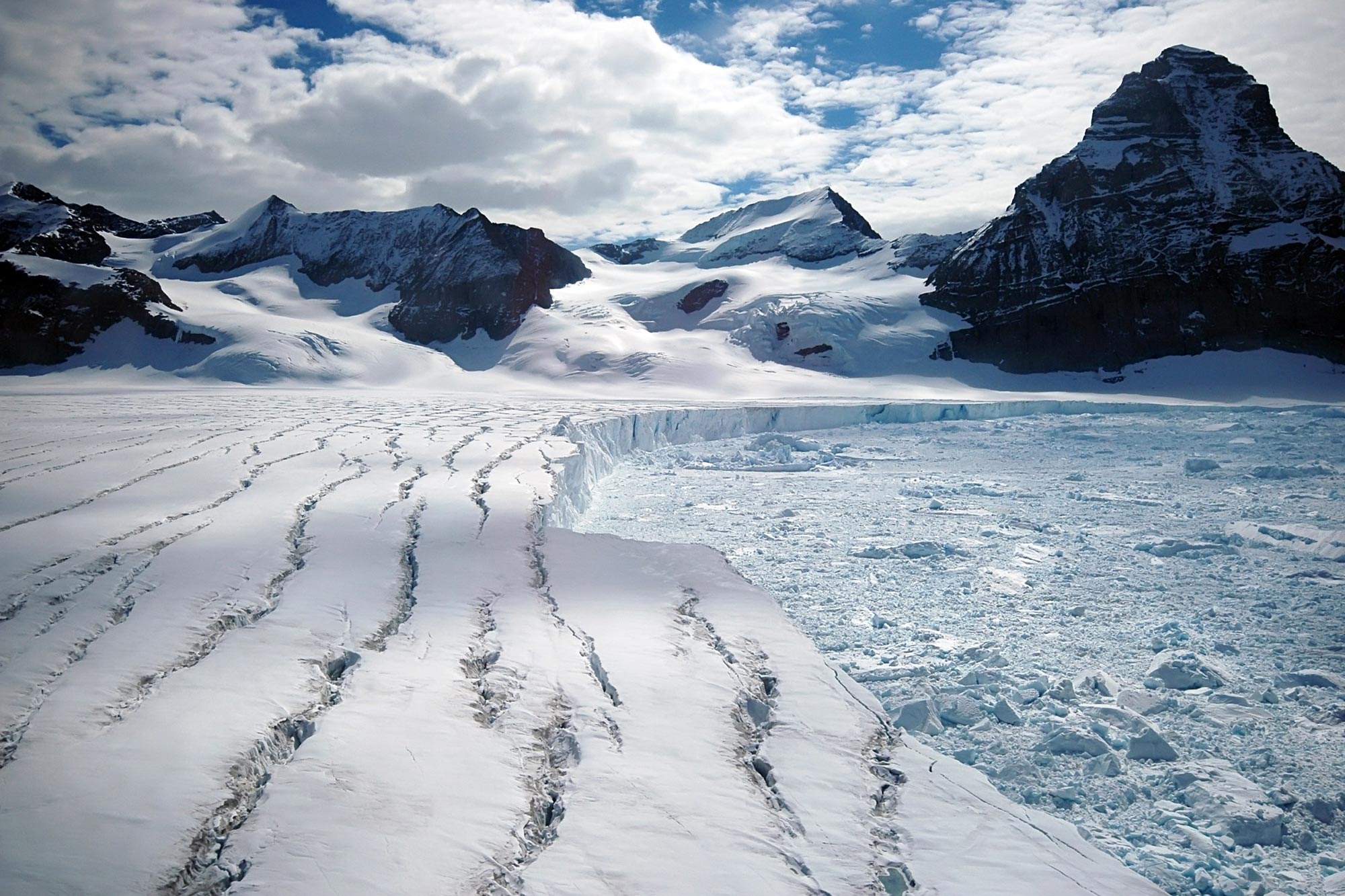
    Antarctic Ice Sheet Glacier
    Research using genetic data from Turquet’s octopus suggests that the West Antarctic Ice Sheet collapsed during the Last Interglacial period due to modest temperature increases. This discovery highlights the WAIS’s vulnerability to even slight warming, posing significant risks under current climate change trajectories.

    Genetic studies of an Antarctic octopus reveal that the collapse of the West Antarctic Ice Sheet (WAIS) occurred in the Last Interglacial period, approximately 129,000 to 116,000 years ago, during a time when temperatures were roughly 1 degree Celsius (°C) higher than those before the industrial era. These results imply that even the slightest increases in temperature, as predicted by the most hopeful climate change mitigation scenarios, could lead to the disintegration of the WAIS and subsequent sea-level rise.

    Climate change is driving unprecedented change to Earth’s cryosphere. The West Antarctic Ice Sheet is considered particularly vulnerable to warming temperatures and may be headed towards irreversible collapse under future climate change trajectories. The ice sheet’s tipping point may lie within the current global climate targets of 1.5 to 2 °C. Total WAIS collapse would likely have devastating global ramifications. It’s estimated that WAIS collapse alone could raise the average global sea level by roughly 3 to 5 meters.

    Antarctic Octopus Genetic Analysis

    Understanding how the WAIS responded to warming climate in the past, like during the Last Interglacial period, when global sea levels were 5 to 10 meters higher and temperatures were ~0.5 to 1.5 °C warmer than preindustrial levels, could help resolve the fate of the WAIS in our rapidly warming future.

    However, it remains unclear just how vulnerable the WAIS has been to rapid change in the past. Although a growing body of evidence seems to suggest that the WAIS may have collapsed during the Last Interglacial, current oceanographic and modeling studies have yielded conflicting and inconclusive results.

    Here, Sally Lau and colleagues leverage a unique and unexpected dataset to address this question – the genetic history of Turquet’s octopus (Pareledone turqueti). Modern populations of the circum-Antarctic benthic octopus found in the Weddell, Amundsen, and Ross Seas are geographically isolated and separated by the WAIS.

    Implications and Perspectives

    Lau et al.sequenced genome-wide single nucleotide polymorphisms in 96 octopuses collected from around the Southern Ocean. Although the populations are genetically distinct, the authors discovered some signs of admixture, revealing a historical gene flow between the Ross Sea and the Weddell Sea. Moreover, demographic modeling of these populations suggests that this admixture occurred during the Last Interglacial. Lau et al. argue that these persistent and historic signals of gene flow could only be possible if the two seas were connected by an interior open waterway where the WAIS now sits grounded below sea level, suggesting complete WAIS collapse during the Last Interglacial.

    “Whether or not this analysis withstands further scrutiny and the test of time, the implications of this result pose some intriguing questions, including whether this history will be repeated, given Earth’s current temperature trajectory,” write Andrea Dutton and Rob DeConto in a related Perspective.

    Reference: “Genomic evidence for West Antarctic Ice Sheet collapse during the Last Interglacial” by Sally C. Y. Lau, Nerida G. Wilson, Nicholas R. Golledge, Tim R. Naish, Phillip C. Watts, Catarina N. S. Silva, Ira R. Cooke, A. Louise Allcock, Felix C. Mark, Katrin Linse and Jan M. Strugnell, 21 December 2023, Science.
    DOI: 10.1126/science.ade0664

    Never miss a breakthrough: Join the SciTechDaily newsletter.
    Follow us on Google and Google News.

    American Association for the Advancement of Science Climate Change Climatology Evolutionary Biology Ice Melt
    Share. Facebook Twitter Pinterest LinkedIn Email Reddit

    Related Articles

    Arctic’s Cooling Power Has Plummeted by 25%, Alarming Study Reveals

    Satellite Records Show Antarctic Sea Ice Reaches New Record Maximum

    Plants May Not be Able to Keep Pace With Warming Temperatures

    A Comprehensive Review on the Ice Melt in Antarctica & Greenland

    Changing Gulf Stream Is Destabilizing Gases Trapped in Sediments

    Record Arctic Snow Melt Might Be Prolonging American Drought

    Arctic Sea Ice Melt Might Spur Extreme Weather Conditions in Europe

    Greenland Ice Sheet May Slow Its Melting Quicker Than Expected

    Unusually High Frequency of Heatwaves Indicates Human Influence on Global Warming

    Leave A Reply Cancel Reply

    • Facebook
    • Twitter
    • Pinterest
    • YouTube

    Don't Miss a Discovery

    Subscribe for the Latest in Science & Tech!

    Trending News

    One of the Universe’s Largest Stars May Be Getting Ready To Explode

    Scientists Discover Enzyme That Could Supercharge Ozempic-Like Weight Loss Drugs

    Popular Sweetener Linked to DNA Damage – “It’s Something You Should Not Be Eating”

    Ancient “Rock” Microbes May Reveal How Complex Life Began

    Researchers Capture Quantum Interference in One of Nature’s Rarest Atoms

    “A Plague Is Upon Us”: The Mass Death That Changed an Ancient City Forever

    Scientists Discover Game-Changing New Way To Treat High Cholesterol

    This Small Change to Your Exercise Routine Could Be the Secret to Living Longer

    Follow SciTechDaily
    • Facebook
    • Twitter
    • YouTube
    • Pinterest
    • Newsletter
    • RSS
    SciTech News
    • Biology News
    • Chemistry News
    • Earth News
    • Health News
    • Physics News
    • Science News
    • Space News
    • Technology News
    Recent Posts
    • Revolutionary Imaging Technique Unlocks Secrets of Matter at Extreme Speeds
    • Where Does Mass Come From? Scientists Find Evidence of a New Exotic Nuclear State
    • Quantum Breakthrough: Unhackable Keys Sent Over 120 km Using Quantum Dots
    • Researchers Discover Unknown Beetle Species Just Steps From Their Lab
    • Jellyfish Caught Feasting on Exploding Sea Worms for the First Time
    Copyright © 1998 - 2026 SciTechDaily. All Rights Reserved.
    • Science News
    • About
    • Contact
    • Editorial Board
    • Privacy Policy
    • Terms of Use

    Type above and press Enter to search. Press Esc to cancel.