
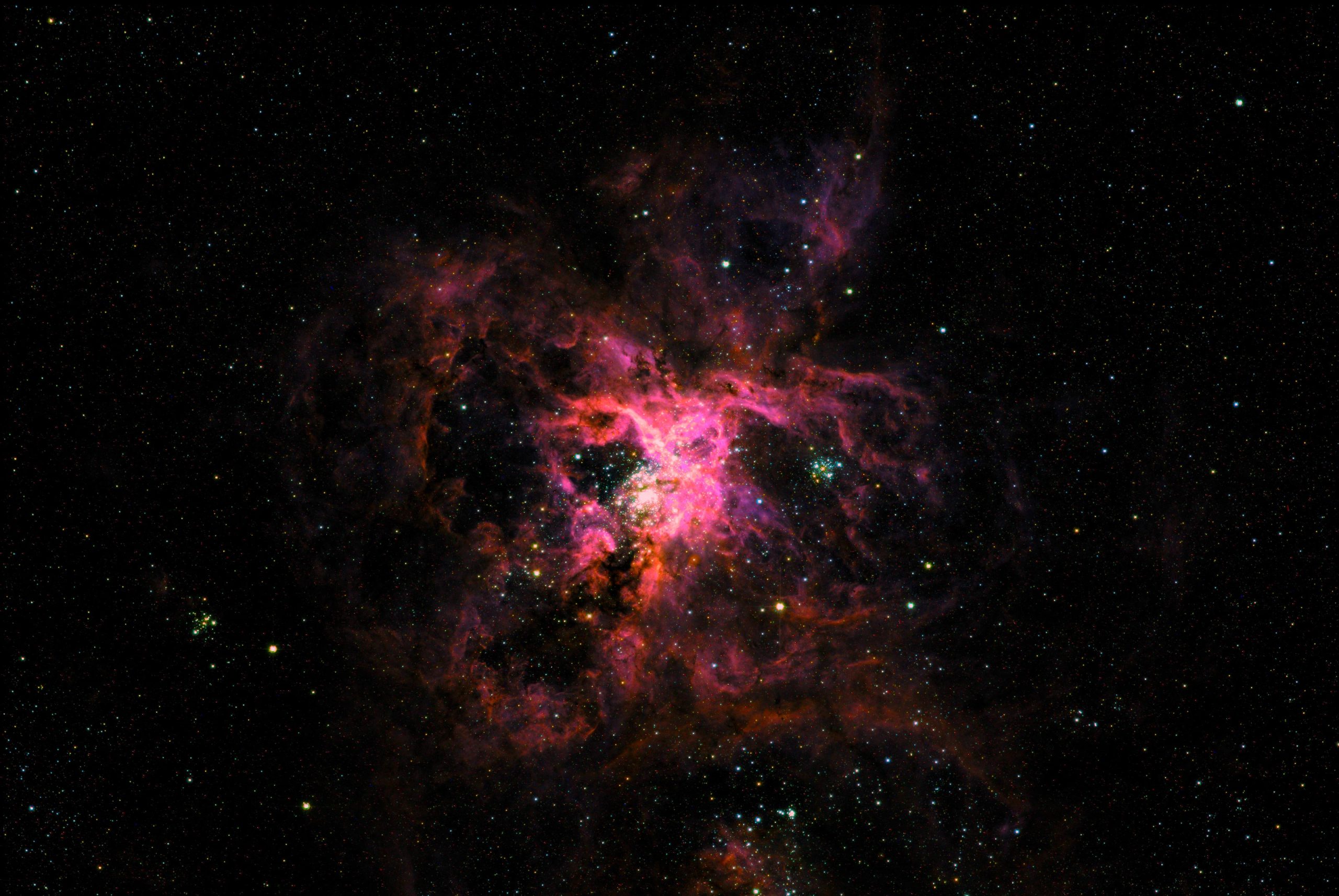
And the recovery journey involving a smashed telescope, a cougar scare, and police.
Data from a NASA mission to map dark matter around galaxy clusters has been saved by a new recovery system designed by scientists at the University of Sydney. The system allowed the retrieval of gigabytes of information, even after communication failed and the balloon-based telescope was damaged in the landing process.
Mission Overview
In April, the Super Pressure Balloon Imaging Telescope (SuperBIT) was launched from Wānaka Airport, New Zealand, suspended under a helium-filled balloon the size of a sports stadium on top of the Earth’s atmosphere, and floated around the world 5.5 times. Unfortunately, it was damaged on landing in southern Argentina the following month.

Data Recovery Success
Separately, two Data Recovery System packages storing more than 200 gigabytes of SuperBIT’s information descended by parachute and landed safely, including a map of dark matter around galaxies and stunning photos of space. Dark matter is an invisible substance that has a mass six times greater than regular matter in the universe.
Study Details and System Design
A study led by Dr. Ellen Sirks from the University of Sydney’s School of Physics, published today in the journal Aerospace, provides instructions to build the Data Recovery System she designed, and recounts the mission that demonstrated, for a relatively small cost, scientists can ensure the information they gather can be salvaged in the worst-case scenario.

System Importance and First Use
The authors of the study, comprised of a team of international scientists from Australia, the United Kingdom, the United States, Canada, Europe, and Taiwan, said that the first use of the Data Recovery System capsules during a live science mission proved a huge success.
“Our telescope got to the point where it was completely destroyed, and we lost high bandwidth communications, so not only did the Data Recovery System work; it was really quite essential to the mission’s success,” Dr. Sirks said.
“When you’re dropping something from the sky, in our case from 33 kilometers, there’s always a chance that something goes wrong, so recovery packages are quite essential to keep your data safe.
“This drop package is something we’ve been developing for about five years, but only now have we been able to test it in its final configuration. It’s got to the point where NASA wants to start producing these packages for other science missions as well, so this was really our final test to show that this system works.”
System Components and Recovery Process
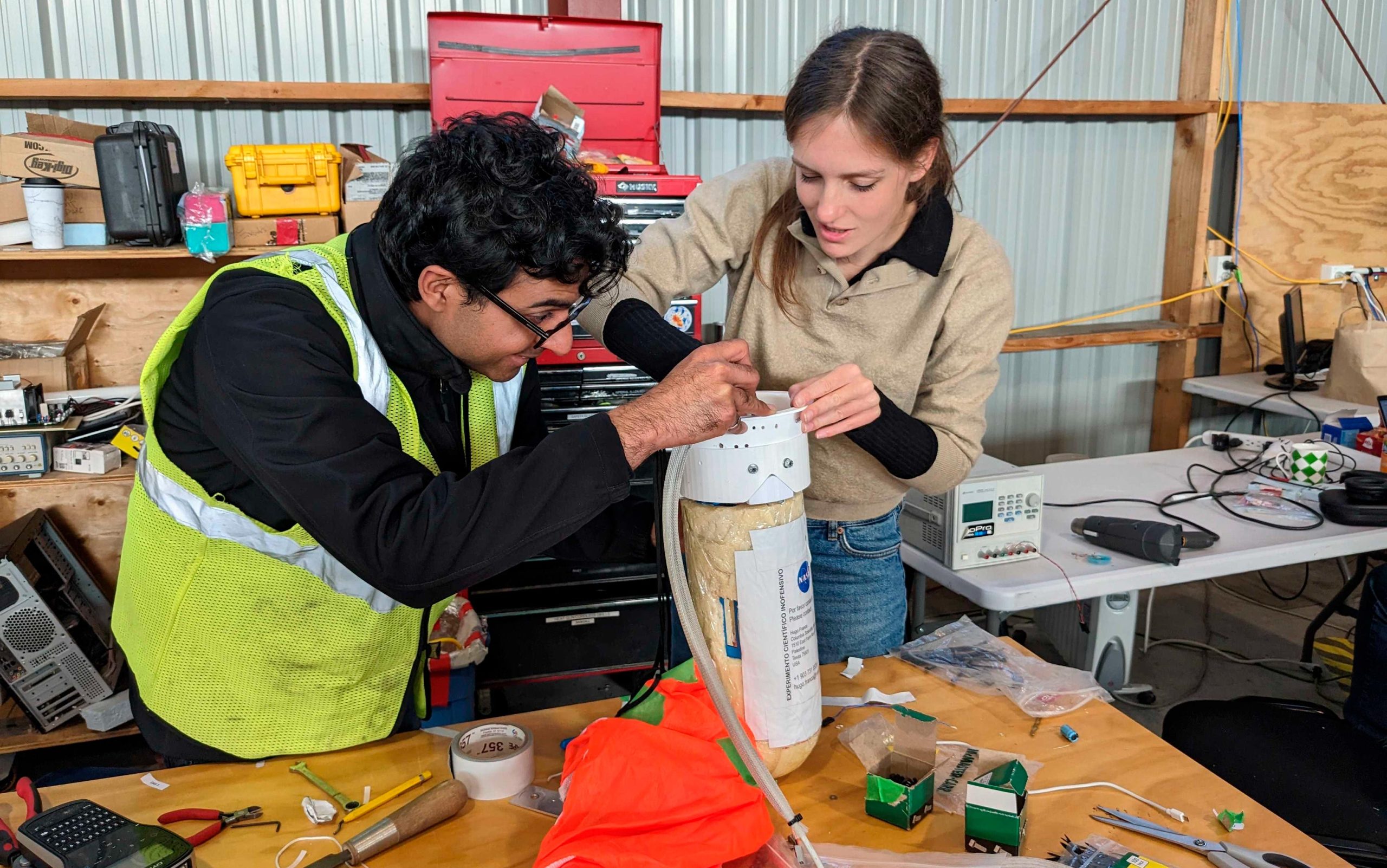
Dr. Sirks said Data Recovery Systems are comprised of small computers with SD cards to store the data, a home-made “find my phone” satellite link, and parachutes – housed in foam enclosures using everyday objects such as chicken roasting bags to keep them waterproof.
The story of recovering the packages itself was a mission. Dr. Sirks said the local police in the Argentinian countryside helped retrieve the packages, given the rough terrain where they landed.
“We couldn’t find one at first and when we did, there were cougar tracks in the snow near it, so we thought maybe the chicken roast bag was not the best idea. It was quite funny. But we did retrieve them quite easily,” Dr. Sirks said.
Data Retrieval Methods in Balloon Missions
In a typical balloon-based mission like NASA’s, data is downloaded by satellite, but Dr. Sirks said scientists often need line-of-sight communication to download the data quickly, which isn’t always efficient or possible.
Balloon-based observations also provide the quality of space telescopes at a fraction of the budget – millions of dollars compared to billions.
“In our case, we were getting so much data per night that it would just be incredibly slow and expensive to retrieve this data mid-flight,” Dr. Sirks said.
“At the moment, the most efficient way for us to download data is to copy it onto an SD drive and just drop it to Earth which is kind of crazy, but it works well.”
Reference: “Data Downloaded via Parachute from a NASA Super-Pressure Balloon” by Ellen L. Sirks, Richard Massey, Ajay S. Gill, Jason Anderson, Steven J. Benton, Anthony M. Brown, Paul Clark, Joshua English, Spencer W. Everett, Aurelien A. Fraisse, Hugo Franco, John W. Hartley, David Harvey, Bradley Holder, Andrew Hunter, Eric M. Huff, Andrew Hynous, Mathilde Jauzac, William C. Jones, Nikky Joyce, Duncan Kennedy, David Lagattuta, Jason S.-Y. Leung, Lun Li, Stephen Lishman, Thuy Vy T. Luu, Jacqueline E. McCleary, Johanna M. Nagy, C. Barth Netterfield, Emaad Paracha, Robert Purcaru, Susan F. Redmond, Jason D. Rhodes, Andrew Robertson, L. Javier Romualdez, Sarah Roth, Robert Salter, Jürgen Schmoll, Mohamed M. Shaaban, Roger Smith, Russell Smith, Sut Ieng Tam and Georgios N. Vassilakis, 13 November 2023, Aerospace.
DOI: 10.3390/aerospace10110960
Never miss a breakthrough: Join the SciTechDaily newsletter.
Follow us on Google and Google News.