

Math struggles in kids may stem from brains that have a harder time learning from mistakes—not just understanding numbers.
Researchers at Stanford University, led by Hyesang Chang, set out to understand why certain children have more difficulty learning math than others. In a new paper published today (February 9) in JNeurosci, the team examined how children approach numerical tasks and how their brains respond during learning.
To study this, children completed a series of trials where they chose which number was larger. Sometimes the quantities were shown as written numbers, and other times as groups of dots. The researchers then built a model that tracked how each child’s performance changed over time, rather than looking only at right or wrong answers.
Brain Activity Linked to Learning Difficulties
The model revealed a key difference between children with typical math skills and those who struggled. Children with math learning difficulties had trouble adjusting their problem-solving strategies after making mistakes, even when they encountered different types of errors. Instead of updating their approach, their performance tended to stay inconsistent across trials.
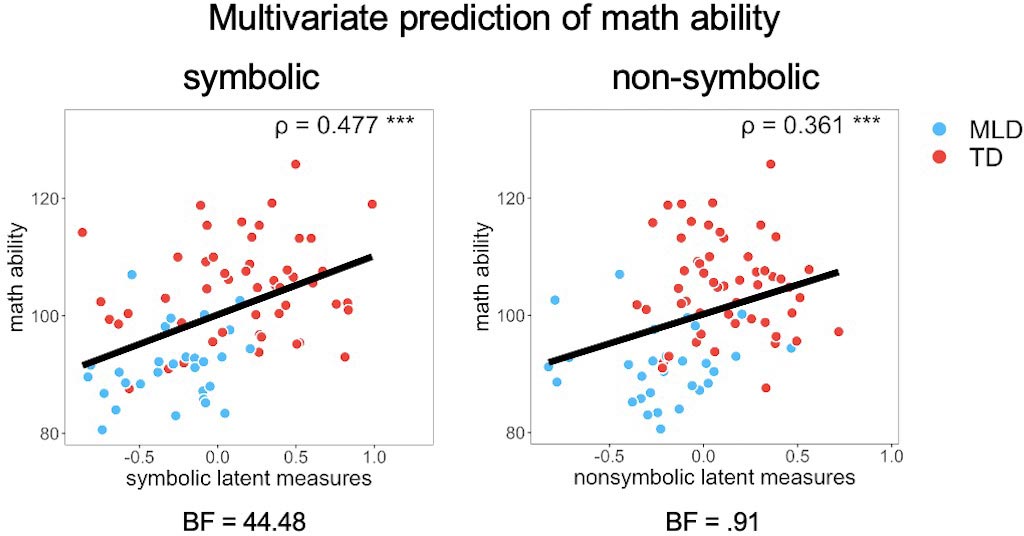
Brain imaging provided insight into why this pattern emerged. Children who struggled with math showed weaker activity in brain regions involved in monitoring performance and adjusting behavior. The researchers also found that reduced activity in these areas could predict whether a child was more likely to have typical or atypical math abilities.
Beyond Numbers Alone
The findings suggest that math difficulties may not be limited to understanding numbers themselves. Instead, some children may struggle because they have difficulty revising their thinking as they work through problems. According to Chang, “These impairments may not necessarily be specific to numerical skills, and could apply to broader cognitive abilities that involve monitoring task performance and adapting behavior as children learn.”
Looking ahead, the research team plans to test their model in larger groups of children, including those with other types of learning disabilities. Their goal is to better understand whether challenges with adapting strategies play a wider role in how children learn across different subjects.
Reference: “Latent neurocognitive mechanisms underlying quantity discrimination in children with and without mathematical learning disabilities” by Hyesang Chang, Percy K. Mistry, Yuan Zhang, Flora Schwartz and Vinod Menon, 8 February 2026, Journal of Neuroscience.
DOI: 10.1523/JNEUROSCI.2385-24.2025
Never miss a breakthrough: Join the SciTechDaily newsletter.
Follow us on Google and Google News.