

Even after almost two hundred years of technological change, U.S. cities continue to follow a consistent pattern that influences how they diversify and adapt over time.
A new investigation from the Complexity Science Hub (CSH) shows that across 170 years of U.S. economic history, the growth of cities follows a remarkably consistent rule. Even as urban centers expand and diversify, they tend to preserve a steady level of “coherence,” a measure of how closely their economic activities align with one another.
The study, conducted by Simone Daniotti, Matte Hartog, and Frank Neffke, drew on a vast dataset that includes 650 million U.S. census records, 6 million patents, and additional historical sources spanning almost two centuries of urban change.
“We observed that, on average, the cities that make up the U.S urban system transform gradually but surely over time–from craftsmanship and manufacturing to services and engineering. Despite this, they maintain a constant level of coherence for nearly two centuries,” explains CSH fellow Daniotti, first author of the study.
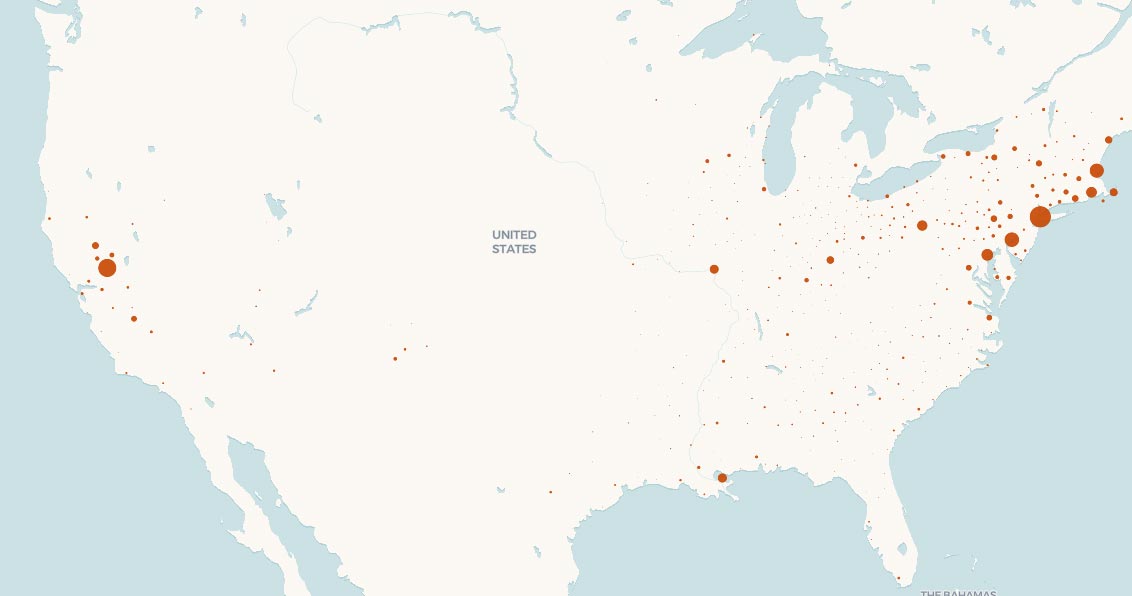
West Coast: rapid diversification, constant coherence
“This also happened and in the same way on the West Coast, which developed later and initially in isolation from the wider U.S.. In 1850, cities such as Los Angeles and San Francisco were just emerging there with the onset of the Gold Rush,” adds Daniotti, who is also a researcher at Utrecht University.
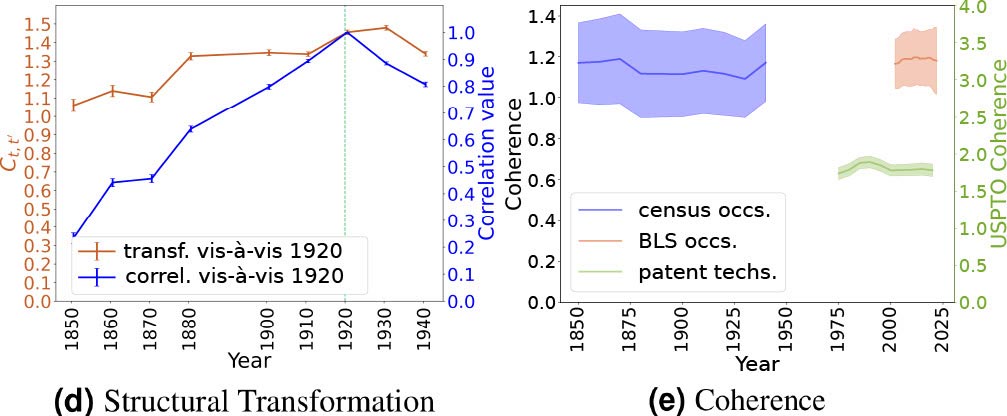
The study reveals that the West Coast experienced a rapid and far-reaching structural shift. “The transformation was massive–faster and more pronounced than on the East Coast,” says Daniotti. In 1850, less than half of all the export-oriented occupations that existed in the wider US were also practiced on the West Coast—but within just fifty years, that share had surged to nearly 90%. “But, despite rapid diversification, West Coast cities’ average coherence remained remarkable constant and at levels that were comparable to those of eastern US cities.”
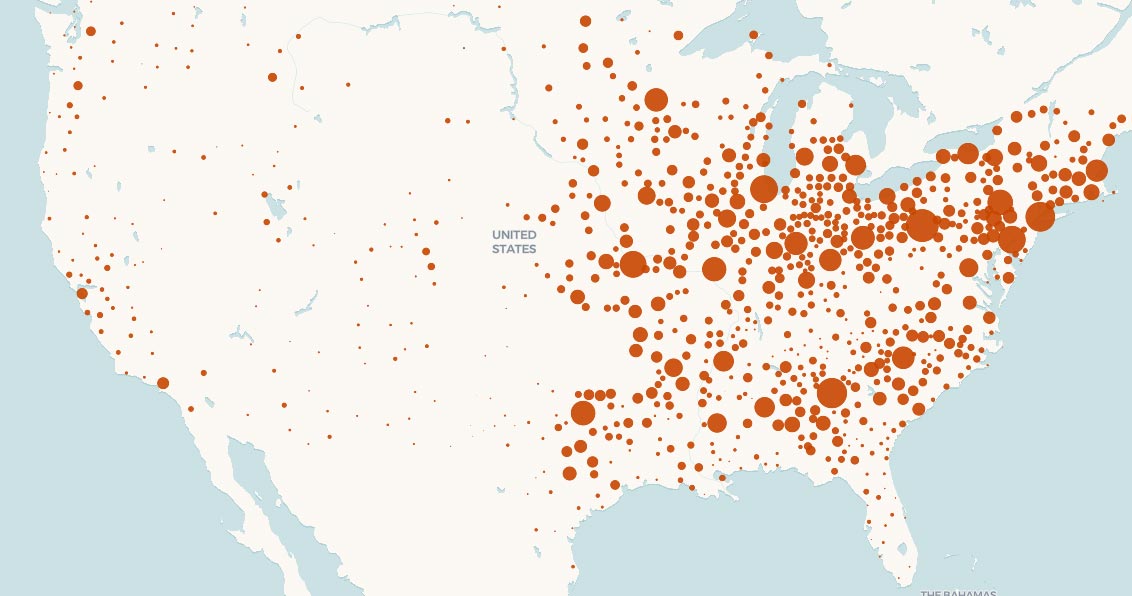
Why transformations are constrained
“The findings show that, although cities develop new activities and abandon old ones, they do so in a way that keeps their coherence constant. This suggests that such transformations are constrained: although cities can develop new activities and drop old ones, while doing so, the set of industries they maintain seems to need to stay coherent at any given point in time,” explains Neffke, who leads CSH’s Transforming Economies research group.
“So even in cases like Pittsburgh or Boston, which went through periods of prolonged decline and only emerged from those after abandoning their heavy manufacturing industries in steel and manufacturing for high-tech production and services, they needed to find a path that would allow them to do so without jeopardizing their coherence,” adds Neffke.
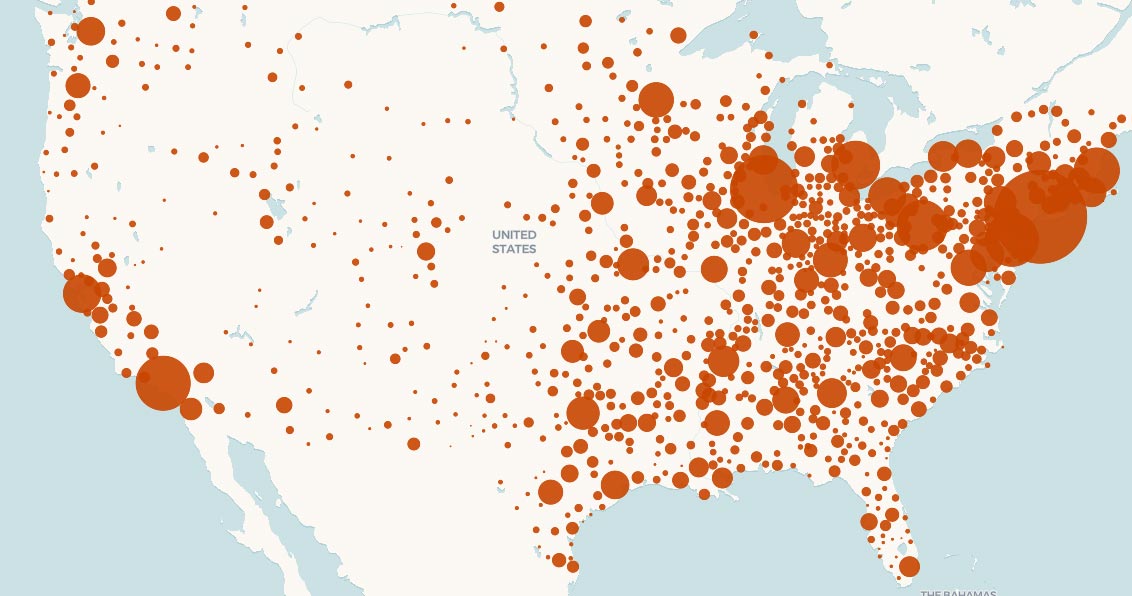
Size matters: coherence shrinks as cities grow
The study also found that bigger cities consistently display lower levels of coherence, with this measure dropping at a steady rate of around 4% whenever the population doubles. Despite sweeping technological changes—from railroads and telephones to mass production, computers, and AI—and a national population that expanded from roughly 23 million in 1850 to 332 million in 2022 while shifting steadily westward, the relationship between coherence and population size has remained unchanged.
“This suggests that the way economic activity is distributed within an urban system follows some universal regularities that constrain the amount of diversity that cities can maintain—keeping them coherent—based on the size of their population,” says Neffke.
Policy lessons: balancing diversification and coherence
A number of lessons can be learned from these findings by policymakers, according to the researchers. While the drive to branch out into emerging technologies is understandable, cities cannot spread themselves too thin—they must maintain a degree of coherence. “The reason is that the capability base that supports their existing economic structure and is embedded in local infrastructure, workforce, and institutions is expensive to maintain and therefore is ideally kept compact,” explains Neffke.
“However, larger cities can sustain a broader set of capabilities, which gives them more room for diversification. But the amount of diversity a city can realistically support is tied to its size. This highlights the importance of benchmarking cities against peers of similar sizes and to recognize that ambitions for diversification are ultimately constrained by size.”
What Coherence Means for Cities
In the study, coherence is the glue that holds a city’s economy together. It reflects how similar or connected two randomly chosen workers—or firms, or patents—in the same city are in terms of their occupations, industries, or technologies.
To explain this in simple terms, coherence combines three related ideas, according to Daniotti. First, the variety of activities a city hosts; second, the balance of how evenly these activities are spread across the workforce; and third, the disparity in how different those activities are from each other.
A highly coherent city tends to have fewer industries that are closely related, like Detroit during its golden age of car-making, while a less coherent city, such as New York City, may span many unrelated sectors.
Reference: “The coherence of US cities” by Simone Daniotti, Matté Hartog and Frank Neffke, 12 September 2025, Proceedings of the National Academy of Sciences.
DOI: 10.1073/pnas.2501504122
S.D. and F.N. receive financial support from the Austrian Research Promotion Agency (FFG), project 873927 (ESSENCSE), within the funding programme Complexity Science.
Never miss a breakthrough: Join the SciTechDaily newsletter.
Follow us on Google and Google News.
2 Comments
How about, like a science based research study, you spend a paragraph clearly explaining the limitations of the study, i.e, small test group, correlation not causality, author bias, no test group, etc. I had a full class on how to read and interpret research and had to cite every little influence on my reasoning. This not hard to do as most authors ate required to idenitfy that themslevs in the paper. Not all. So if you are reviewing research, how about a proper treatment? And I’m sure you do that but not rigorously. Please?
What is the formal definition of coherence, as used in your correlation and other analyses?