
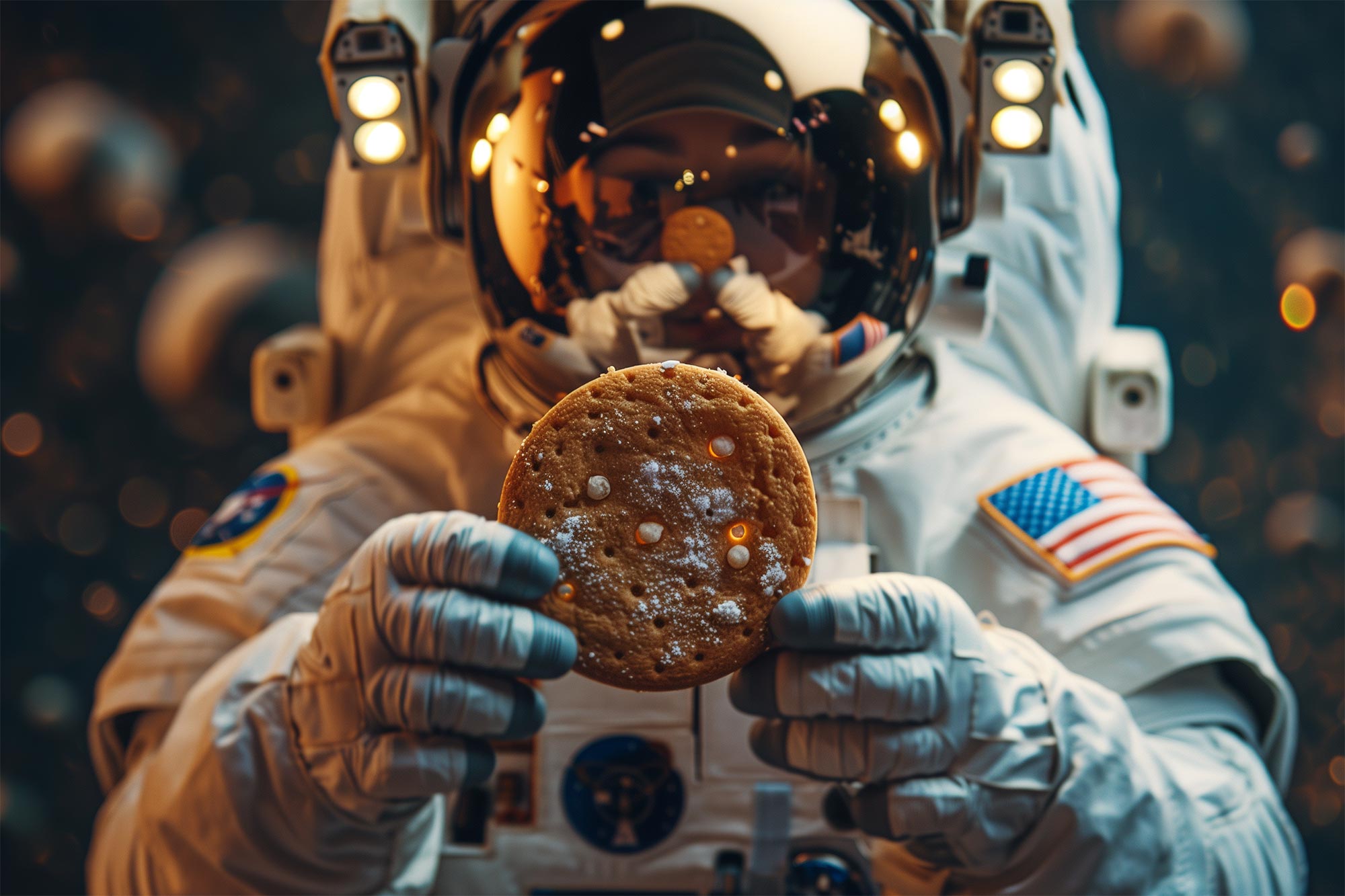
A new study highlights how confined environments like space can intensify food aromas, affecting astronauts’ emotional responses and meal preferences. This research suggests potential improvements in nutrition for space missions and isolated living conditions.
Researchers at RMIT University have discovered that confined and isolating environments can alter both how people perceive food aromas and their emotional responses to them.
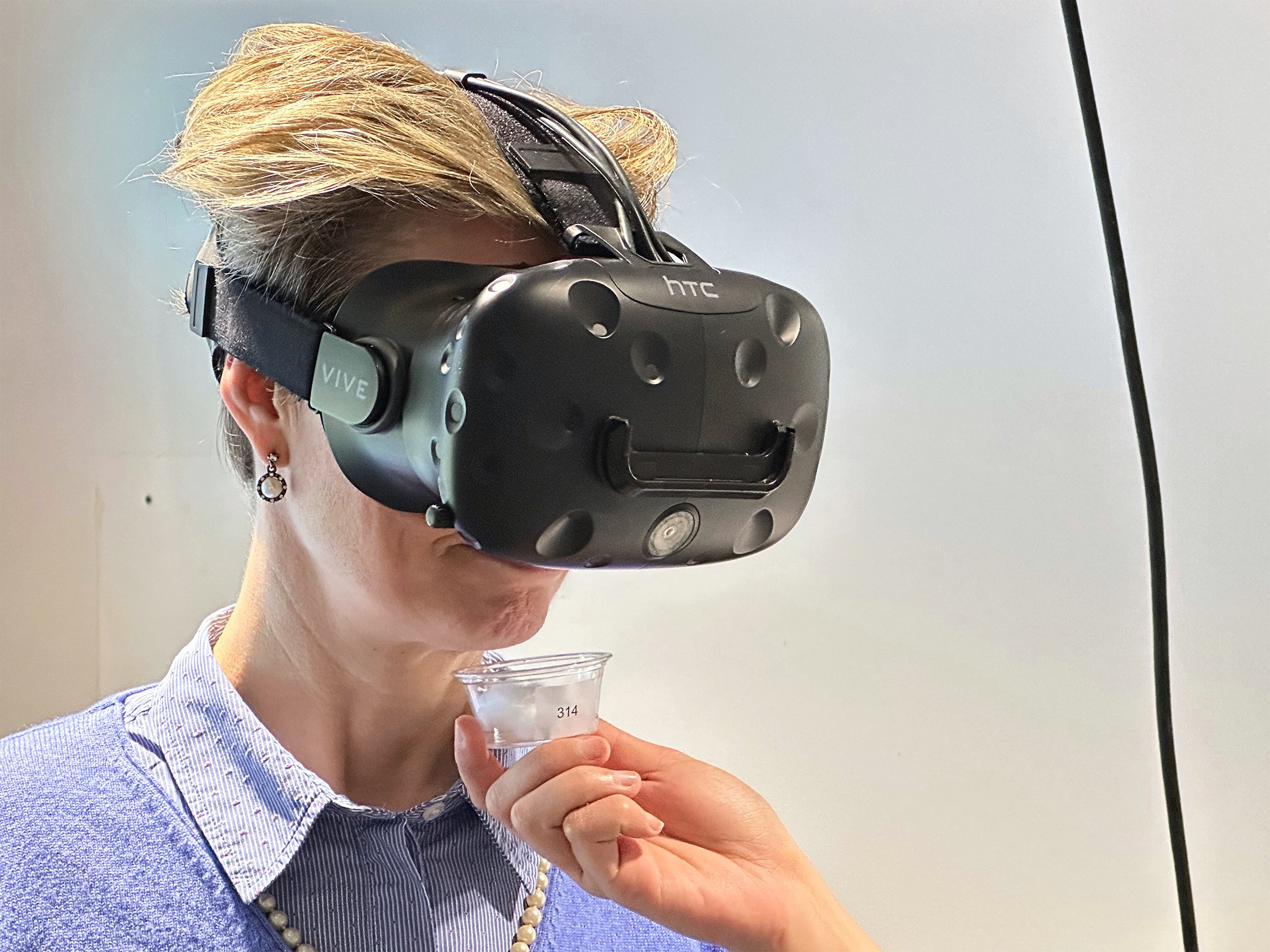
The study involved 44 participants who were exposed to eight different food aromas in two distinct settings: first, while seated in reclined chairs designed to mimic the posture of astronauts in microgravity; and second, in a virtual reality simulation of the confined environment of the International Space Station (ISS).
The aromas tested included vanilla, almond, lemon, lemon myrtle, eucalyptus, peppermint, vinegar, and lemongrass, offering a diverse range of scents for analysis.
The research, published in Food Research International, builds on previous work by the team and aims to help explain why astronauts report meals taste different in space and struggle to eat their normal nutritional intake over long missions, which has been reported in the news recently.
The study has broader implications for further research to improve the diets of isolated people, including nursing home residents, by personalizing aromas to enhance the flavor of their food.
Findings on Aroma Intensity and Perception
Co-lead Dr. Julia Low said the team found the VR simulation offered an immersive experience of a confined environment, evoking more intense perceptions of all the food aromas tested, except lemongrass, than the microgravity posture.
Her RMIT colleague Dr. Lisa Newman co-led the research and PhD scholar Grace Loke was the first author.
“Lemongrass consists of a more floral and earthy aroma, while the other aromas are pungent, spicy or sweet,” Loke said.
“This difference in profile may explain why lemongrass seemed less intense in the VR setting compared to the microgravity posture.”
Influence of Environment on Eating Experience
In an Earth-like setting, eating was often social, but eating in space on long missions can feel quite different, Low said.
“Pilot studies show that spending 10 minutes in VR can induce feelings of confinement, highlighting VR’s effectiveness over other methods such as immersive screens.
“Results indicate that a remote, confined environment such as the ISS and a significant variation in personal sensitivities influence aroma perception, making certain foods smell strange.”
Space studies often emphasized microgravity as the main contributing factor to food’s different taste, but the team’s findings underscored the impact of confined and isolated environments, Loke said.
“This research opens possibilities for personalized meal plans for astronauts and individuals living alone on Earth, showcasing VR’s potential to explore variations in eating when stressed,” she said.
Emotional Impact on Aroma Perception
In the VR setting, participants reporting positive emotions perceived stronger aromas.
For example, almond and vinegar became more intense when participants were happy or experienced a positive emotion, but if a person was even mildly stressed they perceived a less intense vinegar aroma, Loke said.
This link between stress and vinegar may help explain why astronauts like to eat certain foods in microgravity that they don’t normally enjoy on Earth, Newman said.
Future Directions in Space Nutrition Research
Newman said future studies would combine the microgravity posture with the VR experience for participants, to better simulate the astronaut experience and design food plans for longer missions, including trips to Mars.
“Our findings suggest a simulation using VR and the microgravity posture could aid in training astronauts to adapt psychologically to confined and remote eating spaces and personalize meal experiences for astronauts, as well as isolated individuals on Earth, to support their wellbeing,” Newman said.
Low said the research was part of a series of small but impactful studies, providing foundational insights into the importance of studying individual variation and how humans react to eating in more stressful environments.
“This research collectively highlights the critical role of our environment on taste and smell.”
Reference: “Food odour perception and affective response in Virtual spacecraft and microgravity body posture (1-G) – Potential ground-based simulations” by Grace Loke, Jayani Chandrapala, Anne Besnard, Kevin Kantono, Charles Brennan, Lisa Newman and Julia Low, 19 November 2024, Food Research International.
DOI: 10.1016/j.foodres.2024.115260
Never miss a breakthrough: Join the SciTechDaily newsletter.
Follow us on Google and Google News.