
Close Menu
    Facebook X (Twitter) Instagram
    SciTechDaily
    • Biology
    • Chemistry
    • Earth
    • Health
    • Physics
    • Science
    • Space
    • Technology
    Facebook X (Twitter) Pinterest YouTube RSS
    SciTechDaily
    Home»Technology»X-Rays and Lasers Forge the Future: Pioneering the 3D Printing of Ultra-Strong Stainless Steel
    Technology

    X-Rays and Lasers Forge the Future: Pioneering the 3D Printing of Ultra-Strong Stainless Steel

    By U.S. Department of EnergyOctober 18, 2024No Comments3 Mins Read
    Facebook Twitter Pinterest Telegram LinkedIn WhatsApp Email Reddit
    Share
    Facebook Twitter LinkedIn Pinterest Telegram Email Reddit
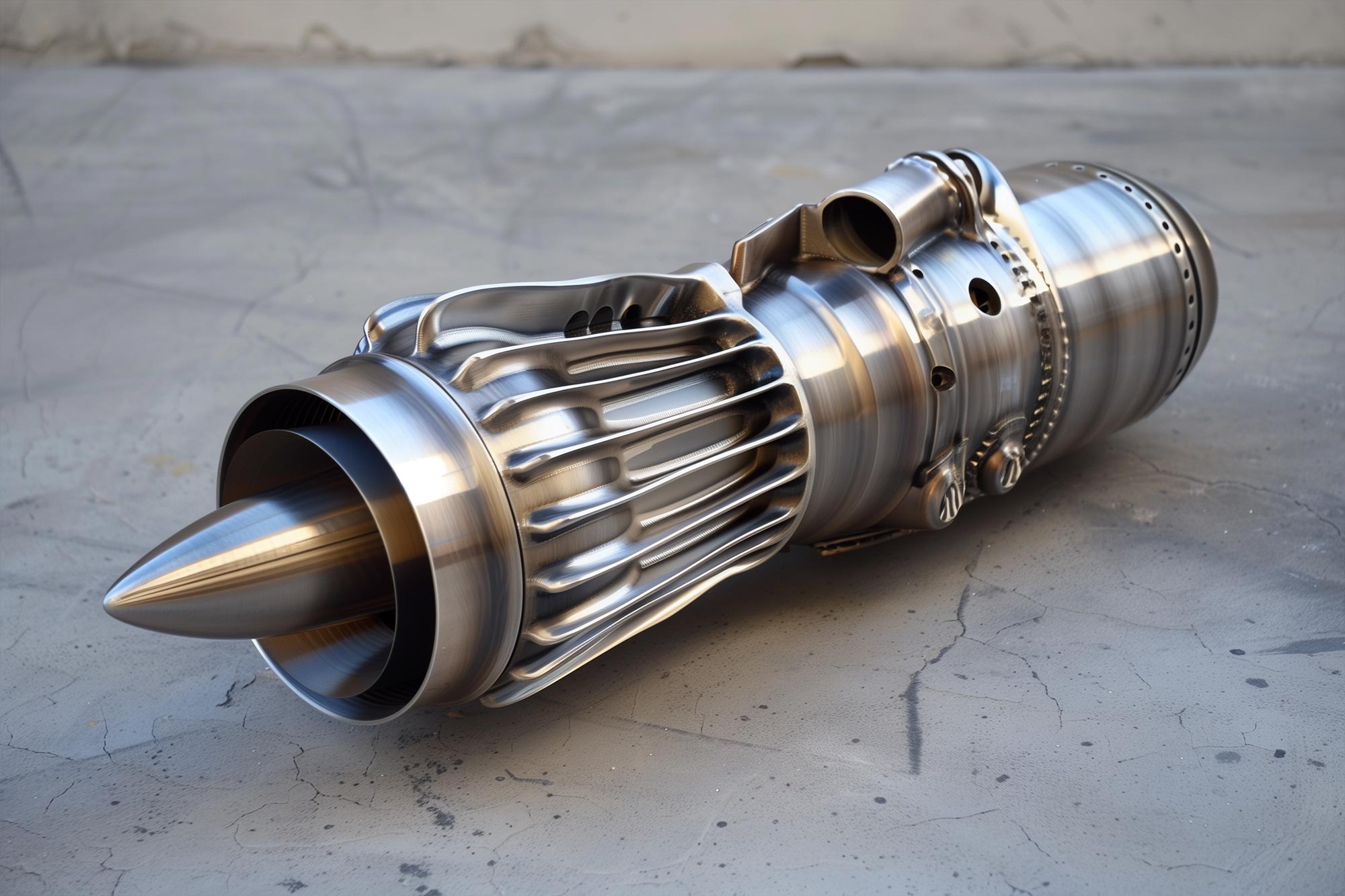
    Advanced 3D Printed Metal Parts Concept
    Enhanced 3D printing techniques now allow for the production of 17-4 PH stainless steel, optimizing its strength and corrosion resistance. This achievement marks a significant step forward in the additive manufacturing of complex alloys. Credit: SciTechDaily.com

    Using advanced X-ray techniques, scientists have achieved a significant milestone in 3D printing by producing 17-4 PH stainless steel with superior strength and durability.

    This development promises to lower costs and increase production flexibility, offering profound implications for manufacturing complex materials.

    Breakthrough in 3D Printing of Stainless Steel

    Researchers have developed a reliable method to produce a specific type of stainless steel, 17-4 PH, using additive manufacturing or 3D printing. Historically, 3D printing steel and other alloys has been problematic due to the rapid temperature changes these materials undergo when heated by the lasers in 3D printers. These fluctuations disrupt the structural arrangement of atoms, compromising the material’s toughness. By employing bright X-ray beams, scientists monitored these swift changes in real time and modified the chemical composition to counteract them, thereby enhancing the durability of the final product.

    Known for its robustness and corrosion resistance, 17-4 PH stainless steel is utilized in industrial machinery, marine vessels, aircraft, and medical devices. These new advancements could enable manufacturers of 17-4 PH components to reduce costs and improve manufacturing flexibility. Moreover, the techniques developed in this study pave the way for a deeper understanding of how to 3D print various materials while enhancing their properties and performance.

    3D Printing Strong Stainless Steel
    Microtomographic 3D snapshots of complex structure of thermal cracks and air bubbles in an additive manufactured metal during the 3D printing process. Credit: Argonne National Laboratory

    Innovations in Additive Manufacturing

    3D printing, also known as additive manufacturing, is a direct and integral construction of a three-dimensional object from a digital model, layer by layer. Metal alloys are particularly tricky to print in this manner due to the rapid temperature changes that occur during the process. Using 3D printing to reproduce a durable material such as 17-4 PH stainless steel requires the ability to closely monitor these rapid changes as they happen and make modifications to the material’s crystal structure.

    Monitoring 3D printing of 17-4 PH stainless steel was made possible by the bright X-ray beams at the Advanced Photon Source (APS), a Department of Energy Office of Science light source user facility at Argonne National Laboratory. The researchers used high-energy X-ray diffraction to capture images every few milliseconds as the material was heated and cooled. Using these images, the team mapped the correlation between process parameter changes and modifications to the crystal structure, then used that analysis to guide alloy development for optimizing the printing process. They then used small-angle X-ray scattering at the APS to characterize tiny structural anomalies called nanoprecipitates that strongly influence the final strength of a printed stainless-steel part. The method developed will help enable manufacturers to consistently and cost efficiently produce one of the toughest materials in the world.

    Reference: “Phase transformation dynamics guided alloy development for additive manufacturing” by Qilin Guo, Minglei Qu, Chihpin Andrew Chuang, Lianghua Xiong, Ali Nabaa, Zachary A. Young, Yang Ren, Peter Kenesei, Fan Zhang and Lianyi Chen, 2 August 2022, Additive Manufacturing.
    DOI: 10.1016/j.addma.2022.103068

    This work was funded by the National Science Foundation (NSF) and the University of Wisconsin-Madison Startup Fund and used resources at the UW-Madison Wisconsin Centers for Nanoscale Technology partially supported by NSF through the University of Wisconsin Materials Research Science and Engineering Center. The research also used resources at the Advanced Photon Source, a Department of Energy Office of Science user facility.

    Never miss a breakthrough: Join the SciTechDaily newsletter.
    Follow us on Google and Google News.

    3D Printing DOE Metal Steel
    Share. Facebook Twitter Pinterest LinkedIn Email Reddit

    Related Articles

    Inside the Laser Forge: How 3D-Printed Superalloys Conquer Extreme Environments

    Alloy Alchemy: Laser-Crafted Metals Defying the Limits of Strength

    New Method Developed for 3D Printing Living Microbes To Enhance Biomaterials

    Bessel Beams: Laser Beam Shaping To Improve Metal 3D Printing

    Electrochemical Reactor Performance Improved Through 3D Printing

    3D-Printed Weather Stations: More Science for Less Money

    Forging High-Tech Armor From Shock-Dissipating Fractal Cubes

    3D-Printed Nuclear Reactor Core Promises Faster, More Economical Energy

    Breakthrough in Laser-Based Metal 3D-Printing Reduces Defects

    Leave A Reply Cancel Reply

    • Facebook
    • Twitter
    • Pinterest
    • YouTube

    Don't Miss a Discovery

    Subscribe for the Latest in Science & Tech!

    Trending News

    Breakthrough Bowel Cancer Trial Leaves Patients Cancer-Free for Nearly 3 Years

    Natural Compound Shows Powerful Potential Against Rheumatoid Arthritis

    100,000-Year-Old Neanderthal Fossils in Poland Reveal Unexpected Genetic Connections

    Simple “Gut Reset” May Prevent Weight Gain After Ozempic or Wegovy

    2.8 Days to Disaster: Scientists Warn Low Earth Orbit Could Suddenly Collapse

    Common Food Compound Shows Surprising Power Against Superbugs

    5 Simple Ways To Remember More and Forget Less

    The Atomic Gap That Could Cost the Semiconductor Industry Billions

    Follow SciTechDaily
    • Facebook
    • Twitter
    • YouTube
    • Pinterest
    • Newsletter
    • RSS
    SciTech News
    • Biology News
    • Chemistry News
    • Earth News
    • Health News
    • Physics News
    • Science News
    • Space News
    • Technology News
    Recent Posts
    • After 37 Years, the World’s Longest-Running Soil Warming Experiment Uncovers a Startling Climate Secret
    • NASA Satellite Captures First-Ever High-Res View of Massive Pacific Tsunami
    • ADHD Isn’t Just a Deficit: Study Reveals Powerful Hidden Strengths
    • Scientists Uncover “Astonishing” Hidden Property of Light
    • Scientists Discover Stem Cells That Could Regrow Teeth and Bone
    Copyright © 1998 - 2026 SciTechDaily. All Rights Reserved.
    • Science News
    • About
    • Contact
    • Editorial Board
    • Privacy Policy
    • Terms of Use

    Type above and press Enter to search. Press Esc to cancel.