
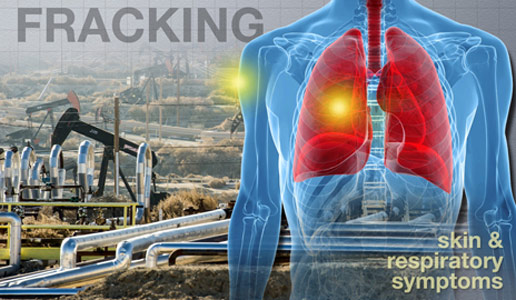
A new study from Yale University found that natural gas drilling may increase the risk of health symptoms in people living near natural gas extraction sites, supporting the need for further research into the health and environmental implications of extraction techniques like hydraulic fracturing.
A Yale-led study has found a greater prevalence of health symptoms reported among residents living close to natural gas wells, including those drilled by hydraulic fracturing. The study appears online September 10 in Environmental Health Perspectives, a journal of the National Institutes of Health.
Little is known about the environmental and public health impact of certain natural gas extraction techniques — including hydraulic fracturing, also known as “fracking” — that occur near residential areas.
The researchers conducted a random survey of 492 people in 180 households with ground-fed water wells in southwestern Pennsylvania, where natural gas extraction activity is significant. According to the Pennsylvania Department of Environmental Protection, there were 624 active natural gas wells in the survey area. Of those, 95% produce gas via hydraulic fracturing.
The researchers compared the proximity of gas wells to the frequency of self-reported skin, respiratory, gastrointestinal, cardiovascular, and neurological symptoms over the past year. The environmental health survey was general and did not ask specific questions about natural gas extraction, or fracking, in the area.
The prevalence of some reported health symptoms was higher among residents living closer to natural gas wells, the researchers report. Reports of skin conditions were more common in households less than 1 kilometer from gas wells compared to those more than 2 kilometers from the gas wells. Reported upper respiratory symptoms also were greater in homes closer to wells. The study did not find a significant increase in grouped neurological, cardiovascular, or gastrointestinal symptoms among those living in homes closer to natural gas wells.
This was an association study and did not look at causation. “Our study suggests that natural gas drilling may increase the risk of health symptoms in people living near the wells. We believe our findings support the need for further research into the health and environmental implications of this form of natural gas extraction,” said the study’s senior author Meredith Stowe, associate research scientist at the Yale Occupational and Environmental Medicine Program and lecturer at the Yale School of Public Health.
“The effect we found persisted in the analyses, even after adjusting for gender, age, educational level, smoking, and awareness of environmental risk factors,” added first author Peter Rabinowitz, M.D., who led the research while at Yale and is now an associate professor in the Departments of Environmental and Occupational Health Sciences and Global Health at the University of Washington’s School of Public Health.
Other authors are Ilya Slizovskiy, Vanessa Lamers, Sally Trufan, Theodore Holford, James Dziura, Peter Peduzzi, Michael Kane, and Theresa Weiss of Yale University; and John Reif of Colorado State University. This study was supported by grants from The Heinz Endowments; The 11th Hour Project, a program of the Schmidt Family Foundation; and the Claneil Foundation. Additional support was received from the Jan Stolwijk Fellowship fund.
Reference: “Proximity to Natural Gas Wells and Reported Health Status: Results of a Household Survey in Washington County, Pennsylvania” by Peter M. Rabinowitz, Ilya B. Slizovskiy, Vanessa Lamers, Sally J. Trufan, Theodore R. Holford, James D. Dziura, Peter N. Peduzzi, Michael J. Kane, John S. Reif, Theresa R. Weiss and Meredith H. Stowe, 1 January 2015, Environment Health Perspectives.
DOI: 10.1289/ehp.1307732
Never miss a breakthrough: Join the SciTechDaily newsletter.
Follow us on Google and Google News.