
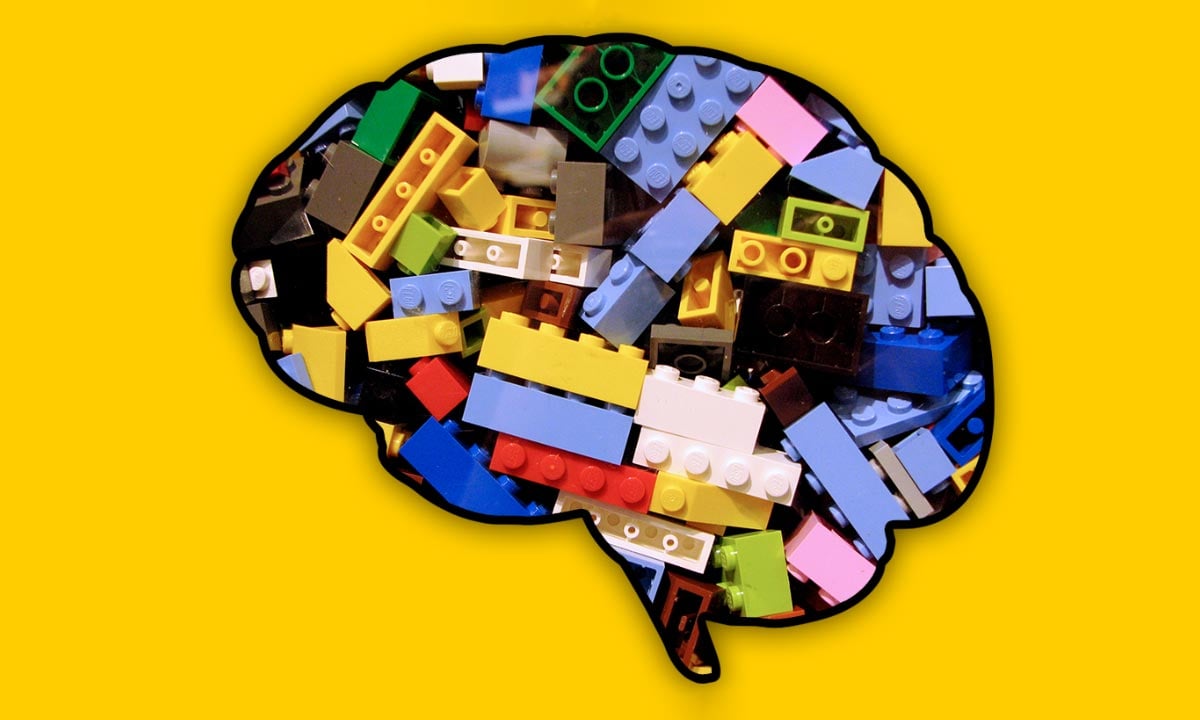
Princeton scientists found that the brain uses reusable “cognitive blocks” to create new behaviors quickly.
Artificial intelligence can now produce acclaimed essays and support medical diagnoses with impressive precision, yet biological brains still outperform machines in one essential area: flexibility. Humans can absorb new information and adapt to unfamiliar situations with very little effort. People can jump into new software, follow a recipe they have never tried before, or learn the rules of a game they have just discovered, while AI systems often struggle to adjust in real time and to learn effectively “on the fly.”
A new study from Princeton neuroscientists offers insight into why the brain excels at this kind of rapid adjustment. The researchers found that the brain repeatedly draws on the same cognitive “blocks” when performing different types of tasks. By recombining these blocks in new ways, the brain can quickly generate fresh behaviors.
“State-of-the-art AI models can reach human, or even super-human, performance on individual tasks. But they struggle to learn and perform many different tasks,” said Tim Buschman, Ph.D., senior author of the study and associate director of the Princeton Neuroscience Institute. “We found that the brain is flexible because it can reuse components of cognition in many different tasks. By snapping together these ‘cognitive Legos,’ the brain is able to build new tasks.”
The research was published on November 26 in the journal Nature.
Compositionality: Building New Skills from Familiar Ones
People often learn something new by building on related abilities they already have. Someone who knows how to maintain a bicycle, for example, may find motorcycle repair easier to pick up. Scientists refer to this process of assembling new skills from simpler, existing ones as compositionality.
“If you already know how to bake bread, you can use this ability to bake a cake without relearning how to bake from scratch,” said Sina Tafazoli, Ph.D., a postdoctoral researcher in the Buschman lab at Princeton and lead author of the new study. “You repurpose existing skills — using an oven, measuring ingredients, kneading dough — and combine them with new ones, like whipping batter and making frosting, to create something entirely different.”
Although compositionality is considered central to human flexibility, evidence about how the brain carries it out has been limited and sometimes inconsistent.
To explore the idea more closely, Tafazoli trained two male rhesus macaques to complete three related tasks while recording activity across their brains.
Video excerpt from the color/shape discrimination task presented to subjects in the study. Credit: Sina Tafazoli (Princeton University)
How Monkeys Helped Reveal the Brain’s Learning Strategy
Instead of real-world tasks like repairing vehicles or baking, the monkeys performed visual categorization challenges. They were shown colorful, balloon-like blobs on a screen and asked to decide whether each blob looked more like a bunny or the letter “T” (categorizing the shape) or whether it appeared more red or more green (categorizing color).
The difficulty varied significantly from trial to trial. Some images strongly resembled a bunny or were clearly tinted red, while others were ambiguous and required much more careful judgment.
To report their decision, each monkey shifted its gaze in one of four directions. In one task, a glance to the left indicated “bunny” and a glance to the right indicated “T.”
A key aspect of the experimental design was that each task had its own rules but also shared components with the others. One of the color tasks and the shape task required the animals to look in the same directions to record their answers, while both color tasks involved categorizing color in the same way (as either more red or more green) even though the required gaze directions differed for reporting those color judgments.
This structure allowed the researchers to determine whether the brain relied on the same neural activity patterns, or cognitive building blocks, whenever tasks included overlapping elements.
The Prefrontal Cortex Houses Reusable Cognitive Blocks
When Tafazoli and Buschman examined brain activity, they found that the prefrontal cortex, a region involved in high-level thinking, contained multiple recurring patterns of neural activity. These patterns emerged across different tasks whenever the neurons were working toward a shared goal, such as distinguishing colors.
Buschman referred to these shared patterns as the brain’s “cognitive Legos,” a set of building blocks that can be assembled in various ways to produce new behaviors.
“I think about a cognitive block like a function in a computer program,” Buschman said. “One set of neurons might discriminate color, and its output can be mapped onto another function that drives an action. That organization allows the brain to perform a task by sequentially performing each component of that task.”
In one color task, for example, the brain combined a block that evaluated color with another block that guided eye movements in different directions. When the monkeys switched from evaluating colors to identifying shapes while still using similar movements, the brain simply activated the block for shape processing along with the same block for eye movement.
This pattern of sharing was strongest in the prefrontal cortex and appeared far less in other brain regions, suggesting that compositionality may be a specialized function of the prefrontal cortex.
Quieting Unneeded Blocks Helps the Brain Stay Focused
Tafazoli and Buschman also discovered that the prefrontal cortex reduces the activity of certain cognitive blocks when they are not required. This likely helps the brain focus more effectively on whichever task is most relevant.
“The brain has a limited capacity for cognitive control,” Tafazoli said. “You have to compress some of your abilities so that you can focus on those that are currently important. Focusing on shape categorization, for example, momentarily diminishes the ability to encode color because the goal is shape discrimination, not color.”
Selective activation and suppression of cognitive blocks may allow the brain to avoid overload and stay aligned with the immediate goal.
What Cognitive Legos Mean for AI and Human Health
These cognitive Legos could explain why humans can learn new tasks so rapidly. Instead of generating each behavior from the ground up, the brain reuses existing components and avoids redundant work, something current artificial intelligence systems generally lack.
“A major issue with machine learning is catastrophic interference,” Tafazoli said. “When a machine or a neural network learns something new, they forget and overwrite previous memories. If an artificial neural network knows how to bake a cake but then learns to bake cookies, it will forget how to bake a cake.”
Integrating compositionality into AI may help create systems capable of adding new skills while retaining old ones.
This understanding may also offer insights for treating neurological and psychiatric disorders. Conditions such as schizophrenia, obsessive-compulsive disorder, and certain kinds of brain injury can make it difficult for people to apply familiar skills in new contexts. These challenges may arise from disruptions in the brain’s ability to combine and reuse its cognitive building blocks.
“Imagine being able to help people regain the ability to shift strategies, learn new routines, or adapt to change,” Tafazoli said. “In the long run, understanding how the brain reuses and recombines knowledge could help us design therapies that restore that process.”
Reference: “Building compositional tasks with shared neural subspaces” by Sina Tafazoli, Flora M. Bouchacourt, Adel Ardalan, Nikola T. Markov, Motoaki Uchimura, Marcelo G. Mattar, Nathaniel D. Daw and Timothy J. Buschman, 26 November 2025, Nature.
DOI: 10.1038/s41586-025-09805-2
Funding for the study was provided by the National Institutes of Health (R01MH129492, 5T32MH065214).
Never miss a breakthrough: Join the SciTechDaily newsletter.
Follow us on Google and Google News.
3 Comments
Mit die zeit, der flexxe ist gekommen.
The so-called AI has no intelligence. It is just a machine which we use for storing and retrieving data. It is human intelligence that manifests through the machine. AI cannot learn. The term ‘learning’ is misused by the creators of AI-machine.
““Imagine being able to help people regain the ability to shift strategies, learn new routines, or adapt to change,” Tafazoli said. “In the long run, understanding how the brain reuses and recombines knowledge could help us design therapies that restore that process.”
Could it be used to teach King Donald to have good manners? Yes, I know that he is not English!