
Most fuel in gas-powered vehicles is wasted as heat, but a new study reveals a way to convert this lost energy into electricity.
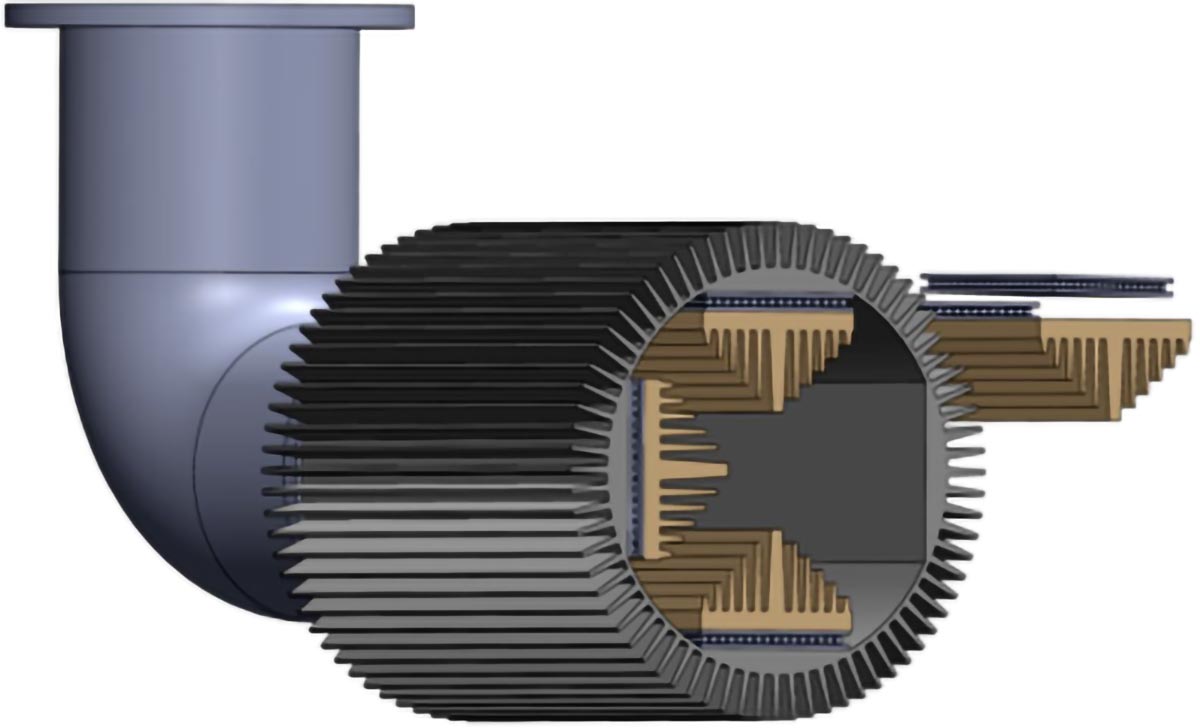
Researchers have developed a thermoelectric generator that captures exhaust heat and transforms it into usable power. Unlike previous systems, which are heavy and require extra cooling, this new design is lightweight, efficient, and works in high-speed environments.
Wasted Energy in Combustion Engines
Gas-powered combustion engines waste about 75% of their fuel’s energy as heat, with only a quarter being used for motion. A new study in ACS Applied Materials & Interfaces explores a way to harness this lost heat and convert it into electricity. Researchers have developed a prototype thermoelectric generator that could improve fuel efficiency and reduce carbon dioxide emissions, offering a potential boost to sustainable energy efforts.
Turning Waste Heat into Electricity
Fuel waste not only reduces efficiency but also increases greenhouse gas emissions, highlighting the need for better waste-heat recovery systems. Thermoelectric systems, which use semiconductor materials to generate electricity from heat differences, offer a solution. However, most existing designs are bulky, complex, and require additional cooling water to maintain effectiveness.
Now, a research team led by Wenjie Li and Bed Poudel has developed a more compact thermoelectric generator that efficiently captures and converts exhaust heat from high-speed vehicles — including cars, helicopters, and unmanned aerial vehicles — into usable energy.
Innovative Thermoelectric Generator Design
The researchers’ new thermoelectric generator contains a semiconductor made of bismuth-telluride and uses heat exchangers (similar to those used in air conditioners) to capture heat from vehicle exhaust pipelines. The team also incorporated a piece of hardware that regulates temperature, called a heatsink. The heatsink significantly increases the temperature difference, which directly influences the system’s electrical output.
Their prototype achieved an output power of 40 Watts, about enough to power a lightbulb. Importantly, the results indicate that high airflow conditions, like those found in exhaust pipes, enhance efficiency, thereby increasing the system’s electrical output.
High-Speed Simulations and Future Potential
In simulations mimicking high-speed environments, the waste-heat system demonstrated great versatility; their system produced up to 56 W for car-like exhaust speeds and 146 W for helicopter-like exhaust speeds, or the equivalent of five and 12 lithium-ion 18650 batteries, respectively.
The researchers say their practical system can be integrated directly into existing exhaust outlets without the need for additional cooling systems. As the demand for clean energy solutions escalates, they add that this work could pave the way toward the practical integration of thermoelectric devices into high-speed vehicles.
Reference: “Thermoelectric Energy Harvesting for Exhaust Waste Heat Recovery: A System Design” by Rabeya Bosry Smriti, Wenjie Li, Amin Nozariasbmarz, Subrata Ghosh, Na Liu, Christopher D. Rahn, Mohan Sanghadasa, Shashank Priya and Bed Poudel, 7 January 2025, ACS Applied Materials & Interfaces.
DOI: 10.1021/acsami.4c18023
The authors acknowledge funding from the Army Rapid Innovation Fund Program; the National Science Foundation Industry-University Cooperative Research Centers Program through the Center for Energy Harvesting Materials and Systems; and the Office of Naval Research.
Never miss a breakthrough: Join the SciTechDaily newsletter.
Follow us on Google and Google News.
9 Comments
Yeah, the fix is called “Buy European Cars”.
I’ll do that if I want to be uncomfortable and in the shoulder a lot.
This technology could be very useful to a company called Airburners when applied to their PowerGen system. I would fund this application and put it to use in my business as well as expand my business with it.
This research doesn’t seem to offer much value. It starts by claiming “Most fuel in gas-powered vehicles is wasted as heat”. But realistically how many vehicles on the road these days use gas? Maybe a few that use liquid propane gas or compressed hydrogen. Aside from electric cars, most cars will use either petrol or diesel. Why not concentrate the research on making petrol or diesel cars more efficient and cleaner?
“Gas” is colloquially used in the US as a contraction of gasoline. It is essentially what you ‘blokes’ call petrol. Another example of two nations divided by a common language.
Missing in this article is anything relevant to actual use and application: Firstly, clogging the tailpipe with heat exchange fins that would actually extract meaningful energy would severely hinder exhaust flow, which itself is part of the “car efficiency”. Secondly, the actual possible energy recovered is 1/1000th the actual heat energy flowing by the thermoelectric recovery device. And thirdly, what actual use is a few watts of electrical energy? How will that be utilized? The article is mute on this point. Lastly, today’s automobiles are running in the range of 55%-65% thermal efficiency. Nowhere near the 25% thermal efficiency listed here… Yikes.
I would think it would be most useful in hybrid vehicles. Charging up the hybrid battery nudges MPG
About the only use I can think of would be to use the thermoelectric generator to replace the conventional generator used to recharge the starting battery and maybe run some low wattage devices like the radio. However, I don’t see that resulting in a large increase in gas(oline) mileage. My guess would be that keeping the car speed closer to the optimum (Does anyone even know what that is for their car?) would be more effective.
Just make the outpipe slightly larger. Problem solved.