
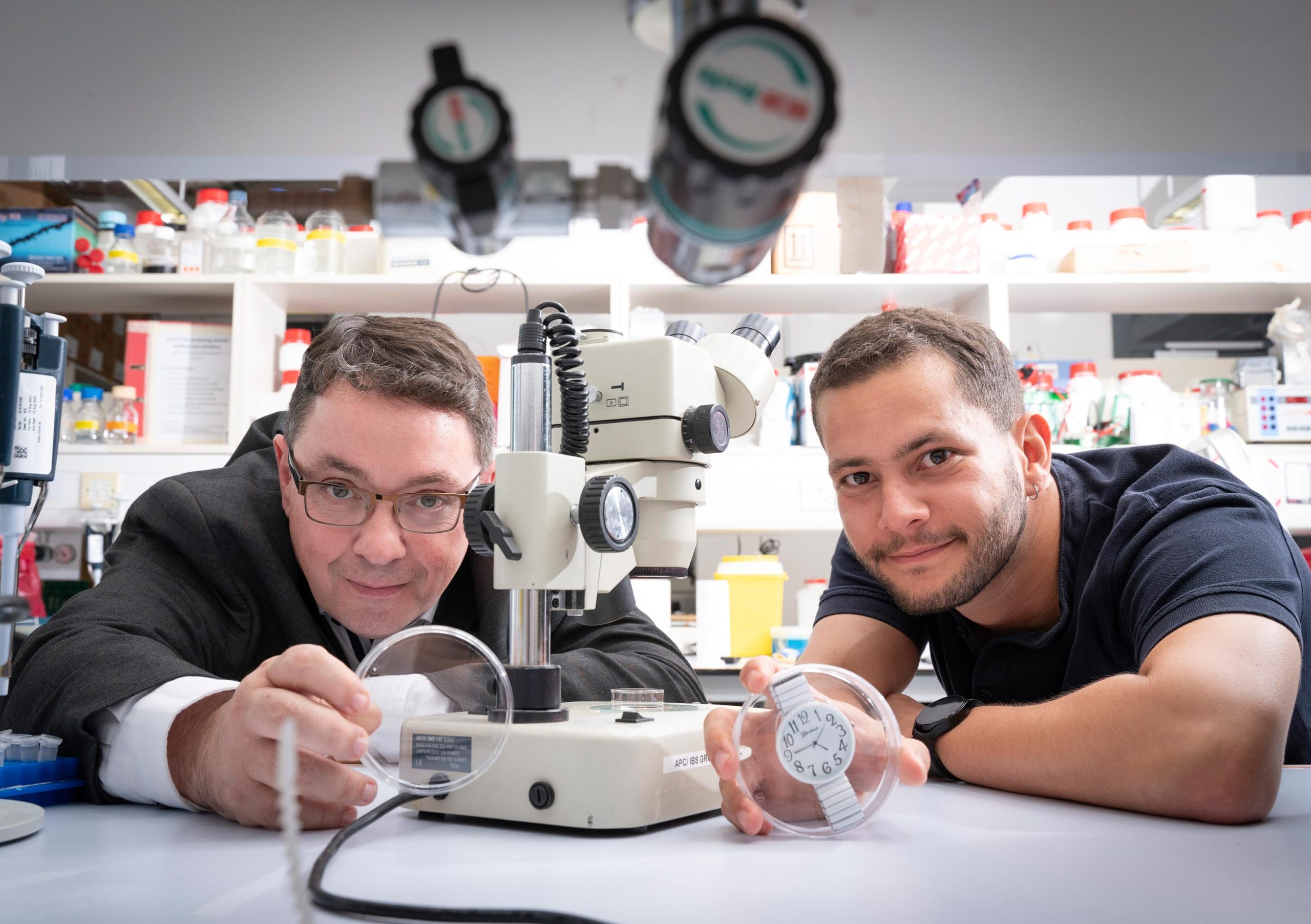
Researchers have found that gut bacteria influence stress by interacting with circadian rhythms, offering new treatment possibilities for stress-related mental health issues. This discovery reveals that specific bacteria help control stress hormones and underscores the value of a balanced microbiome.
- New research reveals that the gut microbiome regulates the body’s diurnal (day-night) rhythms in stress hormones.
- Depletion of gut microbiota results in disruptions in the brain’s core circadian system, and is associated with altered stress hormone rhythms.
- The research highlights that gut microbes also regulates key stress-responding brain regions throughout the day.
- Using microbe transplantation, the team confirmed that oscillations of gut microbes across the day are critical for regulating stress hormone secretion.
Gut Microbiota and Stress Regulation
A pioneering study has uncovered the vital role that gut microbiota plays in regulating stress responses by interacting with the body’s circadian rhythms.
The findings open the door for developing new microbial-based therapies that could help individuals better manage stress-related mental health conditions, such as anxiety and depression which are often associated with alterations in circadian and sleep cycles.
This breakthrough research from University College Cork and APC Microbiome Ireland — a Research Ireland Centre — offers compelling evidence that the trillions of microorganisms in the gut orchestrate the body’s hormonal responses to stress in a time-dependent manner, paving the way for new therapeutic approaches targeting the gut-brain axis.
Published today (November 5) in Cell Metabolism, this study shines a spotlight on the intricate relationship between the gut microbiota and the hypothalamic-pituitary-adrenal (HPA) axis, the body’s central stress response system. The research demonstrates that depletion of gut microbiota leads to a hyperactivation of the HPA-axis in a time-of-day specific manner, which alongside with alterations to the brain’s stress and circadian responding regions, results in altered stress responsivity across the day.
Role of Specific Gut Bacteria in Stress Response
The study further identifies specific gut bacteria, including a Lactobacillus strain (Limosilactobacillus reuteri), as key influencers of this circadian-regulated stress mechanism. L. reuteri emerged as a candidate strain that modulates glucocorticoid secretion (stress hormones), linking the microbiota’s natural diurnal oscillations with altered stress responsiveness.
This groundbreaking discovery opens up new possibilities for psychobiotic interventions aimed at improving mental health outcomes by targeting gut bacteria that influence stress regulation.
Modern Lifestyles and Circadian Disruptions
With modern lifestyles increasingly disrupting circadian rhythms through irregular sleep patterns, high stress, and poor diet, this research underscores the importance of the gut microbiota in maintaining the body’s natural stress-regulation processes.
Speaking about the findings, Principal Investigator Professor John Cryan said,
“Our research has revealed an important link between the gut microbiota and how the brain responds to stress in a time-specific way. The gut microbiome doesn’t just regulate digestion and metabolism; it plays a critical role in how we react to stress, and this regulation follows a precise circadian rhythm. These findings underscore the importance of maintaining a healthy microbiome, particularly for those living in today’s stressful and fast-paced environment.”
Future of Microbiota-Based Stress Therapies
First author Dr. Gabriel Tofani added “Our findings underscore the importance of not only the gut microbiota composition, but also how gut microbes change across the day. By showing that gut bacteria influence how the body handles stress throughout the day, we’re helping to understand the mechanisms through which the microbiota shapes our responses to the environment around us. Our work also demonstrates that exploring this relationship between the gut microbiota and circadian rhythms will be key in the development of microbiota-based therapies for stress-related disorders in the future.”
“This study is a significant leap forward in our understanding of how the microbiome shapes our mental health,” said Professor Paul Ross, Director of APC Microbiome Ireland. “At APC, we are committed to unraveling the many ways in which our gut microbiome impact human health, and this research provides crucial insight into how targeting specific bacteria may help manage or even prevent stress-related conditions. The potential to improve mental health through microbiome-based interventions is very real, and this study takes us one step closer to that goal.”
The study was conducted at APC, a global leader in microbiome research based at University College Cork. Professor Cryan’s team has long been at the forefront of gut-brain axis research, and this new discovery adds to the growing body of evidence that gut bacteria have far-reaching effects on mental and physical health.
Reference: “Gut microbiota regulates stress responsivity via the circadian system” by Gabriel S.S. Tofani, Sarah-Jane Leigh, Cassandra E. Gheorghe, Thomaz F.S. Bastiaanssen, Lars Wilmes, Paromita Sen, Gerard Clarke and John F. Cryan, 5 November 2024, Cell Metabolism.
DOI: 10.1016/j.cmet.2024.10.003
Never miss a breakthrough: Join the SciTechDaily newsletter.
Follow us on Google and Google News.