
Close Menu
    Facebook X (Twitter) Instagram
    SciTechDaily
    • Biology
    • Chemistry
    • Earth
    • Health
    • Physics
    • Science
    • Space
    • Technology
    Facebook X (Twitter) Pinterest YouTube RSS
    SciTechDaily
    Home»Biology»β-Catenin Regulates Telomerase in Stem Cells and Cancer Cells
    Biology

    β-Catenin Regulates Telomerase in Stem Cells and Cancer Cells

    By Max Planck InstituteJune 29, 20121 Comment2 Mins Read
    Facebook Twitter Pinterest Telegram LinkedIn WhatsApp Email Reddit
    Share
    Facebook Twitter LinkedIn Pinterest Telegram Email Reddit
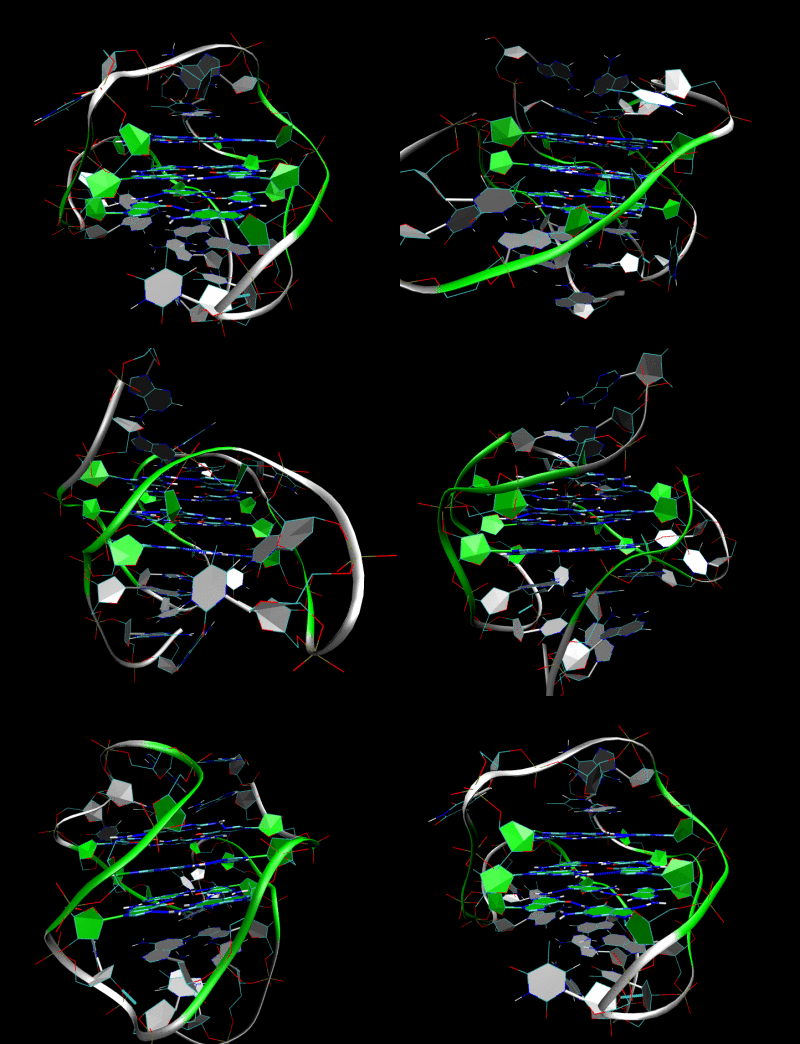
    Telomere structure
    Three-dimensional molecular structure of a telomere (G-quadruplex). Credit: Wikipedia

    New insights from stem cell research could possibly lead to new approaches for the treatment of human tumors.

    Scientists at the Max Planck Institute of Immunobiology and Epigenetics in Freiburg have gained important insights for stem cell research, which are also applicable to human tumors, and could lead to the development of new treatments. As Rolf Kemler’s research group discovered, a molecular link exists between the telomerase that determines the length of the telomeres and a signaling pathway known as the Wnt/β-signaling pathway.

    Telomeres are the end caps of chromosomes that play a very important role in the stability of the genome. Telomeres in stem cells are long and become shorter during differentiation or with age, but lengthen again in tumor cells.

    The Wnt/β-catenin signaling pathway controls numerous processes in embryonic development, such as the formation of the body axis and of organ primordia, and is particularly active in embryonic and adult stem cells. The β-catenin protein plays a key role in this signaling pathway. The incorrect regulation or mutation of β-catenin leads to the development of tumors.

    Rolf Kemler’s research group has now shown that β-catenin regulates the telomerase gene directly, and has explained the molecular mechanism at work here. Embryonic stem cells with mutated β-catenin generate more telomerase and have extended telomeres, while cells without β-catenin have low levels of telomerase and have shortened telomeres.

    This regulation mechanism can also be found in human cancer cells. These discoveries could lead to the development of a new approach to the treatment of human tumors.

    Never miss a breakthrough: Join the SciTechDaily newsletter.
    Follow us on Google and Google News.

    Cancer Immunobiology Max Planck Institute Stem Cells Tumor
    Share. Facebook Twitter Pinterest LinkedIn Email Reddit

    Related Articles

    How Helicobacter Pylori Generates An Immune System Blind Spot

    Could Stem Cells be the Link Between Bacteria and Cancer?

    For the First Time, Cancer Stem Cells Tracked, May Inform Treatment Strategies

    A Potential Therapeutic Target for Treating Pulmonary Fibrosis

    New Drug CD47 Could Potentially Shrink and Cure All Tumors

    Immune System May Trigger Melanoma Growth

    Researchers Use Bioinformatics and Epigenetics to Aid Cancer Research

    Cholera Kills off its Microbial Rivals by Jabbing Them with a Spring-Loaded Poison Dagger

    Researchers Track Development of T-cells in Living Zebrafish Embryos

    1 Comment

    1. Madanagopal.V.C. on September 15, 2012 11:12 pm

      Telomeres are like atom bombs. Shortening of telomeres would signify steady ageing of the cell and ultimately lead to the death which is inevitable in any multicellular organ. Any extension in telomeres by catenin like bio-chemicals will not be a blessing for the animal. Continuous growth would be cancerous as it would be make the organ`s tissue over populous and interfere in the pathway of the other symbionic organs of the multicellular organs. The research in the line of controlling telomeres is excellent indeed for the control of cancer. Thank YOu.

      Reply
    Leave A Reply Cancel Reply

    • Facebook
    • Twitter
    • Pinterest
    • YouTube

    Don't Miss a Discovery

    Subscribe for the Latest in Science & Tech!

    Trending News

    Scientists Warn That This Common Pet Fish Can Wreck Entire Ecosystems

    Scientists Make Breakthrough in Turning Plastic Trash Into Clean Fuel Using Sunlight

    This Popular Supplement May Interfere With Cancer Treatment, Scientists Warn

    Scientists Finally Solved One of Water’s Biggest Mysteries

    Could This New Weight-Loss Pill Disrupt the Entire Market? Here’s What You Should Know About Orforglipron

    Earth’s Crust Is Tearing Open in Africa, and It Could Form a New Ocean

    Breakthrough Bowel Cancer Trial Leaves Patients Cancer-Free for Nearly 3 Years

    Natural Compound Shows Powerful Potential Against Rheumatoid Arthritis

    Follow SciTechDaily
    • Facebook
    • Twitter
    • YouTube
    • Pinterest
    • Newsletter
    • RSS
    SciTech News
    • Biology News
    • Chemistry News
    • Earth News
    • Health News
    • Physics News
    • Science News
    • Space News
    • Technology News
    Recent Posts
    • Scientists Uncover Fatal Weakness in “Zombie Cells” Linked to Cancer
    • World-First Study Reveals Human Hearts Can Regenerate After a Heart Attack
    • Why Your Dreams Feel So Real Sometimes and So Strange Other Times
    • Scientists Debunk 100-Year-Old Belief About Brain Cells, Rewriting Textbooks
    • This Simple Home Device May Boost Brain Power in Adults Over 40
    Copyright © 1998 - 2026 SciTechDaily. All Rights Reserved.
    • Science News
    • About
    • Contact
    • Editorial Board
    • Privacy Policy
    • Terms of Use

    Type above and press Enter to search. Press Esc to cancel.