
Close Menu
    Facebook X (Twitter) Instagram
    SciTechDaily
    • Biology
    • Chemistry
    • Earth
    • Health
    • Physics
    • Science
    • Space
    • Technology
    Facebook X (Twitter) Pinterest YouTube RSS
    SciTechDaily
    Home»Biology»Experts Debunk Scientific Claims That Human Babies Are Colonized by Bacteria Before Birth
    Biology

    Experts Debunk Scientific Claims That Human Babies Are Colonized by Bacteria Before Birth

    By University College CorkJanuary 25, 20232 Comments3 Mins Read
    Facebook Twitter Pinterest Telegram LinkedIn WhatsApp Email Reddit
    Share
    Facebook Twitter LinkedIn Pinterest Telegram Email Reddit
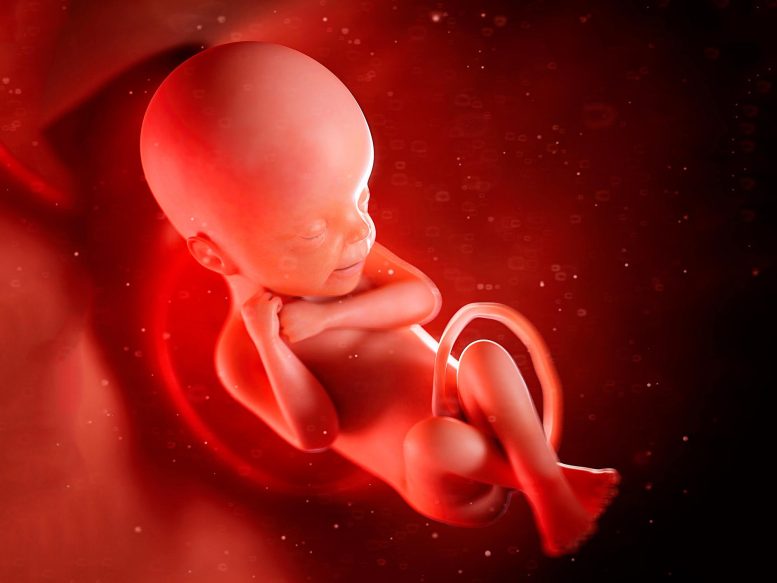
    Human Fetus Illustration
    A team of experts unanimously refuted the concept of a fetal microbiome and concluded that the detection of microbiomes in fetal tissues was due to the contamination of samples taken from the uterus. This contamination could have occurred during vaginal birth, medical procedures, or during laboratory testing.

    Leading experts from several scientific disciplines find flaws in studies that suggest the existence of a “fetal microbiome.”

    Scientific claims that babies harbor live bacteria while still in the womb are inaccurate, and may have impeded research progress, according to University College Cork (UCC) researchers at APC Microbiome Ireland, a world-leading Science Foundation Ireland (SFI) Research Centre, which led a perspective published today (January 25, 2023) in the prestigious scientific journal Nature.  

    Prior claims that the human placenta and amniotic fluid are normally colonized by bacteria would, if true, have serious implications for clinical medicine and pediatrics. It would also undermine established principles in immunology and reproductive biology.

    To examine these claims, UCC & APC Principal Investigator Prof. Jens Walter assembled a trans-disciplinary team of 46 leading experts in reproductive biology, microbiome science, and immunology from around the world to evaluate the evidence for microbes in human fetuses.

    Jens Walter
    University College Cork & APC Microbiome Ireland Principal Investigator Prof. Jens Walter assembled a trans-disciplinary team of 46 leading experts from around the world to evaluate the evidence for microbes in human fetuses. Credit: UCC

    A Healthy Human Fetus Is Sterile

    The team unanimously refuted the concept of a fetal microbiome and concluded that the detection of microbiomes in fetal tissues was due to contamination of samples drawn from the womb. Contamination occurred during vaginal delivery, clinical procedures, or during laboratory analysis.

    In the report in Nature, the international experts encourage researchers to focus their studies on the microbiomes of mothers and their newborn infants and on the microbial metabolites crossing the placenta which prepare the fetus for post-natal life in a microbial world.

    According to Prof. Walter: “This consensus provides guidance for the field to move forward, to concentrate research efforts where they will be most effective. Knowing that the fetus is in a sterile environment, confirms that colonization by bacteria happens during birth and in early post-natal life, which is where therapeutic research on modulation of the microbiome should be focused.”

    The expert international authors also provide guidance on how scientists in the future can avoid pitfalls of contamination in the analysis of other samples where microbes are expected to be absent or present at low levels, such as internal organs and tissues within the human body.  

    Reference: “Questioning the fetal microbiome and pitfalls of low-biomass microbial studies” by Katherine M. Kennedy, Marcus C. de Goffau, Maria Elisa Perez-Muñoz, Marie-Claire Arrieta, Fredrik Bäckhed, Peer Bork, Thorsten Braun, Frederic D. Bushman, Joel Dore, Willem M. de Vos, Ashlee M. Earl, Jonathan A. Eisen, Michal A. Elovitz, Stephanie C. Ganal-Vonarburg, Michael G. Gänzle, Wendy S. Garrett, Lindsay J. Hall, Mathias W. Hornef, Curtis Huttenhower, Liza Konnikova, Sarah Lebeer, Andrew J. Macpherson, Ruth C. Massey, Alice Carolyn McHardy, Omry Koren, Trevor D. Lawley, Ruth E. Ley, Liam O’Mahony, Paul W. O’Toole, Eric G. Pamer, Julian Parkhill, Jeroen Raes, Thomas Rattei, Anne Salonen, Eran Segal, Nicola Segata, Fergus Shanahan, Deborah M. Sloboda, Gordon C. S. Smith, Harry Sokol, Tim D. Spector, Michael G. Surette, Gerald W. Tannock, Alan W. Walker, Moran Yassour and Jens Walter, 25 January 2023, Nature.
    DOI: 10.1038/s41586-022-05546-8

    Never miss a breakthrough: Join the SciTechDaily newsletter.
    Follow us on Google and Google News.

    Microbiome Physiology Popular Pregnancy University College Cork
    Share. Facebook Twitter Pinterest LinkedIn Email Reddit

    Related Articles

    Your Gut Bacteria Could Be the Missing Link to Stress Relief

    Microbes Turn Back the Clock: New Research Discovers Their Potential To Reverse Aging in the Brain

    Scientists Explore Molecular Connections Between Genetics, Gut Microbiome, and Memory

    Birds and Bats Have Strange Gut Microbiomes — Why? Scientists Have a Theory

    Extra Finger Discovered on Aye-Aye, Making the World’s Weirdest Primate Even Weirder [Video]

    Neuroscientists Show High-Fructose Diet Hampers Brain Recovery

    KL001 Interacts With Cryptochrome, May Offer a New Way to Treat Diabetes

    Physical Properties of Stem Cells Predict What They Will Become

    PAPupuncture Offers Long-Lasting Pain Relief

    2 Comments

    1. Prudence Brissman Krieger (once Stewardson) on January 27, 2023 1:31 pm

      If maternal membranes are ruptured, the fetus can be infected before birth. If membranes are ruptured too long, we give antibiotics to the mother, so that the baby is not born in serious condition with Group B Strep. Of course babies encounter germs during the birth process. A long time ago, I wrote articles about this topic.

      Reply
      • K.sai lakshmi on November 16, 2024 4:41 am

        I need complete information about thath articles

        Reply
    Leave A Reply Cancel Reply

    • Facebook
    • Twitter
    • Pinterest
    • YouTube

    Don't Miss a Discovery

    Subscribe for the Latest in Science & Tech!

    Trending News

    The Universe Is Expanding Too Fast and Scientists Can’t Explain Why

    “Like Liquid Metal”: Scientists Create Strange Shape-Shifting Material

    Early Warning Signals of Esophageal Cancer May Be Hiding in Plain Sight

    Common Blood Pressure Drug Shows Surprising Power Against Deadly Antibiotic-Resistant Superbug

    Scientists Uncover Dangerous Connection Between Serotonin and Heart Valve Disease

    Scientists Discover a “Protector” Protein That Could Help Reverse Hair Loss

    Bone-Strengthening Discovery Could Reverse Osteoporosis

    Scientists Uncover Hidden Trigger Behind Stem Cell Aging

    Follow SciTechDaily
    • Facebook
    • Twitter
    • YouTube
    • Pinterest
    • Newsletter
    • RSS
    SciTech News
    • Biology News
    • Chemistry News
    • Earth News
    • Health News
    • Physics News
    • Science News
    • Space News
    • Technology News
    Recent Posts
    • Scientists Overcome Major Quantum Bottleneck, Potentially Transforming Teleportation and Computing
    • Quantum Physics’ Strangest Problem May Hold the Key to Time Itself
    • Scientists Create “Liquid Gears” That Spin Without Touching
    • The Simple Habit That Could Help Prevent Cancer
    • Forgotten Medicinal Plant Shows Promise in Fighting Dangerous Superbugs
    Copyright © 1998 - 2026 SciTechDaily. All Rights Reserved.
    • Science News
    • About
    • Contact
    • Editorial Board
    • Privacy Policy
    • Terms of Use

    Type above and press Enter to search. Press Esc to cancel.