
Close Menu
    Facebook X (Twitter) Instagram
    SciTechDaily
    • Biology
    • Chemistry
    • Earth
    • Health
    • Physics
    • Science
    • Space
    • Technology
    Facebook X (Twitter) Pinterest YouTube RSS
    SciTechDaily
    Home»Technology»Producing Semiconductors From Graphene
    Technology

    Producing Semiconductors From Graphene

    By Bård Amundsen/Thomas Keilman. Translation: Glenn Wells/Carol B. Eckmann, The Research Council of NorwaySeptember 28, 2012No Comments3 Mins Read
    Facebook Twitter Pinterest Telegram LinkedIn WhatsApp Email Reddit
    Share
    Facebook Twitter LinkedIn Pinterest Telegram Email Reddit
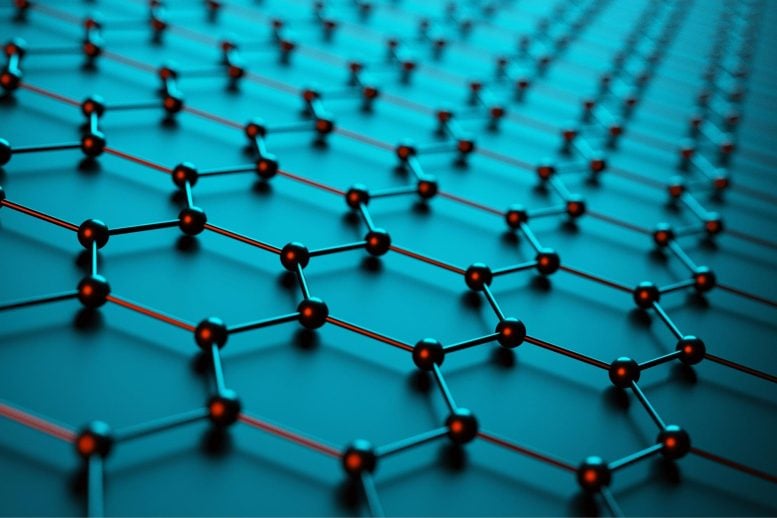
    Graphene Model
    Graphene consists of a single layer of carbon atoms.

    Norwegian scientists have developed a method for producing semiconductors from graphene, possibly revolutionizing the technology industry.

    The method involves growing semiconductor nanowires on graphene. To achieve this, researchers “bomb” the graphene surface with gallium atoms and arsenic molecules, thereby creating a network of minute nanowires.

    The result is a one-micrometer-thick hybrid material that acts as a semiconductor. By comparison, the silicon semiconductors in use today are several hundred times thicker. The semiconductors’ ability to conduct electricity may be affected by temperature, light, or the addition of other atoms.

    Fantastic potential

    Graphene is the thinnest material known, and at the same time one of the strongest. It consists of a single layer of carbon atoms and is both pliable and transparent. The material conducts electricity and heat very effectively. And perhaps most importantly, it is very inexpensive to produce.

    “Given that it’s possible to make semiconductors out of graphene instead of silicon, we can make semiconductor components that are both cheaper and more effective than the ones currently on the market,” explains Helge Weman of the Norwegian University of Science and Technology (NTNU). Dr. Weman is behind the breakthrough discovery along with Professor Bjørn-Ove Fimland.

    “A material comprising a pliable base that is also transparent opens up a world of opportunities, one we have barely touched the surface of,” says Dr. Weman. “This may bring about a revolution in the production of solar cells and LED components. Windows in traditional houses could double as solar panels or a TV screen. Mobile phone screens could be wrapped around the wrist like a watch. In short, the potential is tremendous.”


    This video explains the new material. Credit: CrayNano AS

    Broad-based public funding

    The researchers have received assistance in gaining patents and founding a company from NTNU Technology Transfer AS, a collaborative partner to the program entitled Commercialising R&D Results (FORNY2020) at the Research Council of Norway.

    However, the path to these remarkable findings started with basic research funded under the Research Council’s Clean Energy for the Future Programme (RENERGI) and the now-concluded program, Nanotechnology and New Materials (NANOMAT), which initiated the findings.

    Huge interest among electronics giants

    The researchers will now begin to create prototypes directed toward specific areas of application. They have been in contact with giants in the electronics industry such as Samsung and IBM. “There is tremendous interest in producing semiconductors out of graphene, so it shouldn’t be difficult to find collaborative partners,” Dr. Weman adds.

    The researchers are hoping to have the new semiconductor hybrid materials on the commercial market in roughly five years.

    Never miss a breakthrough: Join the SciTechDaily newsletter.
    Follow us on Google and Google News.

    Graphene Nanotechnology Semiconductors The Research Council of Norway
    Share. Facebook Twitter Pinterest LinkedIn Email Reddit

    Related Articles

    Artificial “Magnetic Texture” Induced in Graphene – May Lead to Powerful Quantum Computers

    Semiconducting Graphene Ribbons Developed for Electronics and Quantum Computing

    Roadmap: Silicon Technology Boost With Graphene and 2D Materials

    Graphene Center Laboratory is State of the Art “Nano-Factory”

    Bismuth-Antimony Material Shares Graphene’s Unusual Properties

    2-D Boron has Potential Advantages over Carbon Nanotubes

    Analyzing the Environmental Costs and Impacts of Technology

    “Designer Electrons” Have Tunable Properties

    Using Lasers to Cool Semiconductors

    Leave A Reply Cancel Reply

    • Facebook
    • Twitter
    • Pinterest
    • YouTube

    Don't Miss a Discovery

    Subscribe for the Latest in Science & Tech!

    Trending News

    Largest-Ever Study Finds Medicinal Cannabis Ineffective for Anxiety, Depression, PTSD

    250-Million-Year-Old Egg Solves One of Evolution’s Biggest Mysteries

    Living With Roommates Might Be Changing Your Gut Microbiome Without You Knowing

    Century-Old Cleaning Chemical Linked to 500% Increased Risk of Parkinson’s Disease

    What if Your Memories Never Happened? Physicists Take a New Look at the Boltzmann Brain Paradox

    One of the Universe’s Largest Stars May Be Getting Ready To Explode

    Scientists Discover Enzyme That Could Supercharge Ozempic-Like Weight Loss Drugs

    Popular Sweetener Linked to DNA Damage – “It’s Something You Should Not Be Eating”

    Follow SciTechDaily
    • Facebook
    • Twitter
    • YouTube
    • Pinterest
    • Newsletter
    • RSS
    SciTech News
    • Biology News
    • Chemistry News
    • Earth News
    • Health News
    • Physics News
    • Science News
    • Space News
    • Technology News
    Recent Posts
    • A Simpler Path to Super-Resolution: Scientists Reinvent Microscopy
    • Scientists Uncover Hidden Genetic Cause of Diabetes in Babies
    • Amazonian Chocolate Could Become the Next Superfood, Scientists Say
    • Challenging the Narrative: New Study Shows U.S. Life Expectancy Is Rising Across All States
    • Mystery Illness Kills 5 in Burundi As Doctors Scramble for Answers
    Copyright © 1998 - 2026 SciTechDaily. All Rights Reserved.
    • Science News
    • About
    • Contact
    • Editorial Board
    • Privacy Policy
    • Terms of Use

    Type above and press Enter to search. Press Esc to cancel.