
Close Menu
    Facebook X (Twitter) Instagram
    SciTechDaily
    • Biology
    • Chemistry
    • Earth
    • Health
    • Physics
    • Science
    • Space
    • Technology
    Facebook X (Twitter) Pinterest YouTube RSS
    SciTechDaily
    Home»Technology»Samarium Hexoboride Behaves Like a Topological Insulator
    Technology

    Samarium Hexoboride Behaves Like a Topological Insulator

    By SciTechDailyDecember 13, 2012No Comments3 Mins Read
    Facebook Twitter Pinterest Telegram LinkedIn WhatsApp Email Reddit
    Share
    Facebook Twitter LinkedIn Pinterest Telegram Email Reddit
    samarium-hexoboride
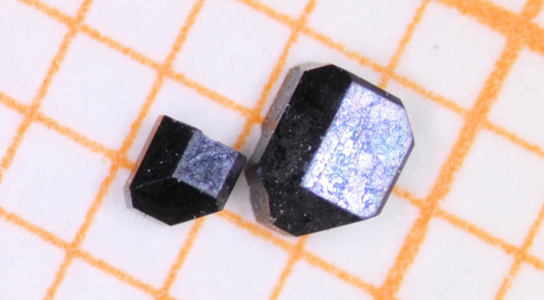
    Despite being insulators inside, samarium hexaboride crystals can conduct electricity on their surface. Credit: Johnpierre Paglione

    Samarium hexoboride, a compound that had been poorly understood and that can gain conducting properties at very low temperatures, maybe a topological insulator in its bulk form, conducting electricity on its surface while the rest of the material behaves like an insulator.

    The scientists published their findings in three papers in preprints on arXiv. This material could provide a boon for quantum physicists and electronic device makers.

    Theorists proposed the existence of such materials in 2005 and hoped to study the quantum effects that should emerge from such materials, and explore applications in low-power electronics as well as quantum computing. But topological insulators have proven difficult to make.

    Researchers at the University of California, Irvine, reported seeing remarkably fast-moving electrons on the surface of SmB6 crystals, which is a sign of a superb surface conductor. Five days later, researchers at the University of Maryland in College Park reported measurements tracing the path of electrons injected into SmB6 samples as they cooled. These results indicate that the material is insulating in its interior at temperatures below 30˚K (-243˚C or -406˚F).

    Prior to those two findings, a team from the University of Michigan in Ann Arbor and from the University of California, Irvine, described their measurements of conductivity through the surface and bulk of the material. They found that the conducting behavior persists despite imperfections and impurities, as they expected from a true topological insulator.

    It was predicted that SmB6 could act as a topological insulator. This prediction stemmed from the study of Kondo insulators, which retain some small amount of conductivity when they are cooled to a few degrees above absolute zero.

    As a topological insulator, the quantum properties of the material would be such that electrons cannot flow through it freely, as an ordinary conductor, except on the material’s surface. This could mean that insights gathered from SmB6 and other Kondo insulators could carry over to all topological insulators.

    On the surface of SmB6, the electrons on the outer shells of the samarium atoms interact strongly with each other, resulting in a coordinated motion. This could mean that the material could be useful in creating exotic quantum effects, like magnetic monopoles and Majorana fermions, which are quasiparticles useful for quantum computing.

    References:

    “Surface Hall Effect and Nonlocal Transport in SmB6: Evidence for Surface Conduction” by D. J. Kim, S. Thomas, T. Grant, J. Botimer, Z. Fisk and Jing Xia, 6 November 2013, Scientific Reports.
    DOI: 10.1038/srep03150

    “Hybridization, Inter-Ion Correlation, and Surface States in the Kondo Insulator SmB6 by Xiaohang Zhang, N. P. Butch, P. Syers, S. Ziemak, Richard L. Greene, and Johnpierre Paglione, 14 February 2013, Physical Review X.
    DOI: 10.1103/PhysRevX.3.011011

    “Low-temperature surface conduction in the Kondo insulator SmB6” by Steven Wolgast, Çağlıyan Kurdak, Kai Sun, J. W. Allen, Dae-Jeong Kim and Zachary Fisk, 27 November 2013, Physical Review B.
    DOI: 10.1103/PhysRevB.88.180405

    Never miss a breakthrough: Join the SciTechDaily newsletter.
    Follow us on Google and Google News.

    Materials Science Quantum Computing Quantum Mechanics Quantum Physics
    Share. Facebook Twitter Pinterest LinkedIn Email Reddit

    Related Articles

    A Simple Chemical Tweak Unlocks One of Quantum Computing’s Holy Grails

    Physicists Discover a New Way To Connect Qubits Using Crystal Imperfections

    This Quantum Electron Breakthrough Could Make Computers Faster Than Ever Before

    Stanford’s New Experimental Hardware Integrates Mechanical Devices Into Quantum Tech

    Ancient Namibian Gemstone Holds Key to Future Quantum Computers

    Researchers Demonstrate High Temperature Superconductivity in a Topological Insulator

    Quantum Computing Continues to Move Forward

    Photon Devices Could Outperform Traditional Computers

    Electronic Read-Out of the Quantum State of an Atom

    Leave A Reply Cancel Reply

    • Facebook
    • Twitter
    • Pinterest
    • YouTube

    Don't Miss a Discovery

    Subscribe for the Latest in Science & Tech!

    Trending News

    Artificial Sweeteners May Harm Future Generations, Study Suggests

    Splashdown! NASA Artemis II Returns From Record-Breaking Moon Mission

    What If Consciousness Exists Beyond Your Brain

    Scientists Finally Crack the 100-Million-Year Evolutionary Mystery of Squid and Cuttlefish

    Beyond “Safe Levels”: Study Challenges What We Know About Pesticides and Cancer

    Researchers Have Found a Dietary Compound That Increases Longevity

    Scientists Baffled by Bizarre “Living Fossil” From 275 Million Years Ago

    Your IQ at 23 Could Predict Your Wealth at 27, Study Finds

    Follow SciTechDaily
    • Facebook
    • Twitter
    • YouTube
    • Pinterest
    • Newsletter
    • RSS
    SciTech News
    • Biology News
    • Chemistry News
    • Earth News
    • Health News
    • Physics News
    • Science News
    • Space News
    • Technology News
    Recent Posts
    • What if Dark Matter Has Two Forms? Bold New Hypothesis Could Explain a Cosmic Mystery
    • Researchers Expose Hidden Chemistry of “Ore-Forming” Elements in Biology
    • Geologists Reveal the Americas Collided Earlier Than We Thought
    • 20x Difference: Study Reveals True Source of Airborne Microplastics
    • Scientists Uncover Hidden Force Powering Yellowstone’s Supervolcano
    Copyright © 1998 - 2026 SciTechDaily. All Rights Reserved.
    • Science News
    • About
    • Contact
    • Editorial Board
    • Privacy Policy
    • Terms of Use

    Type above and press Enter to search. Press Esc to cancel.