
Prehistoric communities in western Iran brought wild boars from far distances as symbolic gifts for a communal feast.
While magnets and shot glasses make for lighthearted holiday keepsakes, food items deeply tied to a country’s culture often hold greater sentimental value. Examples include French cheese, Dutch Stroopwafels, and Canadian maple syrup—gifts that speak to a place’s identity.
Recent research reveals that this idea of meaningful food gifting isn’t just modern. Around 11,000 years ago, during the Early Neolithic period, communities living in what is now western Iran embraced a similar tradition.
These early societies put considerable effort into hunting wild boars from scattered regions across the landscape. They then transported the animals to a communal feast held at the site now known as Asiab, located in the Zagros Mountains.
The study, carried out by an international team of scientists that included researchers from The Australian National University (ANU), shows that the concept of sharing foods with geographic significance during social gatherings has roots that stretch deep into human prehistory.
Culinary Traditions and Social Bonds
“Food and long-standing culinary traditions form an integral component of cultures all over the globe. It is for this reason holidays, festivals, and other socially meaningful events commonly involve food. For example, we cannot imagine Christmas without the Christmas meal, Eid without the food gifts, or Passover without matzo ball soup,” Dr Petra Vaiglova from ANU said.
The scientists unearthed the skulls of 19 wild boars that were neatly packed and sealed inside a pit within a round building at the Asiab site. Butchery marks on the animals’ skulls suggest they were used for feasting, but until now scientists were unsure where these boars came from.

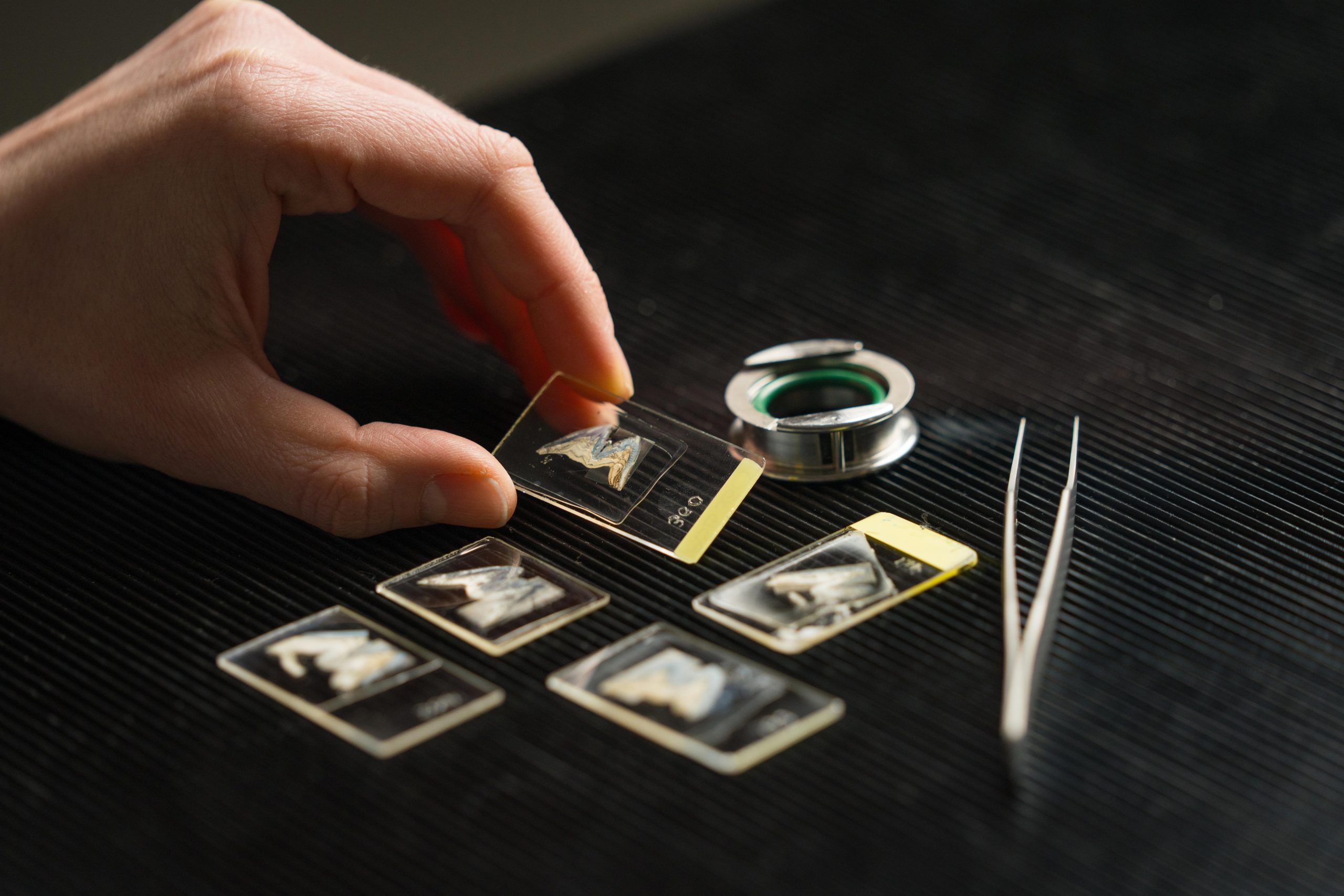
Dr Vaiglova and the international research team examined the tooth enamel of five of these wild boars. The researchers analyzed microscopic growth patterns and chemical signatures inside the enamel that offered “tell-tale” signs indicating that at least some of the boars used for the feast were not from the area where the gathering took place.
“Just like trees and their annual growth rings, teeth deposit visible layers of enamel and dentine during growth that we can count under the microscope. This is the first time these growth layers have been used to guide geochemical analysis of animal teeth to answer questions about human-animal interactions,” Dr Vaiglova said.
“Rainfall and bedrock have distinct isotopic values in different geographical locations. These isotopic values get incorporated into animal tissues through drinking water and food. Measuring the isotopic values of tooth enamel allowed us to assess whether all the animals came from the same part of the region or whether they originated from more dispersed locations.
Surprising Distances and Symbolic Meaning
“Because the values we measured across the five teeth showed a high amount of variability, it is unlikely that all the animals originated from the same location. It is possible that some of them originated roughly 70 kilometers away from the site where the feast took place.”
The researchers said it is surprising that these hunters went through such effort to kill and transport boars from their local region over difficult mountainous terrain during a journey that likely would have taken several days, especially considering boars were not the most hunted animal during the Early Neolithic period.
Dr Vaiglova said communities living in the Zagros Mountains at this time had a “very diverse hunting strategy” and were hunting lots of different animal species.
“Boars are especially aggressive and so displaying them as hunting trophies or presenting them at a feast carries with it a certain element of significance. Bringing these animals from distant locations would have undoubtedly helped celebrate the importance of the social event that took place at Asiab,” she said.
“What is special about the feast at Asiab is not only its early date and that it brought together people from across the wider region, but also the fact that people who participated in this feast invested substantial amounts of effort to ensure that their contributions involved an element of geographic symbolism. This feast also took place at a time that pre-dates agriculture and farming practices.
“This was clearly a very meaningful event, and the fact that people put in so much effort to transport the boars over such challenging terrain provides us with a glimpse of how old the tradition of bringing geographically meaningful gifts to social events really is.
“These people were clearly the ultimate dinner party guests.”
Reference: “Transport of animals underpinned ritual feasting at the onset of the Neolithic in southwestern Asia” by Petra Vaiglova, Horst Kierdorf, Carsten Witzel, Georgina Falster, Renaud Joannes-Boyau, Yue Wang, Jiade Wu, Ian Williams, Brett Knowles, Yang Wu, Pernille Bangsgaard, Lisa Yeomans, Tobias Richter and Hojjat Darabi, 3 July 2025, Communications Earth & Environment.
DOI: 10.1038/s43247-025-02501-z
Funding: New Researcher Grant (Griffith University Arts, Education, and Law Group), Early Career Researcher Grant Development Award (Griffith Centre for Social and Cultural Research and the Australian Research Centre for Human Evolution), Early Career Research Support Award (Society for Archaeological Science), David Foundation Grant
Never miss a breakthrough: Join the SciTechDaily newsletter.
Follow us on Google and Google News.