
Paleontologists identified a new dinosaur species from a 125-year-old Welsh fossil. The animal was a giant Triassic theropod.
Paleontologists at the University of Bristol have confirmed a new dinosaur species from Triassic deposits in South Wales, near Penarth, more than 125 years after the fossil was first recorded.
Through advanced digital scanning methods, the team re-examined a jawbone fossil that has been known since 1899 and displayed for decades at the National Museum of Wales, but which had never been accurately classified.
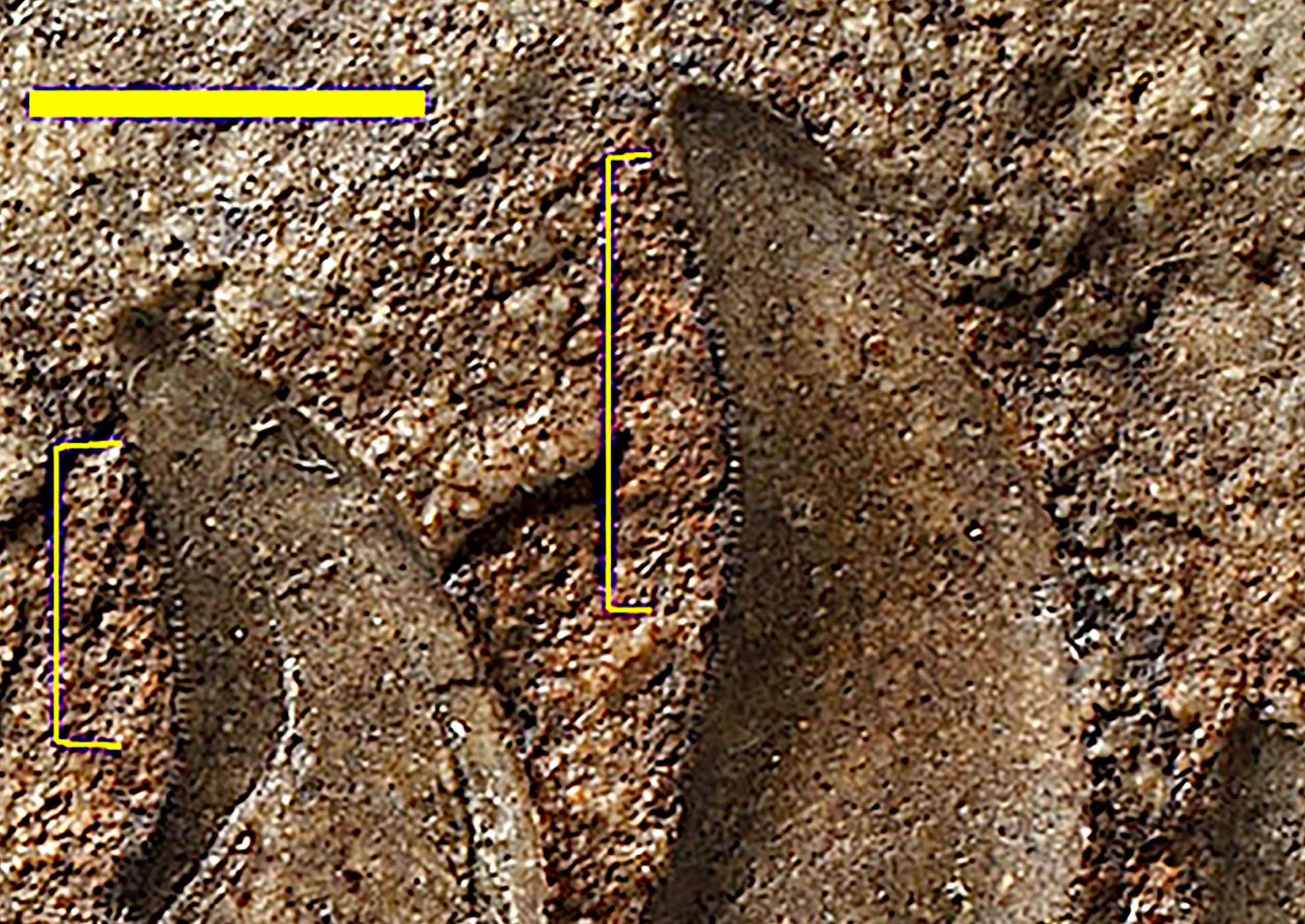
The specimen survives only as natural moulds of the jawbone preserved in rock, with all original bone material lost. Using photogrammetry, paleontology student Owain Evans produced a precise 3D digital reconstruction, allowing the fossil to be studied in detail for the first time.
Naming the newtonsaurus
Owain Evans said: “This specimen has been referred to many times in scientific papers, but had yet to be successfully identified – we were not even sure whether it was a dinosaur. It was named Zanclodon cambrensis by Edwin Tully Newton in 1899, but we knew the name Zanclodon had been abandoned as referring to a broad variety of early reptiles. Therefore, we name it after Newton, calling it Newtonsaurus. It is different from all other dinosaurs from around that time, and requires a distinctive name.”
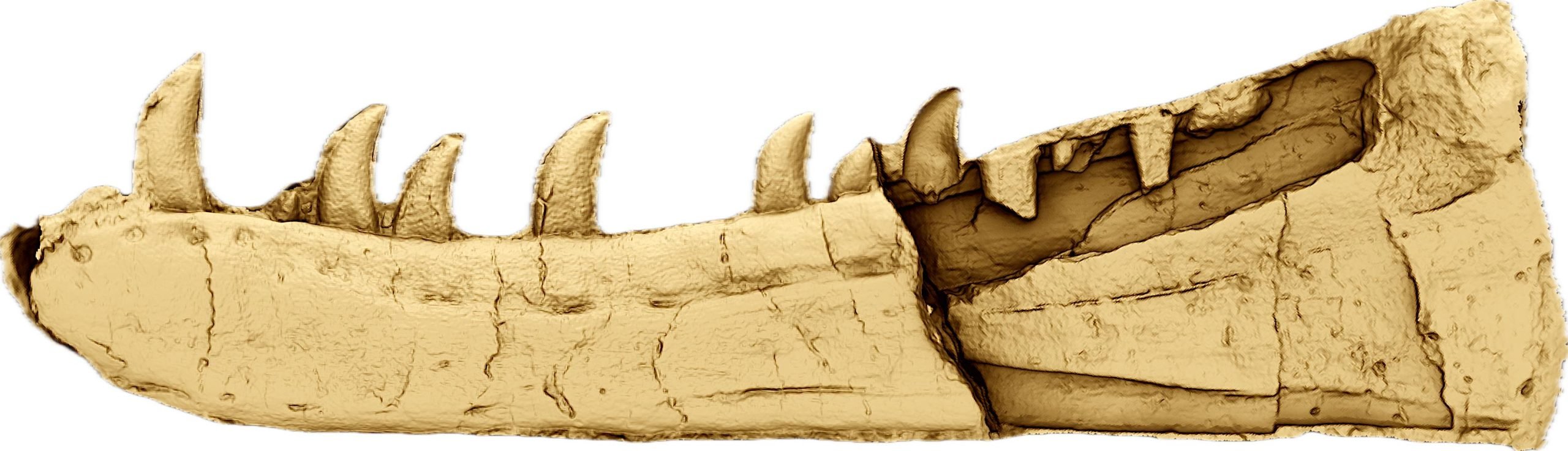
Professor Michael J Benton, who is the senior author on the paper, said: “The natural molds of the inner and outer faces of the jawbone show amazing detail – every groove, ridge, tooth, and even the serrations along the edges of the teeth. We decided to use digital photography to make a 3D model. We began by surface scanning the fossil using photogrammetry. Once we had our digital scan, we then inverted it – essentially giving us a digital negative of the mold. It was then a simple case of fusing the two sides together and analyzing the anatomy from there. The digital reconstruction we have extracted from the specimen gives a much better idea of what the original structure of the bone would have looked like.”
Confirming it was a theropod
Now that the fossil could be studied, the team was able to use its anatomy to piece together its position in the reptile family tree – and most crucially – whether it was a dinosaur or not.
Owain Evans said: “We can now confirm that this specimen very likely belonged to a large predatory theropod dinosaur, that roamed the shores of South Wales during the latest Triassic. It has some definite unique dinosaur features in the emplacement of the teeth, and it is a theropod – a predatory, flesh-eating dinosaur. Otherwise, it sits near the origins of both major divisions of Theropoda, the Coelophysoidea and the Averostra.
“Most unexpected is the size of the animal. The preserved jawbone is 28 cm long, and that is just the front half, so originally the jawbone was 60 cm long, corresponding to a dinosaur with a body length of 5-7 meters. This is unusually large for a Triassic theropod, most of which were half the size or smaller.”
Cindy Howells at the National Museum of Wales said: “These historical specimens are vitally important in paleontology and often yield new and exciting results – even if they have been sitting in collections for years. The Victorians were fascinated by the fossil record and prospected all across the UK for fossils. On top of this, the re-description of Newtonsaurus cambrensis once again highlights the significance of Wales in paleontological research. These Triassic beds are rare worldwide, and yet there are several across Wales. There might very well be another dinosaur waiting to be discovered.”
Reference: “Re-assessment of a large archosaur dentary from the Late Triassic of South Wales, United Kingdom” by Owain Evans, Cindy Howells, Nathan Wintle and Michael J. Benton, 11 September 2025, Proceedings of the Geologists’ Association.
DOI: 10.1016/j.pgeola.2025.101142
Never miss a breakthrough: Join the SciTechDaily newsletter.
Follow us on Google and Google News.