

A new review of Triassic fossils from Germany reveals rich tetrapod diversity and links to modern biodiversity and climate research.
The Triassic period marks a crucial chapter in the evolution of life on Earth. Following one of the largest mass extinctions 252 million years ago, dinosaurs and many other groups of terrestrial tetrapods appeared and spread across a wide range of habitats. Since the early 19th century, the Central European Basin has played a key role in Triassic research and continues to produce remarkable fossil discoveries. In particular, the rock layers and fossil preservation in southwest Germany are exceptional.
An international research team from the State Museum of Natural History in Stuttgart, led by paleontologists Dr. Eudald Mujal and Prof. Rainer Schoch, has now published a comprehensive overview of Triassic terrestrial tetrapods from this region.

For the first time, the study combines all known fossilized skeletal remains and footprints. Many of these specimens come from the museum’s extensive paleontological collections. Published in the journal Earth-Science Reviews, the research offers a detailed reconstruction of Triassic tetrapod faunas, their ancient environments, ecological roles, and evolutionary history.
The Triassic in south-west Germany
The Triassic covers the period from 252 to 201 million years ago. The area of present-day Baden-Württemberg was a central part of the Central European Basin. The extraordinary abundance of fossils and the extensive outcrops of Triassic rocks of this region makes it easy to reconstruct the ecosystems of that time.
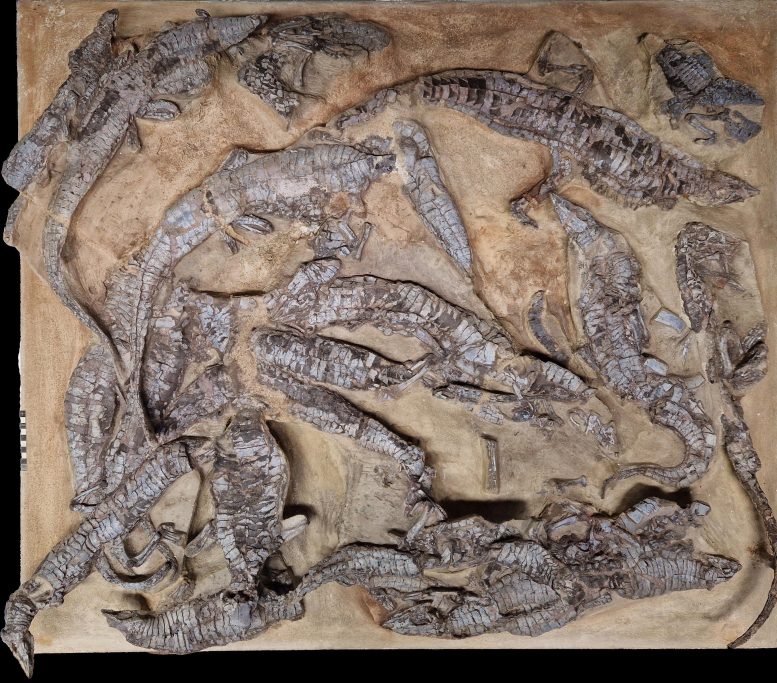
“The Triassic is an important window into the past for understanding evolutionary patterns, adaptations, and the emergence of ecological niches. Terrestrial tetrapod communities are particularly fascinating. The rise of the dinosaurs began in the Triassic, there were already predecessors of modern mammals, and predatory crocodile relatives encountered giant amphibians. Research into the environment and animal communities is extremely exciting for us,” says Dr. Eudald Mujal, paleontologist at the State Museum of Natural History in Stuttgart and first author of the study.
Ecology, biodiversity, climate change
Research shows that the Triassic was an important period in Earth’s history, laying the foundations for the development of complex life forms and the terrestrial tetrapod ecosystems as we understand them today.
By combining different research approaches, scientists can make far-reaching statements about biodiversity, the ecology of individual species, or the changing climatic conditions of the time. At the same time, the large number of fossils studied indicates a greater diversity of terrestrial vertebrates in the Triassic than previously thought.
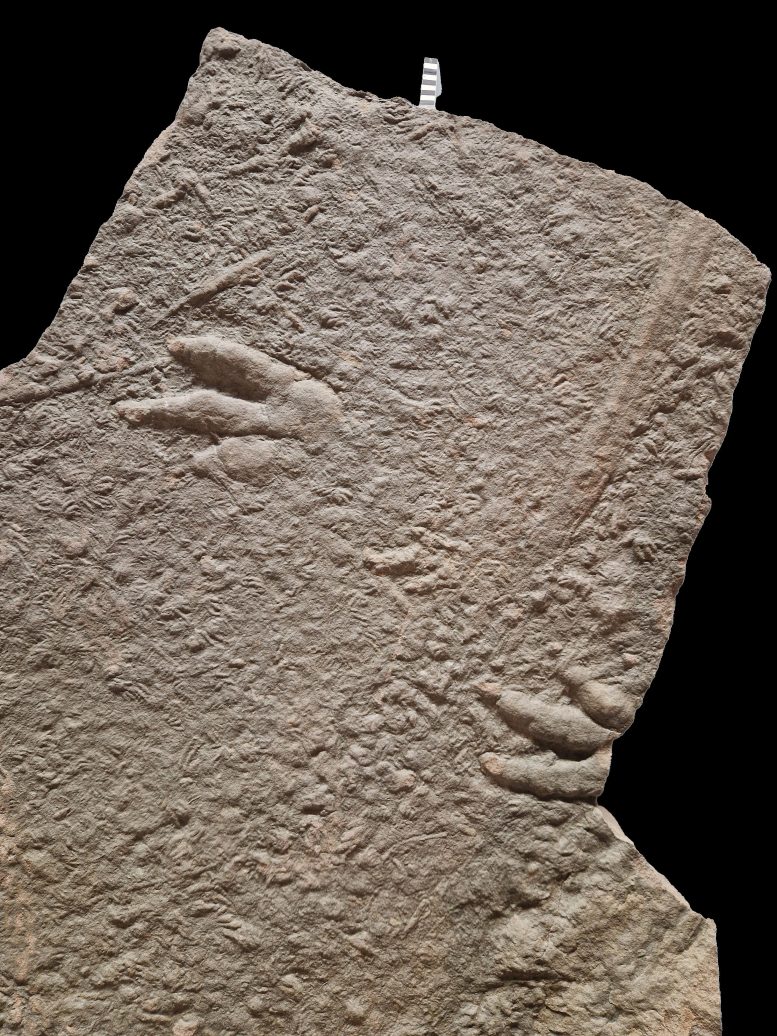
“We have correlated all the fossil finds with their palaeoenvironments. This has allowed us to understand how Triassic tetrapod communities evolved in their environment and how they responded to climate change, for example. Our results can also serve as a model for present-day ecosystems. A comprehensive overview of a geological period, like the Triassic, can also help us to assess the long-term consequences of climate change and biodiversity loss today,” says Mujal.
Important fundamental work for paleontology
The fossil collections of the State Museum of Natural History Stuttgart are of worldwide importance and a reference for the study of the Triassic. The recently published review work was made possible by the collaboration of an interdisciplinary research group at the State Museum of Natural History Stuttgart, in which specialists work on various aspects and tetrapod groups of the Triassic.
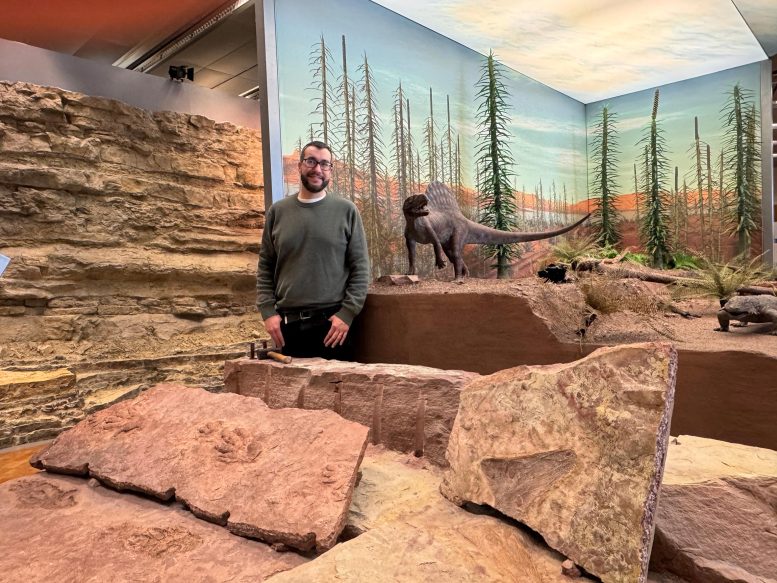
Some 250 million years ago, during the Buntsandstein period, the landscape was almost barren and desert-like. Fossil tracks (in the foreground) and individual skeletal remains tell us about the inhabitants of this habitat. Crocodile ancestors, some with sails on their back, were reptiles that lived here. Credit: SMNS, M.Rech
“Our team has analyzed all the relevant fossils and geological strata of the Triassic in southern Germany and other parts of Europe for this important project, combining different research approaches. At the same time, a comprehensive literature review was carried out. Overall, the publication makes an important contribution to our understanding of the history of the Earth and the evolution of its organisms,” says Prof. Rainer Schoch, Head of Palaeontology at the State Museum of Natural History Stuttgart and senior author of the study.
Special exhibition “Triassic Life” in Stuttgart
The Museum am Löwentor in Stuttgart displays numerous finds of terrestrial tetrapods from the Triassic period, including crocodile relatives – the top predators of their time – giant amphibians, the world’s oldest turtle, the first dinosaurs in Europe, aetosaurs and remains of the first tiny ancestors of today’s mammals. From 17 October 2025, the State Museum of Natural History Stuttgart will also be showing the major special exhibition of Baden-Württemberg ‘Triassic Life – Aufbruch in die Zeit der Saurier’, with more exciting finds from the Triassic period.
Reference: “Triassic terrestrial tetrapod faunas of the Central European Basin, their stratigraphical distribution, and their palaeoenvironments” by Eudald Mujal, Hans-Dieter Sues, Raphael Moreno, Joep Schaeffer, Gabriela Sobral, Sanjukta Chakravorti, Stephan N.F. Spiekman and Rainer R. Schoch, 4 March 2025, Earth-Science Reviews.
DOI: 10.1016/j.earscirev.2025.105085
Never miss a breakthrough: Join the SciTechDaily newsletter.
Follow us on Google and Google News.
3 Comments
Absolute rubbish.
What makes you say that?
What makes you say that