
Close Menu
    Facebook X (Twitter) Instagram
    SciTechDaily
    • Biology
    • Chemistry
    • Earth
    • Health
    • Physics
    • Science
    • Space
    • Technology
    Facebook X (Twitter) Pinterest YouTube RSS
    SciTechDaily
    Home»Chemistry»98% Efficiency: Scientists Unveil Game-Changing Nanoplastic Removal Technology
    Chemistry

    98% Efficiency: Scientists Unveil Game-Changing Nanoplastic Removal Technology

    By University of Missouri-ColumbiaAugust 18, 20241 Comment4 Mins Read
    Facebook Twitter Pinterest Telegram LinkedIn WhatsApp Email Reddit
    Share
    Facebook Twitter LinkedIn Pinterest Telegram Email Reddit
    Gary Baker
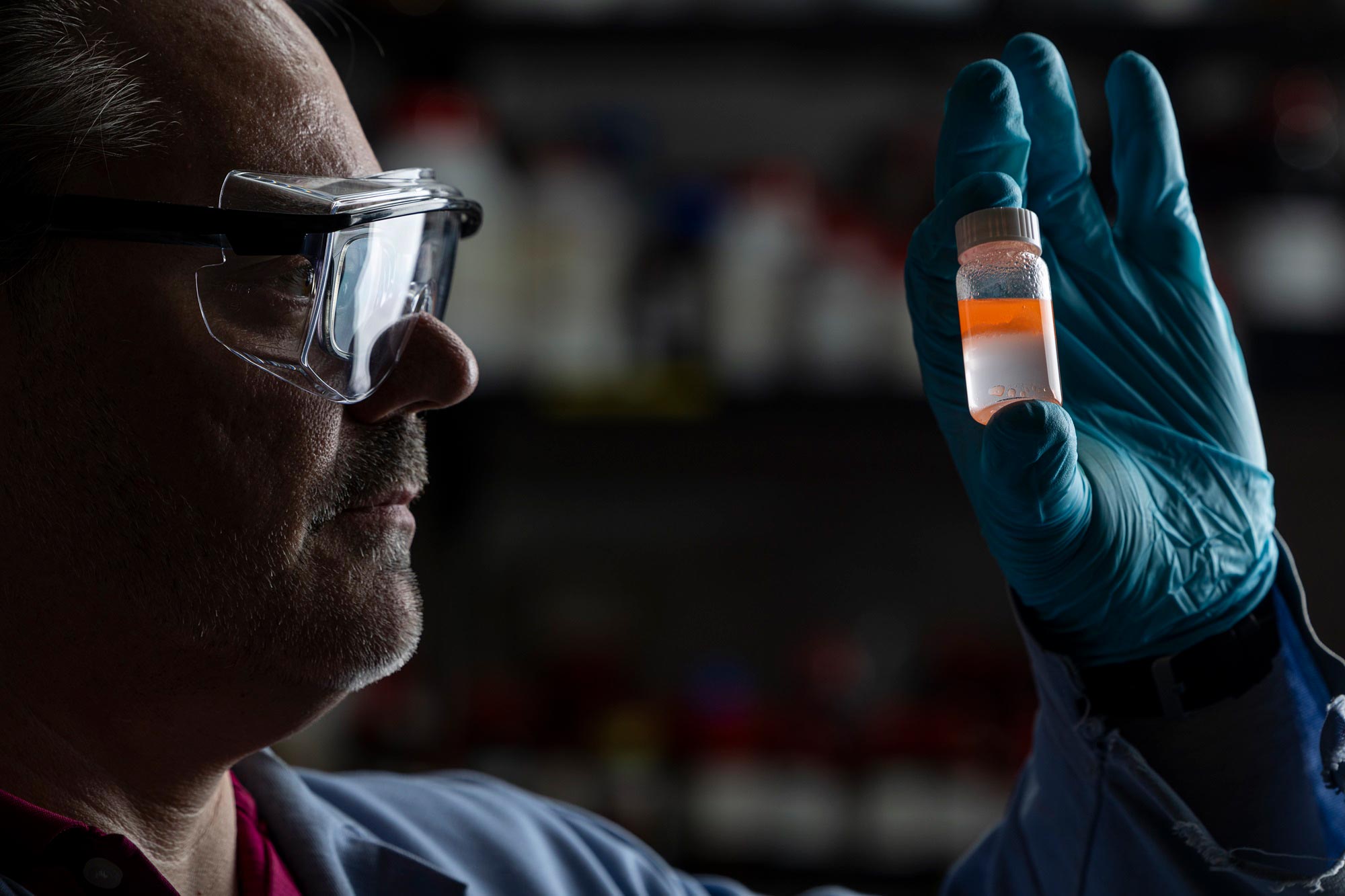
    “Our strategy uses a small amount of designer solvent to absorb plastic particles from a large volume of water,” said Gary Baker, an associate professor in the University of Missouri’s Department of Chemistry. Credit: Sam O’Keefe/University of Missouri

    A team at the University of Missouri has devised a method to eliminate most nanoplastics from water using eco-friendly solvents, suitable for both fresh and saltwater applications.

    Nanoplasticst are an emerging enemy of human health. Much smaller in size than the diameter of an average human hair, nanoplastics are invisible to the naked eye.

    Linked to cardiovascular and respiratory diseases in people, nanoplastics continue to build up, largely unnoticed, in the world’s bodies of water. The challenge remains to develop a cost-effective solution to get rid of nanoplastics while leaving clean water behind.

    Now, researchers at the University of Missouri have developed a revolutionary liquid-based solution that eliminates more than 98% of these microscopic plastic particles from water. This method, detailed in new study published in ACS Applied Engineering Materials, promises significant advancements in water purification technology.
    Gary Baker With Solvent
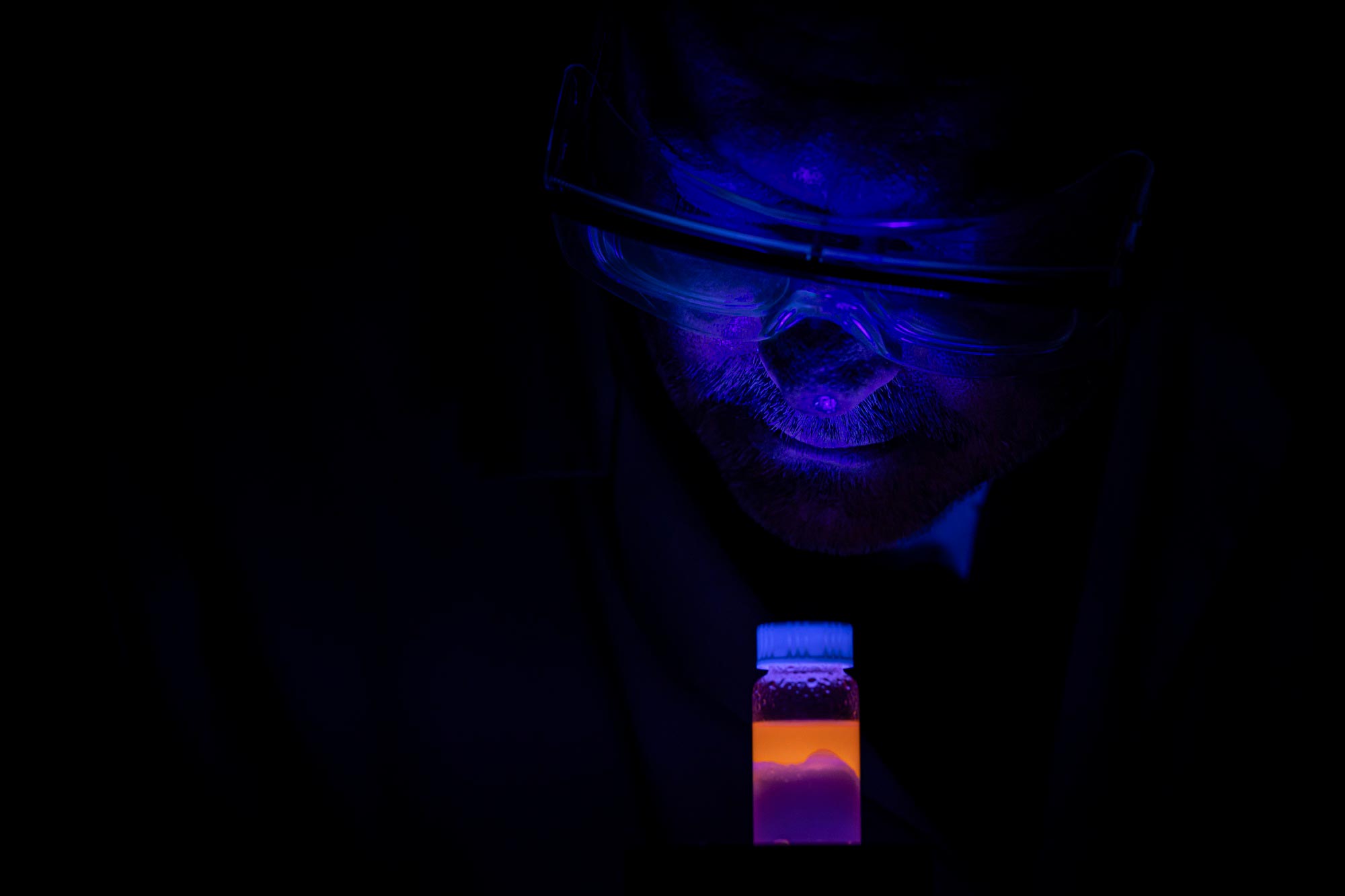
    Gary Baker, an associate professor in the University of Missouri’s Department of Chemistry, looks at a bottle of a new liquid-based solution that eliminates more than 98% of microscopic plastic particles from water. Credit: Sam O’Keefe/University of Missouri

    “Nanoplastics can disrupt aquatic ecosystems and enter the food chain, posing risks to both wildlife and humans,” said Piyuni Ishtaweera, a recent alumna who led the study while earning her doctorate in nano and materials chemistry at Mizzou. “In layman’s terms, we’re developing better ways to remove contaminants such as nanoplastics from water.”

    Innovative Purification Methods

    The novel method — using water-repelling solvents made from natural ingredients — not only offers a practical solution to the pressing issue of nanoplastic pollution but also paves the way for further research and development in advanced water purification technologies.
    Nanoplastic Purification Solution
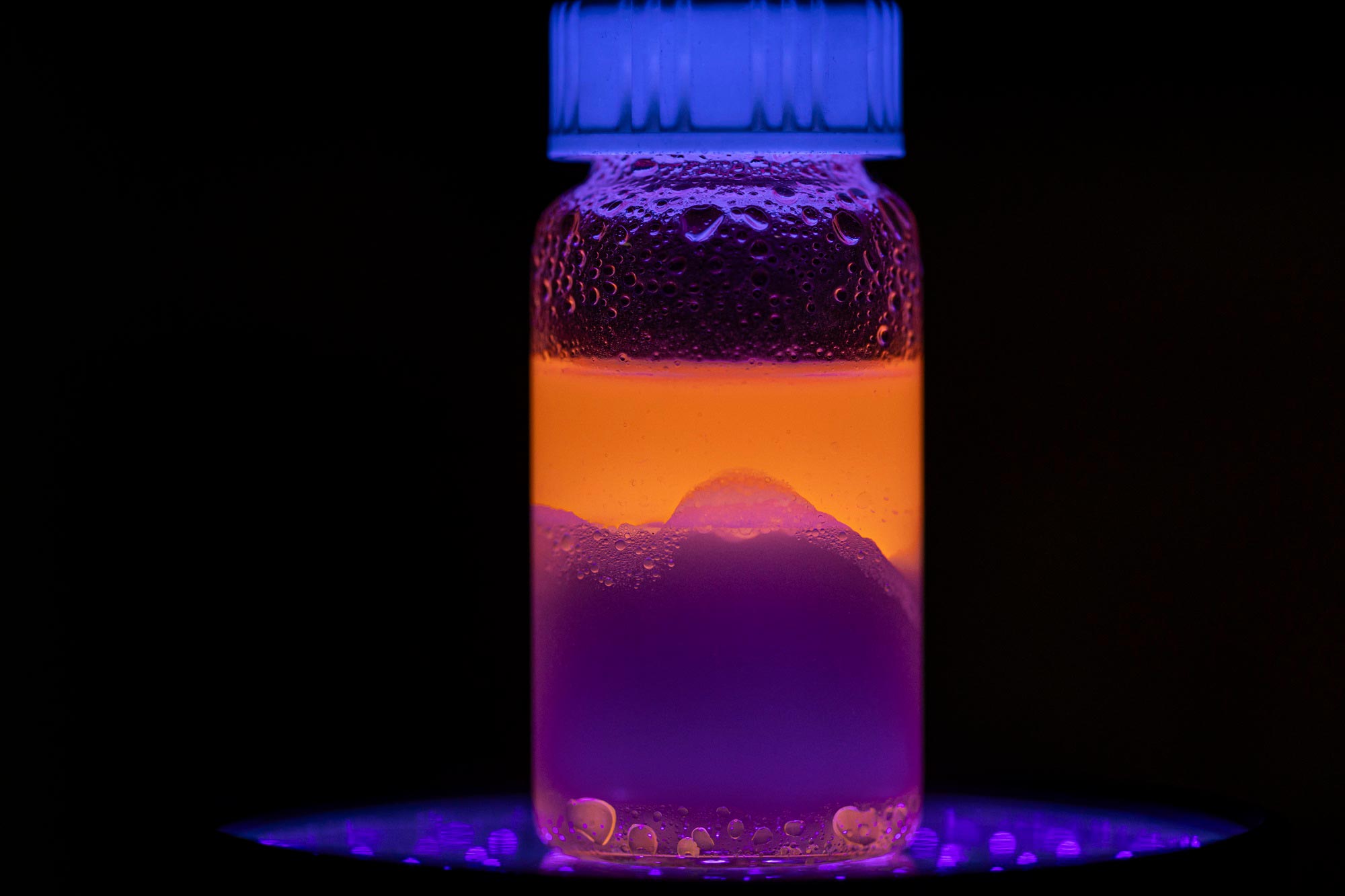
    Once mixed with water and allowed to reseparate, the solvent floats back to the surface, carrying the nanoplastics within its molecular structure. Credit: Sam O’Keefe/University of Missouri

    “Our strategy uses a small amount of designer solvent to absorb plastic particles from a large volume of water,” said Gary Baker, an associate professor in Mizzou’s Department of Chemistry and the study’s corresponding author. “Currently, the capacity of these solvents is not well understood. In future work, we aim to determine the maximum capacity of the solvent. Additionally, we will explore methods to recycle the solvents, enabling their reuse multiple times if necessary.”

    Scaling and Future Applications

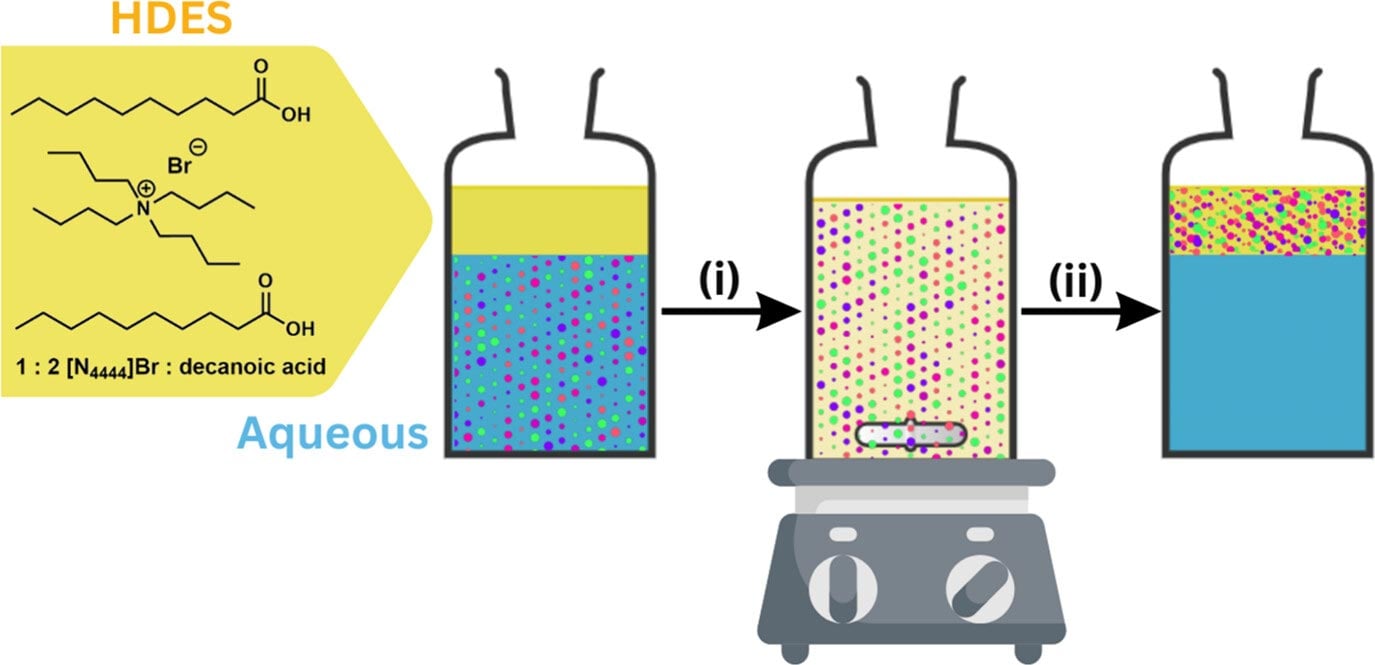
    Initially, the solvent sits on the water’s surface the way oil floats on water. Once mixed with water and allowed to reseparate, the solvent floats back to the surface, carrying the nanoplastics within its molecular structure.

    In the lab, the researchers simply use a pipette to remove the nanoplastic-laden solvent, leaving behind clean, plastic-free water. Baker said future studies will work to scale up the entire process so that it can be applied to larger bodies of water like lakes and, eventually, oceans.
    Nanoplastic Solvent Graphic
    This illustration outlines the two-step extraction method. Credit: Gary Baker

    Implications and Next Steps

    Ishtaweera, who now works at the U.S. Food and Drug Administration in St. Louis, noted that the new method is effective in both fresh and saltwater.

    “These solvents are made from safe, non-toxic components, and their ability to repel water prevents additional contamination of water sources, making them a highly sustainable solution,” she said. “From a scientific perspective, creating effective removal methods fosters innovation in filtration technologies, provides insights into nanomaterial behavior and supports the development of informed environmental policies.”

    The Mizzou team tested five different sizes of polystyrene-based nanoplastics, a common type of plastic used in the making of Styrofoam cups. Their results outperformed previous studies that largely focused on just a single size of plastic particles.

    Reference: “Nanoplastics Extraction from Water by Hydrophobic Deep Eutectic Solvents” by Piyuni Ishtaweera, Colleen L. Ray, Wyland Filley, Garrett Cobb and Gary A. Baker, 4 June 2024, ACS Applied Engineering Materials.
    DOI: 10.1021/acsaenm.4c00159

    Never miss a breakthrough: Join the SciTechDaily newsletter.
    Follow us on Google and Google News.

    Chemical Engineering Environmental Science Plastic Pollution Public Health Seawater University of Missouri-Columbia Water Water Quality
    Share. Facebook Twitter Pinterest LinkedIn Email Reddit

    Related Articles

    These Molecular Filters Thousands of Times Thinner Than a Human Hair Could Change How the World Cleans Water

    Researchers Discover Simple Solution To Break Down “Forever” Chemicals

    MIT Unveils a Biodegradable Alternative to Microplastic Beads

    New Wood-Based Technology Can Easily Purify Contaminated Water

    Transforming the Plastic Lifecycle Into a Circle

    Extremely Efficient New Method for Removing Heavy-Metal Contaminants From Drinking Water

    New Environmentally-Friendly Method Developed for Removing Toxic Chemicals From Water

    Chemists Develop Simple, Cost-Effective Method to Break Down Water Pollutants

    UCLA Nanoscientists Develop a Better Way to Remove Pollutants from Water

    1 Comment

    1. Boba on August 18, 2024 5:37 pm

      Just the last week they’d announced the “gamechanging” laser to deal with nanoplastic… Or was it microplastic? Can’t remember. Anyway, it’s tiny. A week before that, it was some other gamechanging thingy.

      What they all have in common is that they stop being “gamechanging” as soon as they bump into the problem of scale. To meet the demand of the real world, these things need to be produced in millions.

      In the case of these “eco friendly” solvents, something tells me that they would not be that eco friendly if they were produced in millions of gallons and spilled into drinking water systems.

      Reply
    Leave A Reply Cancel Reply

    • Facebook
    • Twitter
    • Pinterest
    • YouTube

    Don't Miss a Discovery

    Subscribe for the Latest in Science & Tech!

    Trending News

    Scientists Uncover Potential Brain Risks of Popular Fish Oil Supplements

    Scientists Discover a Surprising Way To Make Bread Healthier and More Nutritious

    After 60 Years, Scientists Uncover Unexpected Brain Effects of Popular Diabetes Drug Metformin

    New Research Uncovers Hidden Side Effects of Popular Weight-Loss Drugs

    Scientists Rethink Extreme Warming After Surprising Ocean Discovery

    Landmark Study Links Never Marrying to Significantly Higher Cancer Risk

    Researchers Discover Unknown Beetle Species Just Steps From Their Lab

    Largest-Ever Study Finds Medicinal Cannabis Ineffective for Anxiety, Depression, PTSD

    Follow SciTechDaily
    • Facebook
    • Twitter
    • YouTube
    • Pinterest
    • Newsletter
    • RSS
    SciTech News
    • Biology News
    • Chemistry News
    • Earth News
    • Health News
    • Physics News
    • Science News
    • Space News
    • Technology News
    Recent Posts
    • Early Warning Signals of Esophageal Cancer May Be Hiding in Plain Sight
    • Researchers Have Discovered a THC-Free Cannabis Compound That May Replace Opioids
    • Common Blood Pressure Drug Shows Surprising Power Against Deadly Antibiotic-Resistant Superbug
    • Students Build Dark Matter Detector and Set New Experimental Limits
    • Scientists Discover Caffeine Can Repair Key Memory Circuits After Sleep Loss
    Copyright © 1998 - 2026 SciTechDaily. All Rights Reserved.
    • Science News
    • About
    • Contact
    • Editorial Board
    • Privacy Policy
    • Terms of Use

    Type above and press Enter to search. Press Esc to cancel.