
Giant Galaxies May Be More Common Than Previously Believed
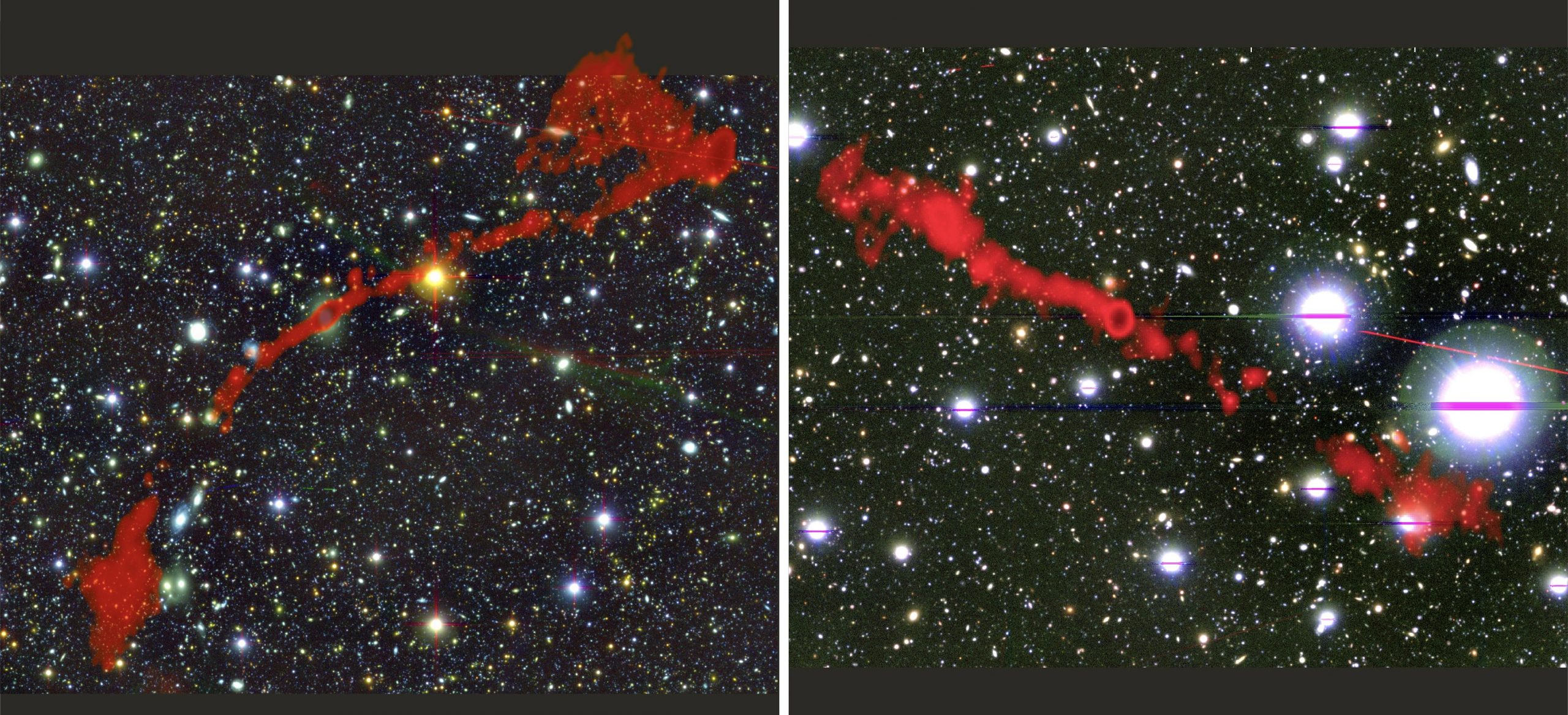
Two giant radio galaxies have been discovered with South Africa’s powerful MeerKAT telescope. These galaxies are thought to be amongst the largest single objects in the Universe. The discovery has been published today in Monthly Notices of the Royal Astronomical Society.
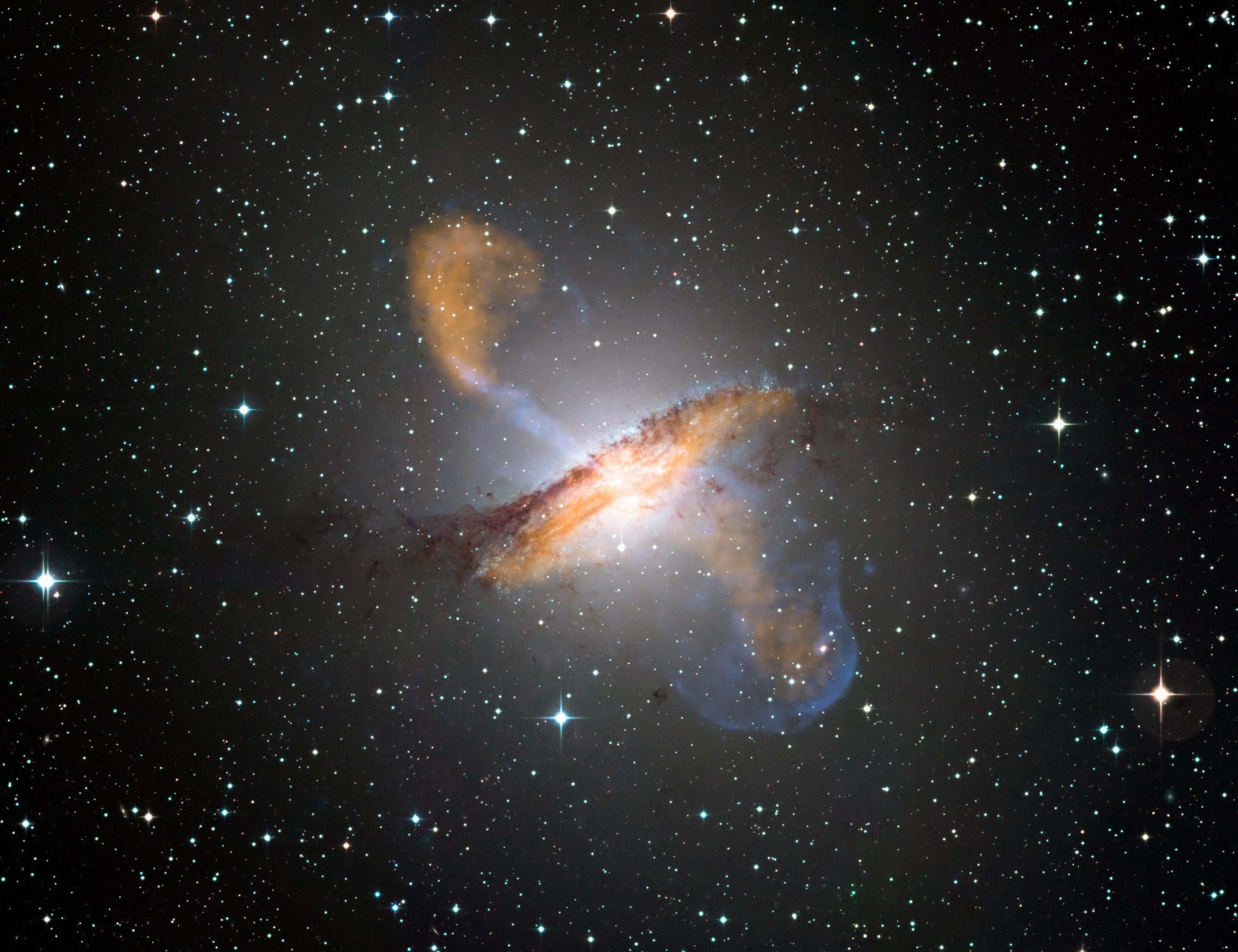
Whereas normal radio galaxies are fairly common, only a few hundred of these have radio jets exceeding 700 kilo-parsecs in size, or around 22 times the size of the Milky Way. These truly enormous systems are dubbed ‘giant radio galaxies’.
Despite the scarcity of giant radio galaxies, the authors found two of these cosmic beasts in a remarkably small patch of sky.
Significance of the Findings
Dr. Jacinta Delhaize, a Research Fellow at the University of Cape Town and lead author of the work, said: “We found these giant radio galaxies in a region of sky which is only about 4 times the area of the full Moon. Based on our current knowledge of the density of giant radio galaxies in the sky, the probability of finding two of them in this region is less than 0.0003 percent.”
“This means that giant radio galaxies are probably far more common than we thought!”
Implications for Galaxy Evolution
Dr. Matthew Prescott, a Research Fellow at the University of the Western Cape and co-author of the work, said, “These two galaxies are special because they are amongst the largest giants known, and in the top 10 percent of all giant radio galaxies. They are more than 2 Mega-parsecs across, which is around 6.5 million light years or about 62 times the size of the Milky Way. Yet they are fainter than others of the same size.”
“We suspect that many more galaxies like these should exist, because of the way we think galaxies grow and change over their lifetimes.”
Why so few radio galaxies have such gigantic sizes remains something of a mystery. It is thought that the giants are the oldest radio galaxies, which have existed for long enough (several hundred million years) for their radio jets to grow outwards to these enormous sizes. If this is true, then many more giant radio galaxies should exist than are currently known.
The giant radio galaxies were spotted in new radio maps of the sky created by the MeerKAT International Gigahertz Tiered Extragalactic Exploration (MIGHTEE) survey. It is one of the large survey projects underway with South Africa’s impressive MeerKAT radio telescope, a precursor to the Square Kilometer Array (SKA), which is due to become fully operational in the mid-2020s.
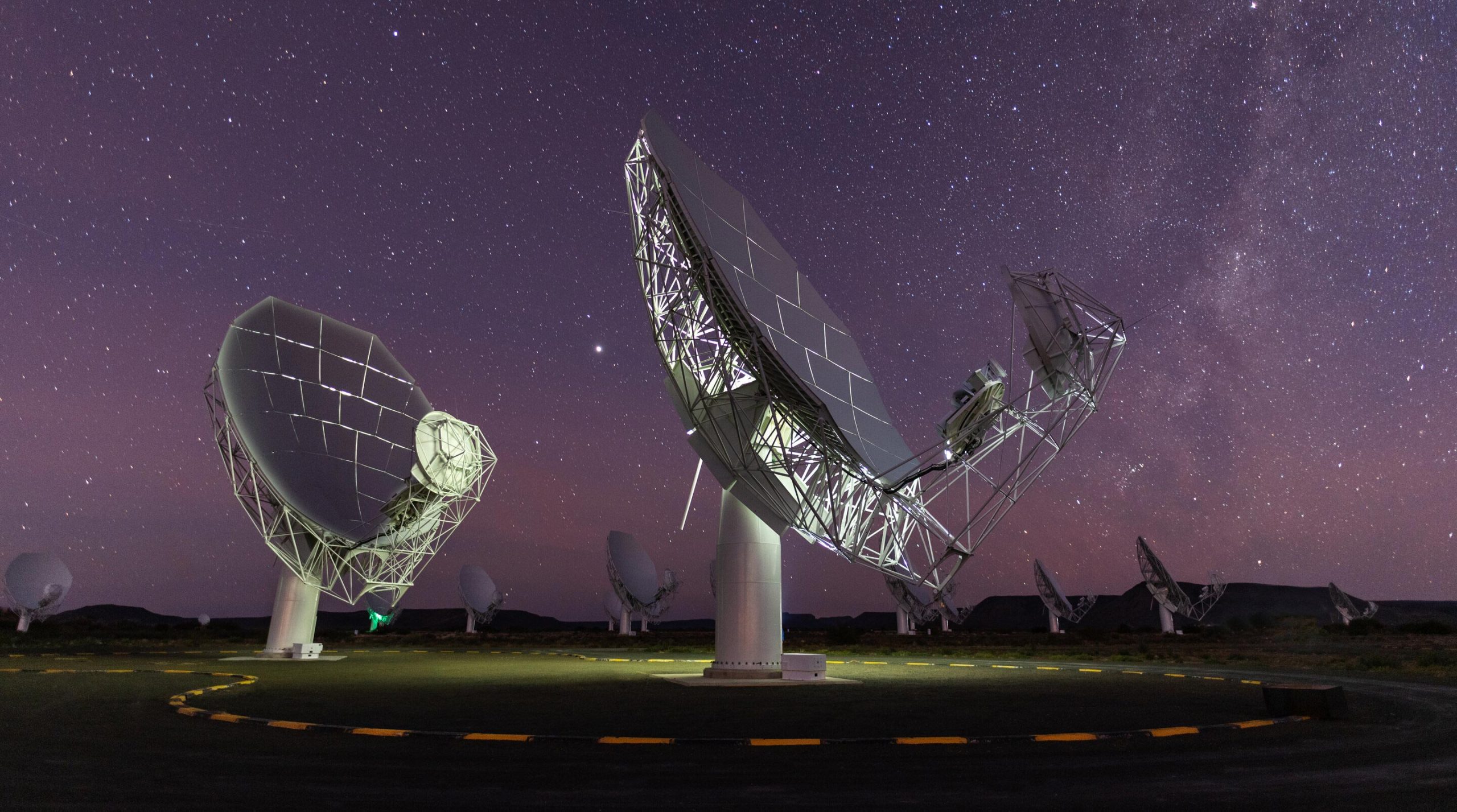
Dr. Ian Heywood, a co-author at the University of Oxford, said “The MeerKAT telescope is the best of its kind in the world. We have managed to identify these giant radio galaxies for the first time because of MeerKAT’s unprecedented sensitivity to faint and diffuse radio light.”
Dr. Delhaize adds, “In the past, this population of galaxies has been hidden from our ‘sight’ by the technical limitations of radio telescopes. However, it is now being revealed thanks to the impressive capabilities of the new generation of telescopes.”
Construction of the highly anticipated trans-continental SKA telescope is due to commence in South Africa and Australia in 2021, and continue until 2027. Science commissioning observations could begin as early as 2023, and it is hoped that the telescope will reveal larger populations of radio galaxies than ever before and revolutionize our understanding of galaxy evolution.
Reference: “MIGHTEE: are giant radio galaxies more common than we thought?” by J Delhaize, I Heywood, M Prescott, M J Jarvis, I Delvecchio, I H Whittam, S V White, M J Hardcastle, C L Hale, J Afonso, Y Ao, M Brienza, M Brüggen, J D Collier, E Daddi, M Glowacki, N Maddox, L K Morabito, I Prandoni, Z Randriamanakoto, S Sekhar, Fangxia An, N J Adams, S Blyth, R A A Bowler, L Leeuw, L Marchetti, S M Randriamampandry, K Thorat, N Seymour, O Smirnov, A R Taylor, C Tasse and M Vaccari, 14 December 2020, Monthly Notices of the Royal Astronomical Society.
DOI: 10.1093/mnras/staa3837
Never miss a breakthrough: Join the SciTechDaily newsletter.
Follow us on Google and Google News.