
Close Menu
    Facebook X (Twitter) Instagram
    SciTechDaily
    • Biology
    • Chemistry
    • Earth
    • Health
    • Physics
    • Science
    • Space
    • Technology
    Facebook X (Twitter) Pinterest YouTube RSS
    SciTechDaily
    Home»Space»Astronomy & Astrophysics 101: Atmosphere
    Space

    Astronomy & Astrophysics 101: Atmosphere

    By ESA/HubbleMarch 18, 2022No Comments4 Mins Read
    Facebook Twitter Pinterest Telegram LinkedIn WhatsApp Email Reddit
    Share
    Facebook Twitter LinkedIn Pinterest Telegram Email Reddit
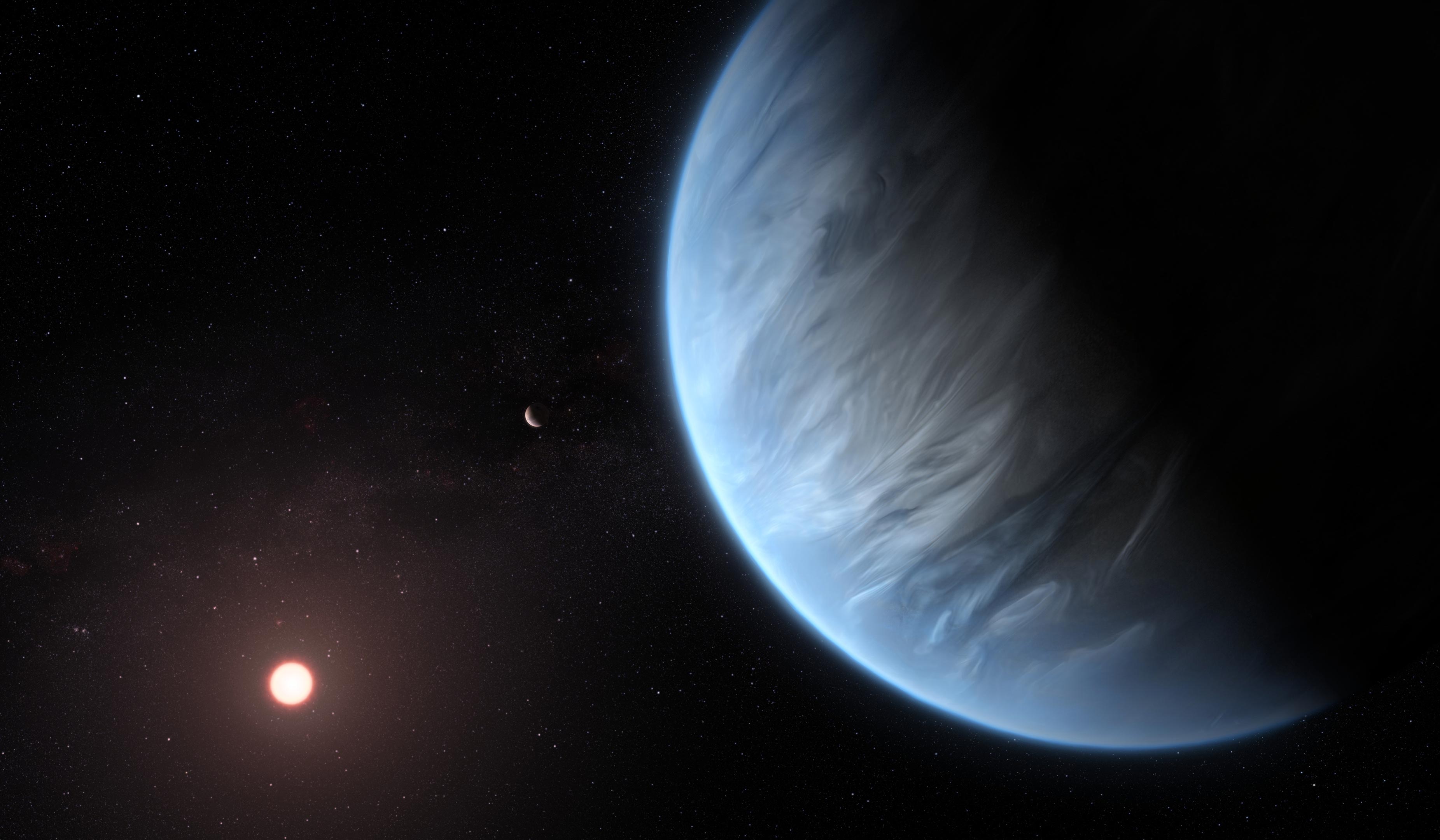
    Artist Impression Planet K2-18b
    This artist’s impression shows the planet K2-18b, its host star and an accompanying planet in this system. K2-18b is now the only super-Earth exoplanet known to host both water and temperatures that could support life. UCL researchers used archive data from 2016 and 2017 captured by the NASA/ESA Hubble Space Telescope and developed open-source algorithms to analyze the starlight filtered through K2-18b’s atmosphere. The results revealed the molecular signature of water vapor, also indicating the presence of hydrogen and helium in the planet’s atmosphere. Credit: ESA/Hubble, M. Kornmesser

    What Is an Atmosphere?

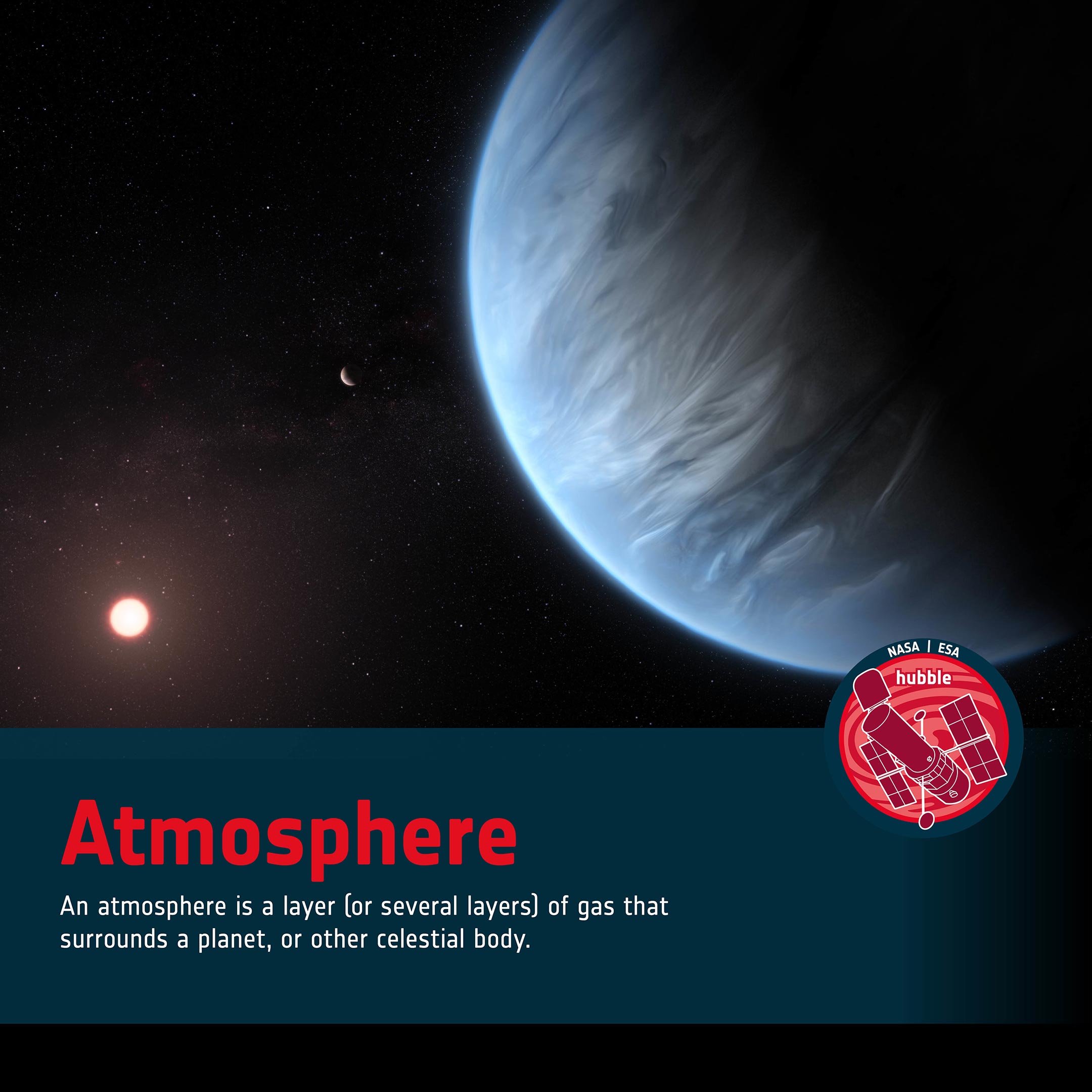
    An atmosphere is a layer (or several layers) of gas that surrounds a planet, or other celestial body.

    If a celestial body is surrounded by a layer, or several layers, of gas, then it is said to have an atmosphere. Atmospheres are typically associated with planets and stars, although other celestial bodies can have them as well, such as comets, which have temporary atmospheres. An atmosphere can be acquired in different ways: it can be accreted onto a celestial body by gravitational attraction, or it can be released from a celestial body itself in a process referred to as outgassing. Whether or not a celestial body retains its atmosphere depends on the body’s mass and the temperature of the atmosphere. Generally speaking, the more mass the body has, and the cooler the atmosphere, the better chance it has of hanging onto its atmosphere. For example, a planet that is in close proximity to a star, and which therefore receives a lot of energy, might end up being stripped of its atmosphere — as happened to Mercury in our own Solar System.


    An atmosphere is a layer (or several layers) of gas that surrounds a planet, or other celestial body. Credit: NASA & ESA
    While not one of its original science goals, Hubble has also made a name for itself as an explorer of exoplanets — planets orbiting stars outside the Solar System — in particular by studying their atmospheres. The chemical makeup of a planet’s atmosphere leaves a unique fingerprint on the starlight that passes through it. You can learn more about how Hubble studies the atmospheres of exoplanets in this video.

    Hubble made the first detection ever of an organic molecule in the atmosphere of an exoplanet in 2008. Hubble found the tell-tale signature of the molecule methane in the atmosphere of the Jupiter-sized extrasolar planet HD 189733b. Under the right circumstances methane can play a key role in prebiotic chemistry — the chemical reactions considered necessary to form life as we know it. Although methane had been detected on most of the planets in our Solar System, this was the first detection of any organic molecule on a world orbiting another star. This breakthrough was an important step towards one day identifying signs of life on a planet outside our Solar System.
    Word Bank Atmosphere
    Credit: ESA/Hubble, M. Kornmesser

    In 2016 Hubble analyzed for the first time the dry atmosphere of a super-Earth, 40 light-years away. Using Hubble’s data and new analysis techniques, the exoplanet 55 Cancri e was shown to have a dry atmosphere without any indication of water vapor. The discovery indicated that the atmosphere consists mainly of hydrogen and helium.

    In 2019, in an exciting discovery, Hubble data were used to detect water vapor in the atmosphere of a super-Earth within the habitable zone. K2-18b is eight times the mass of Earth and at the time of its discovery was the only exoplanet known to have both water and temperatures that could support life.

    In 2021, used archival datasets from the Hubble Space Telescope to reveal the first evidence for water vapor in the atmosphere of Jupiter’s moon Ganymede, the result of the thermal escape of water vapor from the moon’s icy surface.

    Never miss a breakthrough: Join the SciTechDaily newsletter.
    Follow us on Google and Google News.

    Astronomy Astrophysics Atmosphere European Space Agency Exoplanet Planets
    Share. Facebook Twitter Pinterest LinkedIn Email Reddit

    Related Articles

    Methane on a 3000°C Planet? Webb Just Shattered Expectations

    NASA Just Found One of the Coldest Planets Ever – And It’s in a Twisted Orbit

    Gaia Just Found Two Massive Objects That Shouldn’t Exist – And Astronomers Are Stunned

    Alien Atmosphere? Webb Telescope Uncovers Surprising Secrets of Trappist-1 b

    TRAPPIST-1b: Bare Rock or Hazy Alien World? Webb’s Surprising Discovery

    Cosmic Symphony: Cheops Mission Exposes a Resonant Sextet of Distant Worlds

    Planets Beyond Our Solar System: What Do Exoplanets Look Like?

    Webb Space Telescope To Provide Details of Two Intriguing “Super-Earths” in the Milky Way

    Astronomy & Astrophysics 101: Exoplanet

    Leave A Reply Cancel Reply

    • Facebook
    • Twitter
    • Pinterest
    • YouTube

    Don't Miss a Discovery

    Subscribe for the Latest in Science & Tech!

    Trending News

    Millions of People Have Osteopenia Without Realizing It – Here’s What You Need To Know

    Researchers Discover Boosting a Single Protein Helps the Brain Fight Alzheimer’s

    World-First Study Reveals Human Hearts Can Regenerate After a Heart Attack

    Why Your Dreams Feel So Real Sometimes and So Strange Other Times

    This Simple Home Device May Boost Brain Power in Adults Over 40

    Enormous Prehistoric Insects Puzzle Scientists

    Scientists Develop Bioengineered Chewing Gum That Could Help Fight Oral Cancer

    After 37 Years, the World’s Longest-Running Soil Warming Experiment Uncovers a Startling Climate Secret

    Follow SciTechDaily
    • Facebook
    • Twitter
    • YouTube
    • Pinterest
    • Newsletter
    • RSS
    SciTech News
    • Biology News
    • Chemistry News
    • Earth News
    • Health News
    • Physics News
    • Science News
    • Space News
    • Technology News
    Recent Posts
    • Scientists Discover Evolution’s 120-Million-Year-Old “Cheat Sheet”
    • This New “Sound Laser” Could Measure Gravity With Stunning Precision
    • Quantum Breakthrough: New Algorithm Solves “Impossible” Materials in Seconds
    • Could the Universe’s Hidden Shape Solve One of Physics’ Biggest Mysteries?
    • Rewriting Dinosaur Evolution: Scientists Unearth Remarkable 150-Million-Year-Old Stegosaur Skull
    Copyright © 1998 - 2026 SciTechDaily. All Rights Reserved.
    • Science News
    • About
    • Contact
    • Editorial Board
    • Privacy Policy
    • Terms of Use

    Type above and press Enter to search. Press Esc to cancel.