
Close Menu
    Facebook X (Twitter) Instagram
    SciTechDaily
    • Biology
    • Chemistry
    • Earth
    • Health
    • Physics
    • Science
    • Space
    • Technology
    Facebook X (Twitter) Pinterest YouTube RSS
    SciTechDaily
    Home»Space»This Week @NASA: Critical Preflight Test for Artemis I, DART Planetary Defense, New Webb Images
    Space

    This Week @NASA: Critical Preflight Test for Artemis I, DART Planetary Defense, New Webb Images

    By NASASeptember 26, 20221 Comment5 Mins Read
    Facebook Twitter Pinterest Telegram LinkedIn WhatsApp Email Reddit
    Share
    Facebook Twitter LinkedIn Pinterest Telegram Email Reddit
    This Week NASA Artemis DART Insight Webb
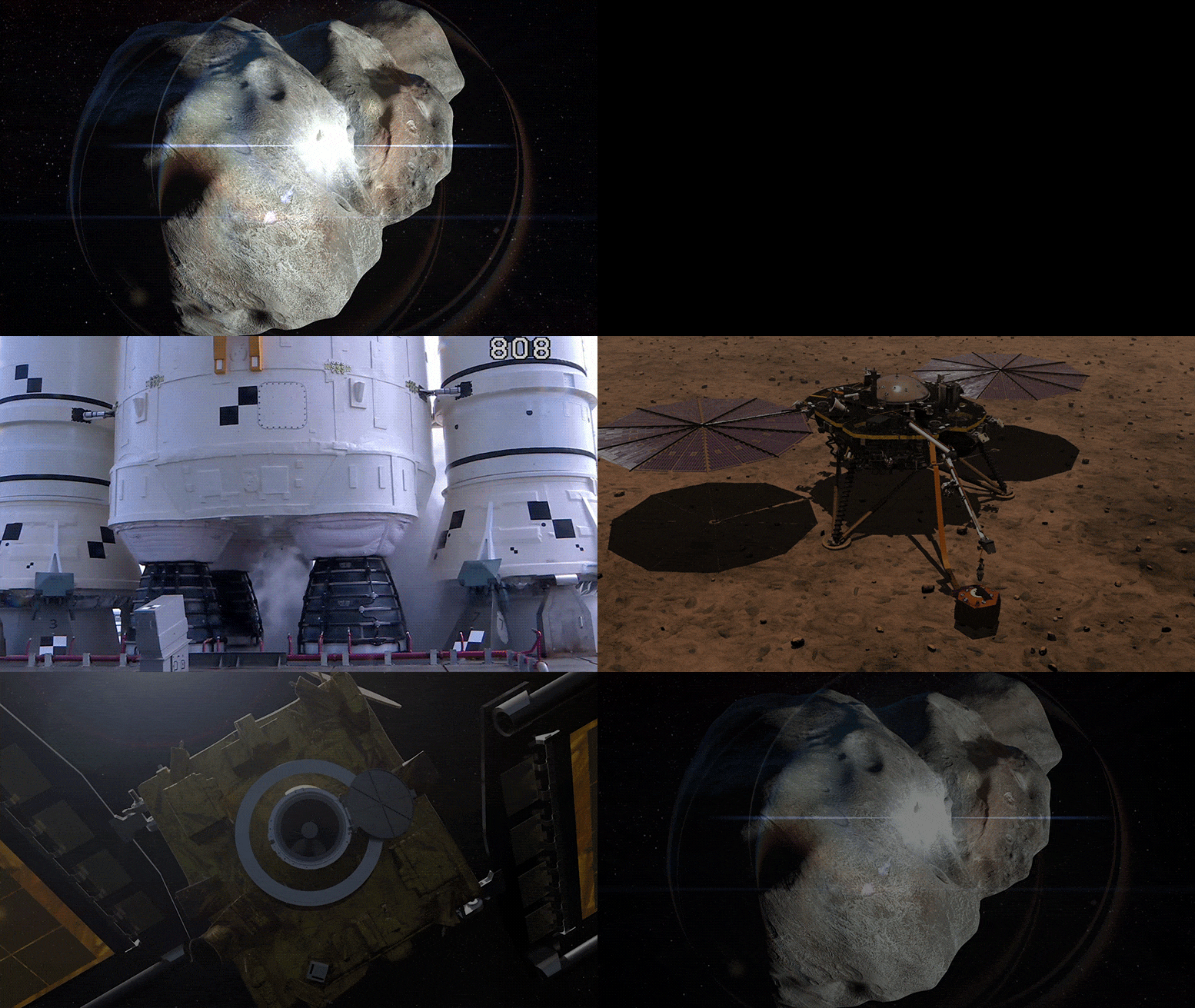
    This week at NASA features a critical preflight test for Artemis I, the first trip to space for a NASA astronaut, and new Webb Space Telescope images of our solar system neighbors.

    A critical preflight test for Artemis I …

    The first trip to space for a NASA astronaut …

    And new Webb Space Telescope images of neighbors in our solar system … a few of the stories to tell you about – This Week at NASA!

    A Critical Preflight Artemis I Demonstration Test

    On September 21, teams at NASA’s Kennedy Space Center conducted a cryogenic demonstration test with the Space Launch System, or SLS rocket for NASA’s upcoming uncrewed Artemis I flight test around the Moon. The demonstration test was designed to allow teams to confirm the repair of a hydrogen leak that cropped up during a previous launch attempt in early September, evaluate updated procedures for loading the rocket with propellant, and conduct additional evaluations. Keep up with the latest Artemis I updates on NASA’s Artemis blog.
    NASA Astronaut Frank Rubio Preflight Checkouts Soyuz MS-22 Spacecraft
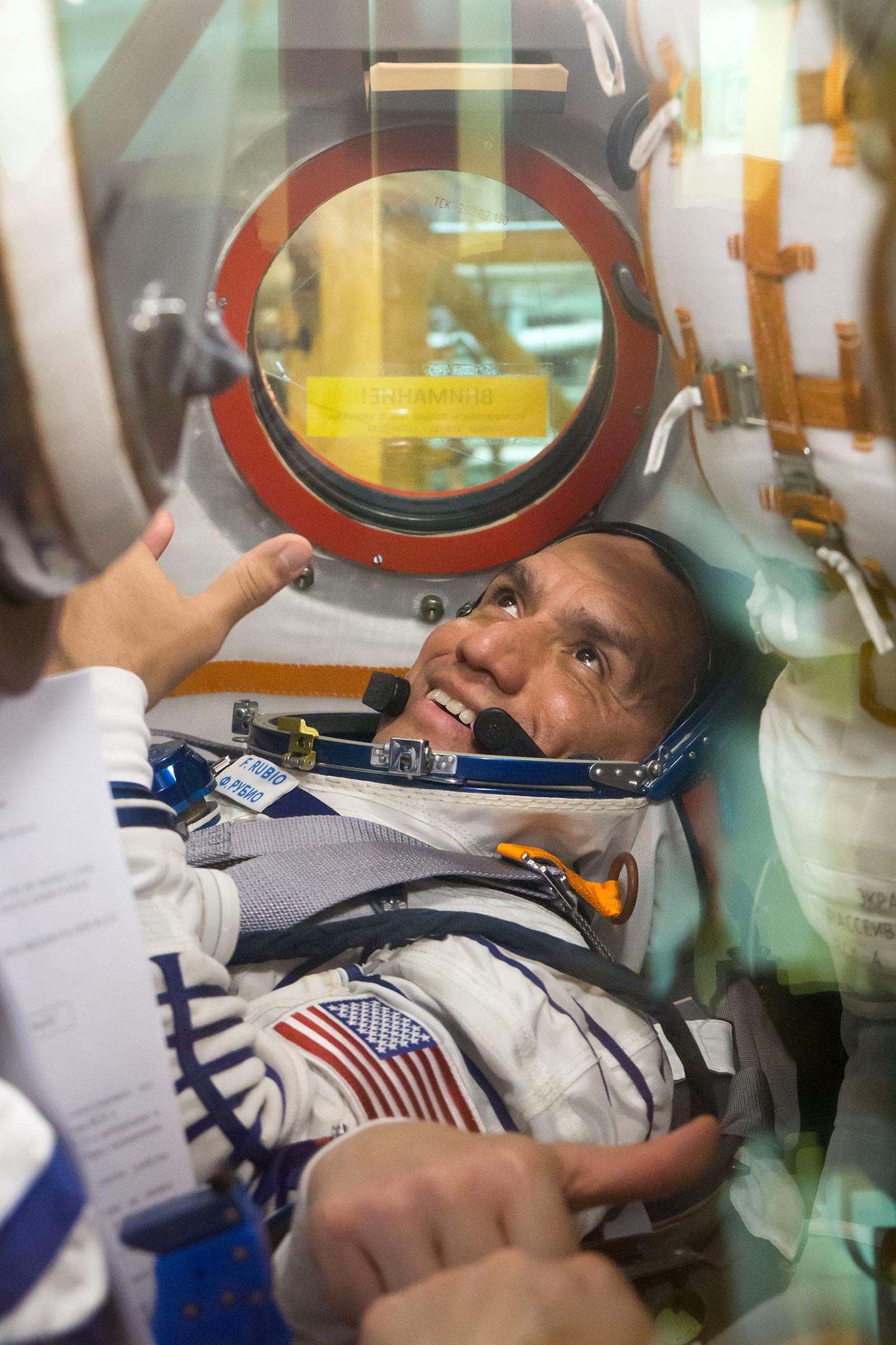
    At the Baikonur Cosmodrome in Kazakhstan, NASA astronaut Frank Rubio performs preflight checkouts in the Soyuz MS-22 spacecraft. Rubio launched with crewmates Roscosmos cosmonaut Sergey Prokopyev and Dmitri Petelin on September 21 for a six-month mission on the International Space Station. Credit: NASA/Victor Zelentsov

    NASA Astronaut Frank Rubio Launches to the Space Station

    Also on September 21, NASA astronaut Frank Rubio launched to the International Space Station (ISS) from Kazakhstan with two other members of the station’s Expedition 68 crew. Later that same day, they docked to the station’s Rassvet module and were welcomed aboard by the Expedition 67 crew, including NASA’s Bob Hines, Kjell Lindgren, and Jessica Watkins. This is Rubio’s first spaceflight.
    Neptune Close Up (Webb NIRCam)
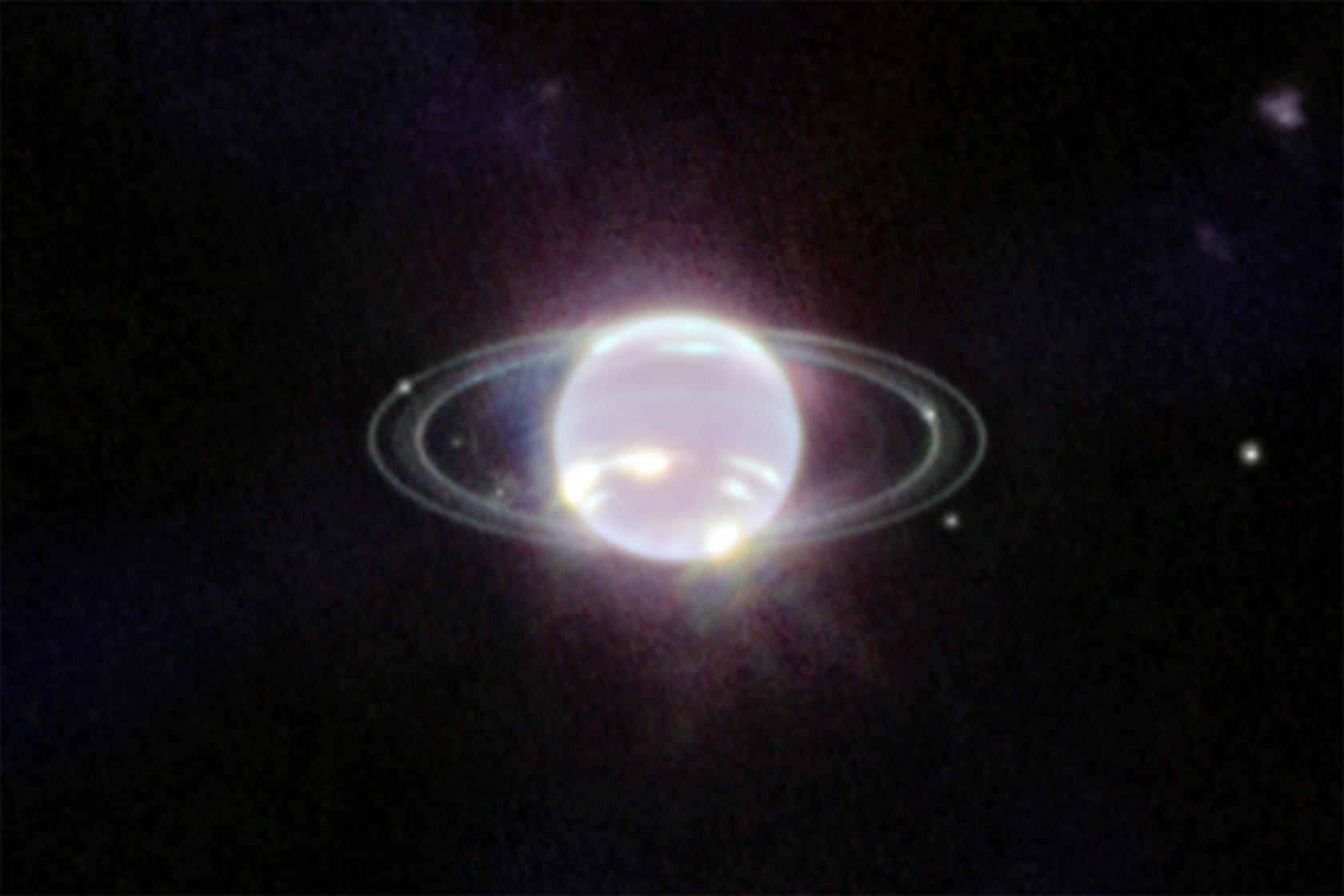
    Webb’s Near-Infrared Camera (NIRCam) image of Neptune, taken on July 12, 2022, brings the planet’s rings into full focus for the first time in more than three decades. Credit: Image: NASA, ESA, CSA, STScI, Image Processing: Joseph DePasquale (STScI)

    Webb Image Captures Clearest View of Neptune’s Rings in Decades

    NASA’s Webb Space Telescope’s first image of Neptune includes the clearest view of Neptune’s rings since the images Voyager 2 captured during its 1989 flyby of the distant planet. Webb also captured seven of Neptune’s 14 known moons including Triton, which orbits Neptune in an unusual retrograde, or backward direction. Additional studies by Webb of both Triton and Neptune are planned in the coming year.
    Webb Mars
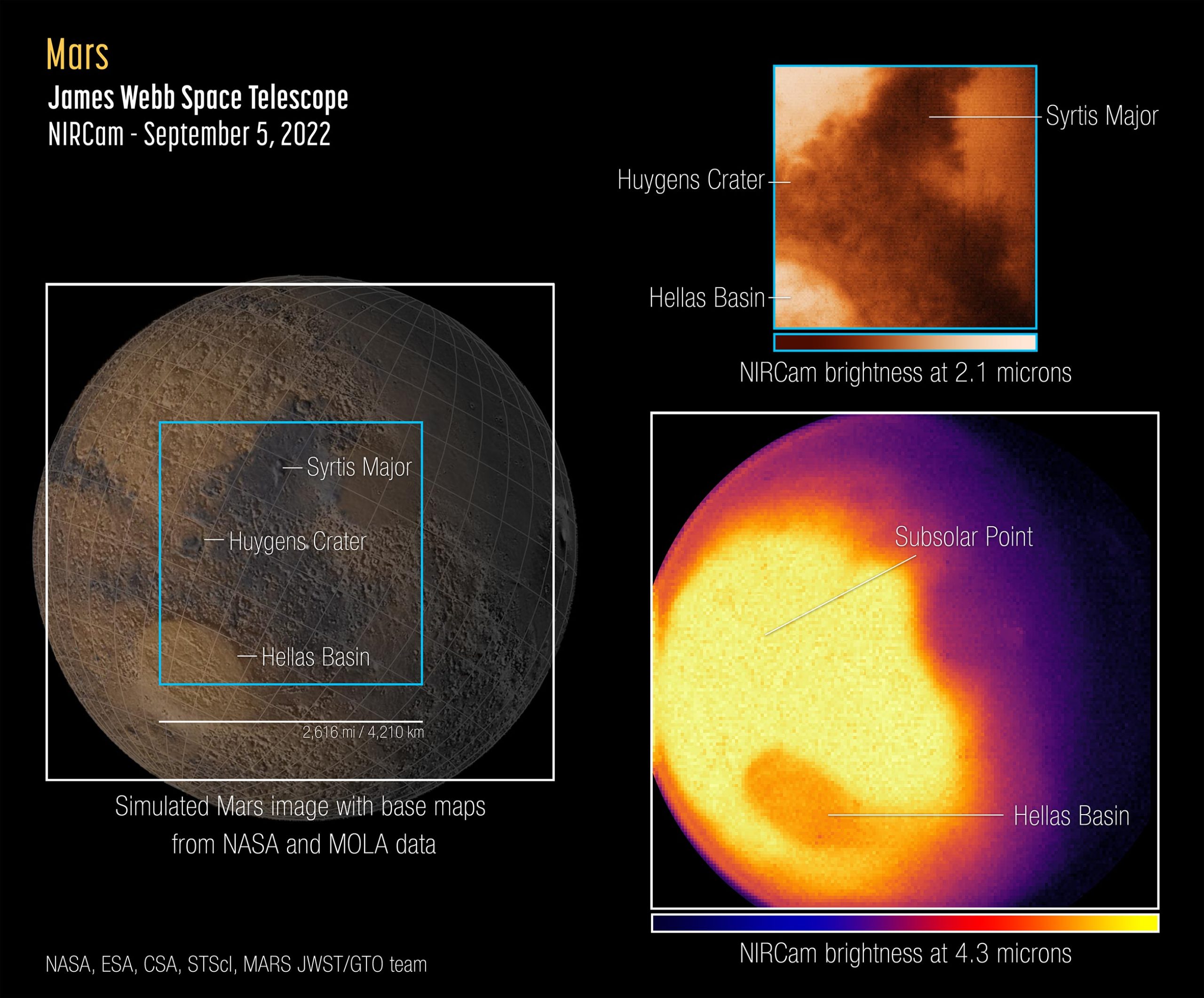
    Webb’s first images of Mars, captured by its NIRCam instrument Sept. 5, 2022 [Guaranteed Time Observation Program 1415]. Left: Reference map of the observed hemisphere of Mars from NASA and the Mars Orbiter Laser Altimeter (MOLA). Top right: NIRCam image showing 2.1-micron (F212 filter) reflected sunlight, revealing surface features such as craters and dust layers. Bottom right: Simultaneous NIRCam image showing ~4.3-micron (F430M filter) emitted light that reveals temperature differences with latitude and time of day, as well as darkening of the Hellas Basin caused by atmospheric effects. The bright yellow area is just at the saturation limit of the detector. Credit: NASA, ESA, CSA, STScI, Mars JWST/GTO team
    Webb’s First Observations of The Red Planet

    The Webb Space Telescope recently used its infrared capability to capture its first images and spectra of Mars. Images of the planet’s eastern hemisphere captured by Webb’s Near-Infrared Camera show surface features, such as craters and dust layers, as well as thermal emission, or light given off by the planet as it loses heat. Meanwhile, data from the telescope’s first near-infrared spectrum of Mars could give astronomers additional details about the planet’s surface and about its atmosphere.
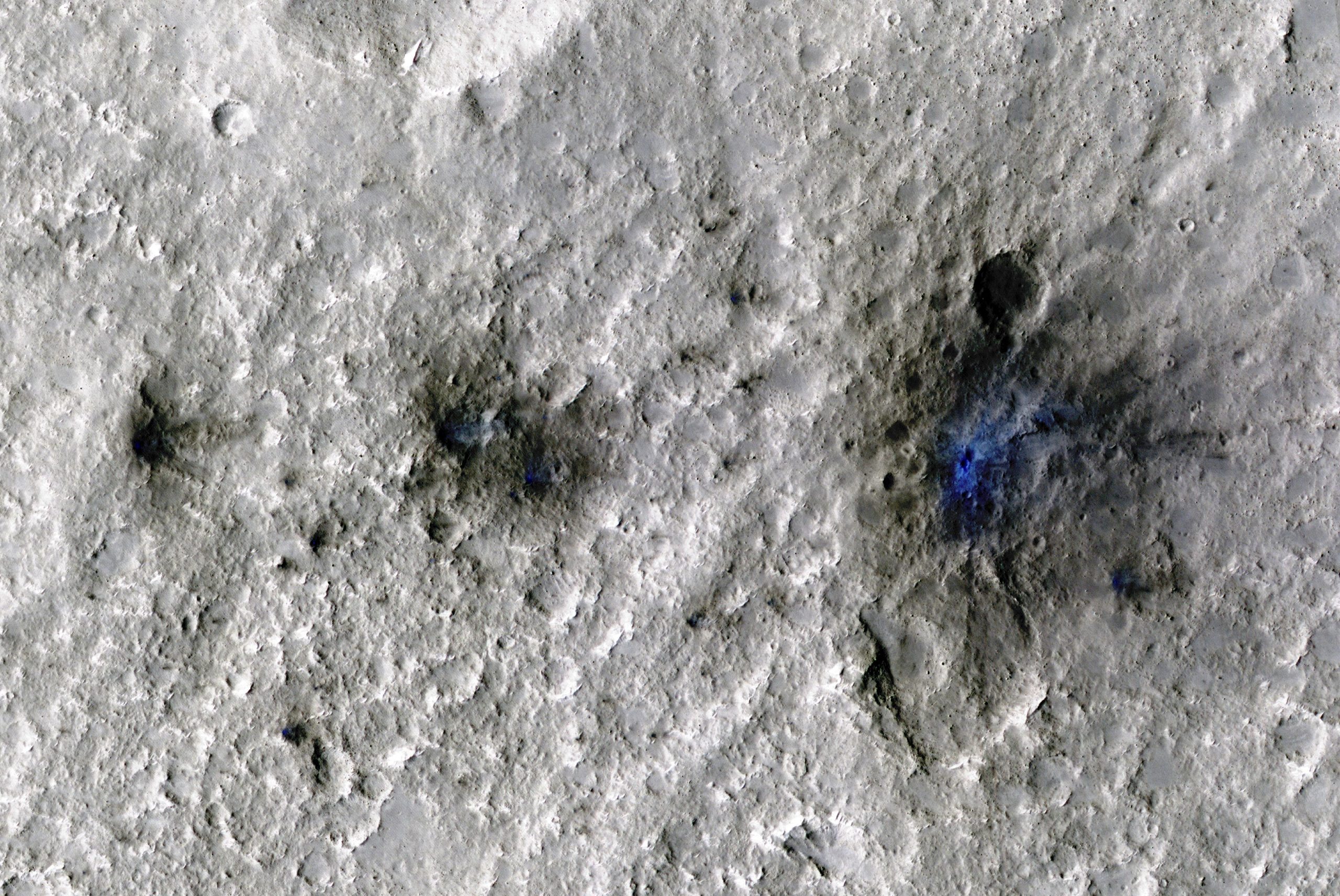
    Meteoroid Impact Craters on Mars
    InSight Detects an Impact for the First Time: These craters were formed by a September 5, 2021, meteoroid impact on Mars, the first to be detected by NASA’s InSight. Taken by NASA’s Mars Reconnaissance Orbiter, this enhanced-color image highlights the dust and soil disturbed by the impact in blue in order to make details more visible to the human eye. Credits: NASA/JPL-Caltech/University of Arizona

    InSight “Hears” Its First Meteoroid Impacts on Mars

    That strange noise is what a space rock crashing into Mars sounds like to NASA’s InSight lander. InSight detected seismic waves from four meteoroid impacts on the Red Planet in 2020 and 2021. This includes an impact on September 5, 2021, that made these craters (see image above). Not only are these the first impacts detected by InSight’s seismometer since the spacecraft landed in 2018, but they also mark the first time seismic and acoustic waves from an impact have been detected on Mars.
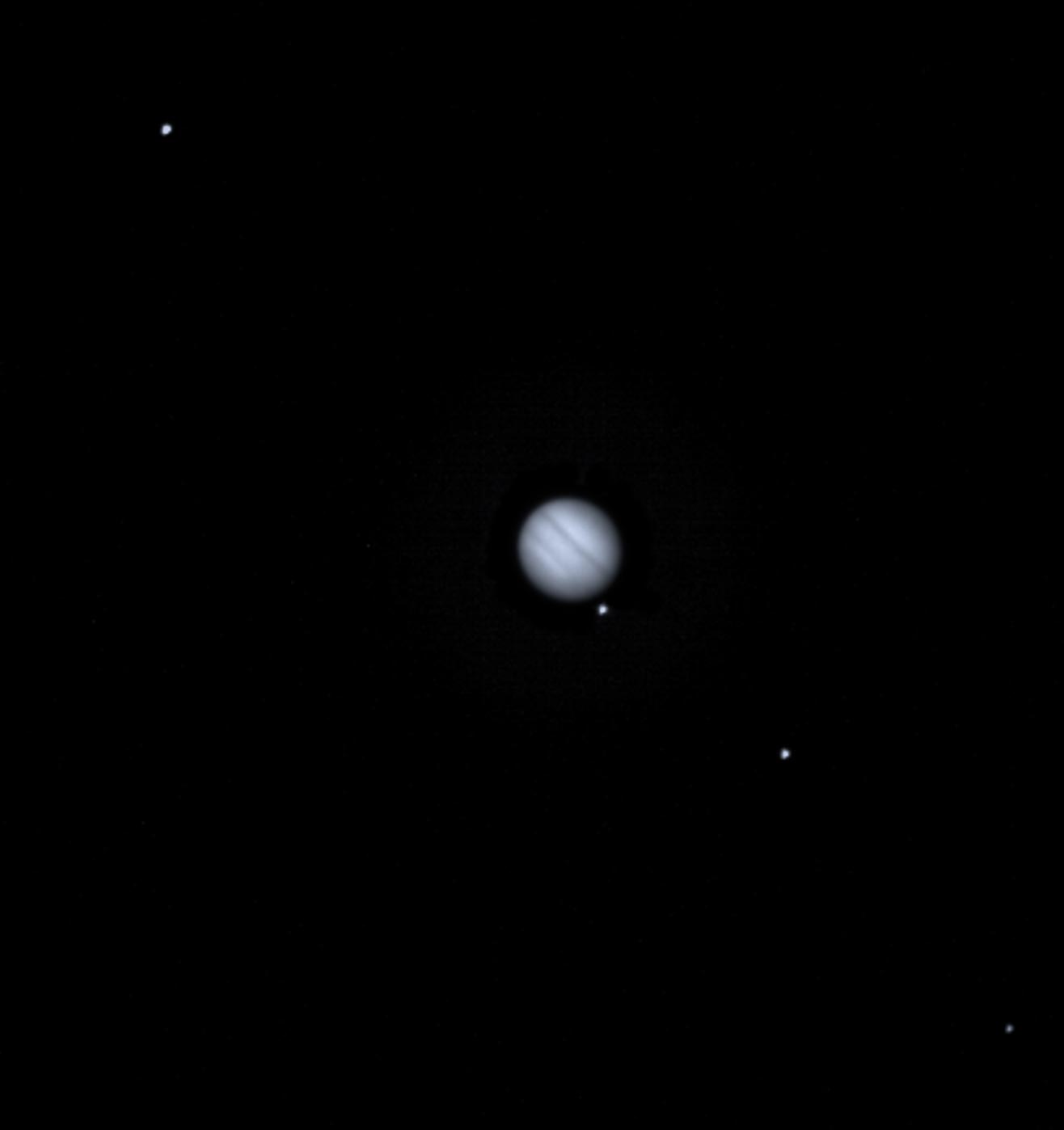
    DRACO Image Jupiter
    A cropped composite of a DRACO image centered on Jupiter taken during one of SMART Nav’s tests. DART was approximately 16 million miles (26 million km) from Earth when the image was taken, with Jupiter approximately 435 million miles (700 million km) away from the spacecraft. Credit: NASA/Johns Hopkins APL

    DART Uses Jupiter and Europa to Test Navigation System

    NASA’s DART spacecraft is on track to intentionally crash into the asteroid moonlet Dimorphos on September 26. The views in this composite image of the Jupiter system were captured during recent testing with the spacecraft’s imager and guidance systems to target and track Jupiter’s moon Europa as it emerged from behind the planet, similar to how Dimorphos will visually separate from Didymos, the larger asteroid it orbits. DART, the world’s first planetary defense test mission, is designed to deflect and alter the course of an asteroid should one ever be discovered that is a threat to Earth. Neither Dimorphos nor Didymos is a threat to Earth.

    That’s what’s up this week @NASA …

    Never miss a breakthrough: Join the SciTechDaily newsletter.
    Follow us on Google and Google News.

    NASA
    Share. Facebook Twitter Pinterest LinkedIn Email Reddit

    Related Articles

    The Cosmic “Hand of God” Just Got Even Stranger

    NASA’s Parker Solar Probe Just Solved a 70-Year Solar Mystery

    NASA’s Perseverance Mars Rover Spots Bizarre Helmet-Shaped Rock and Mysterious Megaripples

    Hubble Reveals a Rare Interstellar Comet Racing at 130,000 MPH Through Our Solar System

    Stunning New NASA Perseverance Rover Images Show Mars Clearer Than Ever Before

    NASA Unveils Possible Building Blocks of Life on Saturn’s Moon Titan

    NASA’s Curiosity Mars Rover Just Got a Big Brain Upgrade

    NASA’s Webb May Have Found a Planet Next Door. Then It Vanished

    NASA’s Lunar Trailblazer Moon Mission Lost Just a Day After Launch

    1 Comment

    1. Bao-hua ZHANG on September 26, 2022 4:06 pm

      Mathematics is the language in which human beings write the universe.The nature of space-time motion is the interaction of topological vortex fields.If there are no physical environment with dark matter and dark energy topological vortexes, there can be neither all kinds of celestial bodies and microscopic particles nor the interaction of them.That’s all!

      Reply
    Leave A Reply Cancel Reply

    • Facebook
    • Twitter
    • Pinterest
    • YouTube

    Don't Miss a Discovery

    Subscribe for the Latest in Science & Tech!

    Trending News

    A Star Near the Milky Way’s Black Hole Is Losing Mass at an Astonishing Rate

    Scientists Solve a Vitamin B12 Mystery With an Unexpected Culprit

    Has the Autism Spectrum Become Too Broad? Leading Scientist Warns of Hidden Consequences

    Rewriting History: Researchers Uncover a Forgotten Amazon Civilization That May Have Housed 3 Million People

    New Research May Change How We Think About Weight Loss Drugs Like Ozempic

    Coffee Drinkers Show Surprising Differences in Fat, Muscle, and Hormones

    New Treatment Targets Gum Disease Without Killing Good Bacteria

    Scientists Discover a 245-Million-Year-Old Reptile With Its Organs Still Preserved

    Follow SciTechDaily
    • Facebook
    • Twitter
    • YouTube
    • Pinterest
    • Newsletter
    • RSS
    SciTech News
    • Biology News
    • Chemistry News
    • Earth News
    • Health News
    • Physics News
    • Science News
    • Space News
    • Technology News
    Recent Posts
    • New Injectable Hydrogel Could Transform Osteoarthritis Treatment
    • Is Your Sleep Hiding an Early Warning Sign of Alzheimer’s?
    • Scientists Find Just 3 Minutes of Sprinting Can Transform Blood Chemistry
    • JWST Finds a Galaxy Cluster That Shouldn’t Be This Mature So Early in the Universe
    • Scientists Think Fungi Could Turn Martian Dirt Into Farmland
    Copyright © 1998 - 2026 SciTechDaily. All Rights Reserved.
    • Science News
    • About
    • Contact
    • Editorial Board
    • Privacy Policy
    • Terms of Use

    Type above and press Enter to search. Press Esc to cancel.