
Close Menu
    Facebook X (Twitter) Instagram
    SciTechDaily
    • Biology
    • Chemistry
    • Earth
    • Health
    • Physics
    • Science
    • Space
    • Technology
    Facebook X (Twitter) Pinterest YouTube RSS
    SciTechDaily
    Home»Space»New Hubble Image Resembles Modern Art
    Space

    New Hubble Image Resembles Modern Art

    By Hubble Space TelescopeJanuary 27, 2014No Comments2 Mins Read
    Facebook Twitter Pinterest Telegram LinkedIn WhatsApp Email Reddit
    Share
    Facebook Twitter LinkedIn Pinterest Telegram Email Reddit


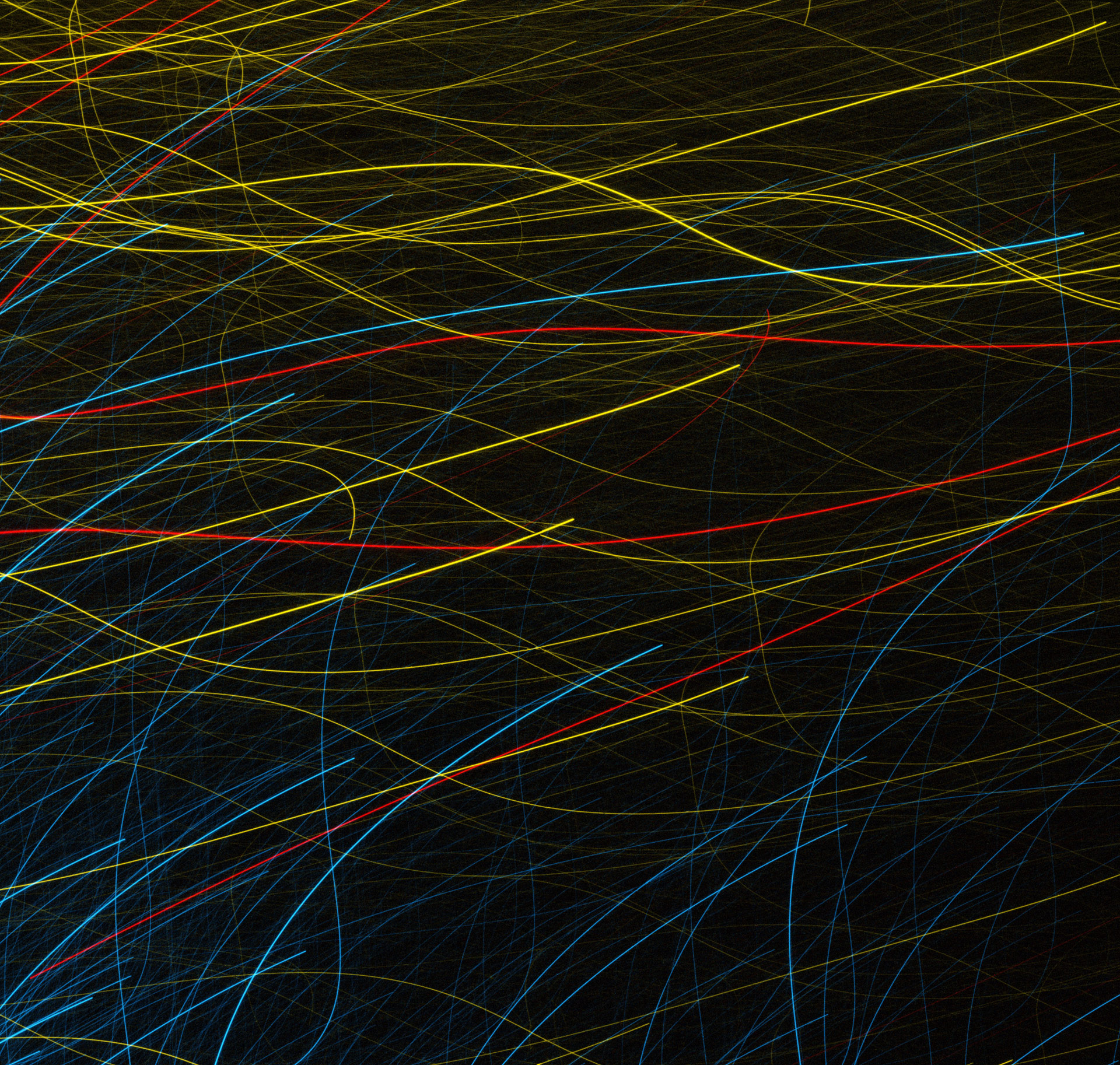
    Hubble Image Reveals Brightly Colored Stellar Streaks
    Hubble image reveals brightly colored stellar streaks. Image: NASA, ESA; Acknowledgements: A. Sarajedini (University of Florida) and Judy Schmidt

    This newly released Hubble image looks like something you would see at an art gallery, but the picture of brightly colored stellar streaks was most likely caused by an error in the tracking system.

    A piece of art? A time-lapse photo? A flickering light show?

    At first glance, this image looks nothing like the images that we are used to seeing from Hubble.

    The distinctive splashes of color must surely be a piece of modern art, or an example of the photographic technique of “light painting”. Or, could they be the trademark tracks of electrically charged particles in a bubble chamber? On a space theme, how about a time-lapse of the paths of orbiting satellites?

    The answer? None of the above. In fact, this is a genuine frame that Hubble relayed back from an observing session.

    Hubble uses a Fine Guidance System (FGS) in order to maintain stability whilst performing observations. A set of gyroscopes measures the attitude of the telescope, which is then corrected by a set of reaction wheels. In order to compensate for gyroscopic drift, the FGS locks onto a fixed point in space, which is referred to as a guide star.

    It is suspected that in this case, Hubble had locked onto a bad guide star, potentially a double star or binary. This caused an error in the tracking system, resulting in this remarkable picture of brightly colored stellar streaks. The prominent red streaks are from stars in the globular cluster NGC 288. It seems that even when Hubble makes a mistake, it can still kick-start our imagination.

    A version of this image was entered into the Hubble’s Hidden Treasures image processing competition by contestant Judy Schmidt.

    Never miss a breakthrough: Join the SciTechDaily newsletter.
    Follow us on Google and Google News.

    Astronomy European Space Agency Hubble Space Telescope NASA
    Share. Facebook Twitter Pinterest LinkedIn Email Reddit

    Related Articles

    Hubble’s Newest Discovery Isn’t a Star, It’s a Window Into the Dark Universe

    This Nearby Galaxy Shows How Frozen Clouds Ignite Into Stars

    This Chaotic Spiral Galaxy Is Still Recovering From a Cosmic Collision

    This Strange Spiral Galaxy Is Hiding a Massive Black Hole

    Hubble Zooms In on a Galaxy That Maps the Universe’s Expansion

    Hubble Captures a Dazzling Spiral Galaxy Alive With Birth and Destruction

    Hubble Spots a Glowing “Ring of Fire” in a Distant Spiral Galaxy

    Dust, Light & Ancient Collisions: The Sombrero Galaxy Like You’ve Never Seen It

    Star Formation in Motion: Hubble Reveals Spiraling Stars and Sculpted Nebulae

    Leave A Reply Cancel Reply

    • Facebook
    • Twitter
    • Pinterest
    • YouTube

    Don't Miss a Discovery

    Subscribe for the Latest in Science & Tech!

    Trending News

    Scientists May Have Solved a Long-Standing Melanoma Treatment Mystery

    This Flesh-Eating Fly Is Back in the U.S. – Scientists Are Tracking Where It Could Strike Next

    Scientists Have Uncovered a Troubling New Pattern Hidden in America’s Rivers

    “Entirely Surprising” – Scientists Have Found a Martian Meteorite Unlike Any Known Before

    “Find of the Year” – Archaeologists Discover the Smallest Ice Age Figurines Ever Found

    New Research Challenges Common Exercise Advice for Bone Health

    Avoiding These 3 Health Risks in Midlife Linked to 13 More Years Without Dementia

    Where Were All the Tiny Dinosaurs? Scientists May Finally Have an Answer

    Follow SciTechDaily
    • Facebook
    • Twitter
    • YouTube
    • Pinterest
    • Newsletter
    • RSS
    SciTech News
    • Biology News
    • Chemistry News
    • Earth News
    • Health News
    • Physics News
    • Science News
    • Space News
    • Technology News
    Recent Posts
    • New Drug Turns Cancer’s Favorite Fuel Into a Deadly Weakness
    • Scientists Solve a Vitamin B12 Mystery With an Unexpected Culprit
    • Has the Autism Spectrum Become Too Broad? Leading Scientist Warns of Hidden Consequences
    • Scientists Reprogram How Light Travels in Just 74 Femtoseconds
    • Scientists Uncover New Clues to a Long-Standing Bonnethead Shark Mystery
    Copyright © 1998 - 2026 SciTechDaily. All Rights Reserved.
    • Science News
    • About
    • Contact
    • Editorial Board
    • Privacy Policy
    • Terms of Use

    Type above and press Enter to search. Press Esc to cancel.