
Close Menu
    Facebook X (Twitter) Instagram
    SciTechDaily
    • Biology
    • Chemistry
    • Earth
    • Health
    • Physics
    • Science
    • Space
    • Technology
    Facebook X (Twitter) Pinterest YouTube RSS
    SciTechDaily
    Home»Space»This Week @NASA: New Space Exploration Partner, Mars Experience on Earth, Black Hole Week
    Space

    This Week @NASA: New Space Exploration Partner, Mars Experience on Earth, Black Hole Week

    By NASAMay 7, 2023No Comments4 Mins Read
    Facebook Twitter Pinterest Telegram LinkedIn WhatsApp Email Reddit
    Share
    Facebook Twitter LinkedIn Pinterest Telegram Email Reddit
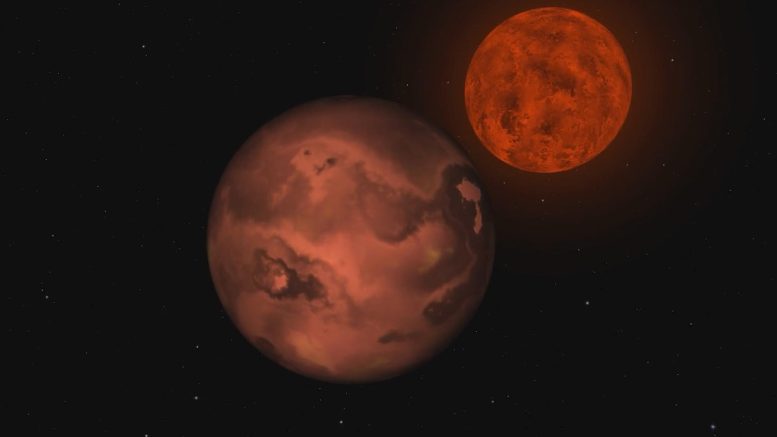
    GJ 486 b Exoplanet Star
    GJ 486 b is about 30% larger than the Earth and three times as massive, which means it is a rocky world with stronger gravity than Earth. It orbits a red dwarf star in just under 1.5 Earth days. It is too close to its star to be within the habitable zone, with a surface temperature of about 800 degrees Fahrenheit. And yet, Webb observations show hints of water vapor. Credit: NASA

    Another partner for space exploration …

    A Mars experience right here on Earth …

    And a promising find outside our solar system …

    A few of the stories to tell you about – This Week at NASA!

    Another Nation Signs Up for Exploration Cooperation

    On May 3, the Czech Republic became the 24th country to sign the Artemis Accords. NASA Administrator Bill Nelson and the Czech Republic’s foreign minister, Jan Lipavský, participated in the signing ceremony at NASA Headquarters. The Artemis Accords establish a practical set of principles to guide space exploration cooperation among nations, including those participating in NASA’s Artemis program.
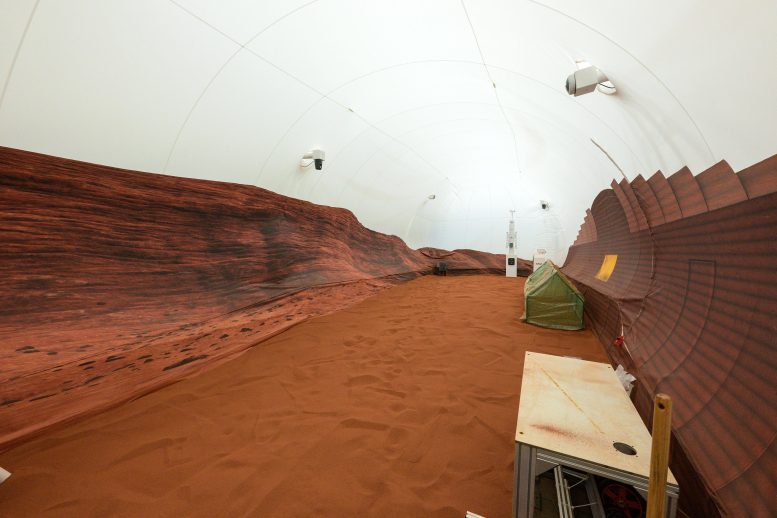
    NASA’s Simulated Mars Habitat
    NASA’s simulated Mars habitat includes a 1,200-square-foot sandbox with red sand to simulate the Martian landscape. The area will be used to conduct simulated spacewalks or “Marswalks” during the analog missions. Credits: NASA

    3D-Printed Mars Habitat Ready for Crew

    NASA’s Crew Health and Performance Exploration Analog, or CHAPEA habitat is complete and ready for crew members. The 3D-printed habitat, at NASA’s Johnson Space Center, was built to provide a Mars-like environment here on Earth. This summer, several volunteers will start a yearlong analog mission to help us prepare for future human exploration of Mars. Learn more about analog missions at nasa.gov/analogs.
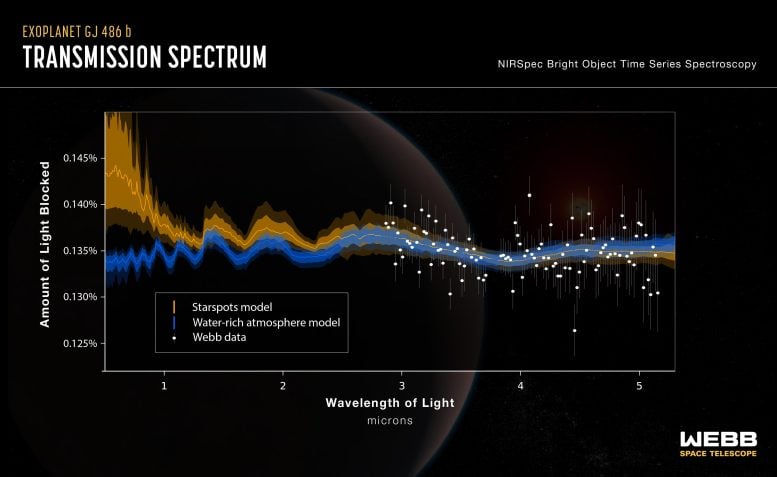
    Exoplanet GJ 486 b (Webb Transmission Spectrum)
    This graphic shows the transmission spectrum obtained by Webb observations of rocky exoplanet GJ 486 b. The science team’s analysis shows hints of water vapor; however, computer models show that the signal could be from a water-rich planetary atmosphere (indicated by the blue line) or from starspots from the red dwarf host star (indicated by the yellow line). Credit: NASA, ESA, CSA, Joseph Olmsted (STScI), Sarah E. Moran (University of Arizona), Kevin B. Stevenson (APL), Ryan MacDonald (University of Michigan), Jacob A. Lustig-Yaeger (APL)

    Webb Finds Water Vapor Outside Our Solar System

    NASA’s James Webb Space Telescope detected hints of water vapor while observing GJ 486 b, an extremely hot rocky exoplanet that is too close to its star to potentially have liquid water. But astronomers don’t know yet if the water vapor is associated with the planet or its sun. If it is the former, that would indicate the planet has an atmosphere. To date, there has been no definite detection of an atmosphere around a rocky planet outside our solar system.


    All monster black holes are not equal. Watch this video to see how they compare to each other and to our solar system. The black holes shown, which range from 100,000 to more than 60 billion times our Sun’s mass, are scaled according to the sizes of their shadows – a circular zone about twice the size of their event horizons. Only one of these colossal objects resides in our own galaxy, and it lies 26,000 light-years away. Smaller black holes are shown in bluish colors because their gas is expected to be hotter than that orbiting larger ones. Scientists think all of these objects shine most intensely in ultraviolet light.

    NASA Celebrates Black Hole Week

    We celebrated Black Hole Week with new animations, educational resources, and other fun and informative material about black holes and their significance in the field of astrophysics. A black hole is an astronomical object with such a strong gravitational pull that not even light can escape from it. Learn more at nasa.gov/black-holes.

    That’s what’s up this week @NASA!

    Never miss a breakthrough: Join the SciTechDaily newsletter.
    Follow us on Google and Google News.

    NASA
    Share. Facebook Twitter Pinterest LinkedIn Email Reddit

    Related Articles

    Scientists Stunned by New Organic Molecules Found on Mars

    Scientists Discover a New Meteor Shower From a Mysterious Crumbling Asteroid

    NASA Artemis II Splashdown and Astronaut Recovery Operation [Image Gallery]

    Splashdown! NASA Artemis II Returns From Record-Breaking Moon Mission

    NASA Artemis II Nears Dramatic Moon Flyby With Record-Breaking Moment Ahead

    A Fiery Finale: How NASA’s Artemis II Moon Mission Returns to Earth

    NASA Artemis II Skips Burn As Astronaut Captures Stunning View of Earth

    NASA’s Artemis II: Humans Just Left Earth Orbit for the First Time Since 1972

    Liftoff! NASA’s Artemis II Launch Sends Astronauts Around the Moon for First Time in 50 Years

    Leave A Reply Cancel Reply

    • Facebook
    • Twitter
    • Pinterest
    • YouTube

    Don't Miss a Discovery

    Subscribe for the Latest in Science & Tech!

    Trending News

    Common Laxative May Help Reverse Depression-Related Brain Fog

    Younger Generations Are Aging Faster – and It May Be Fueling a Surge in Cancer

    New Discovery Could Unlock Quantum Computers the Size of a Coin

    Shingles Vaccine Linked to 24% Lower Dementia Risk in Older Adults

    Scientists Found a Wordle Trick That Solves 99% of Puzzles

    A Hidden Galaxy Called Shadow Blaster May Explain One of Astronomy’s Biggest Mysteries

    These 3 Common Sleep Habits May Be Aging Your Brain Faster

    Rare Goblin Shark Spotted Alive in Its Natural Habitat for the First Time

    Follow SciTechDaily
    • Facebook
    • Twitter
    • YouTube
    • Pinterest
    • Newsletter
    • RSS
    SciTech News
    • Biology News
    • Chemistry News
    • Earth News
    • Health News
    • Physics News
    • Science News
    • Space News
    • Technology News
    Recent Posts
    • 520-Million-Year-Old Fossils Solve One of Evolution’s Biggest Mysteries
    • This Extraordinary Desert Mouse Defies Aging – and It Could Change Human Longevity
    • A Simple Blood Test Can Reveal the True Age of Your Brain, Heart, and Other Organs
    • This Popular Workout Supplement May Give Cancer Immunotherapy a Big Boost
    • Scientists Built a Mars Rover That “Swims” Through Sand
    Copyright © 1998 - 2026 SciTechDaily. All Rights Reserved.
    • Science News
    • About
    • Contact
    • Editorial Board
    • Privacy Policy
    • Terms of Use

    Type above and press Enter to search. Press Esc to cancel.