
Close Menu
    Facebook X (Twitter) Instagram
    SciTechDaily
    • Biology
    • Chemistry
    • Earth
    • Health
    • Physics
    • Science
    • Space
    • Technology
    Facebook X (Twitter) Pinterest YouTube RSS
    SciTechDaily
    Home»Technology»Graphene Photonics Breakthrough Has Potential for Ultrafast Telecommunications
    Technology

    Graphene Photonics Breakthrough Has Potential for Ultrafast Telecommunications

    By Swinburne University of TechnologyMay 9, 2014No Comments3 Mins Read
    Facebook Twitter Pinterest Telegram LinkedIn WhatsApp Email Reddit
    Share
    Facebook Twitter LinkedIn Pinterest Telegram Email Reddit
    Graphene Photonics Breakthrough Promises High Speed Communications
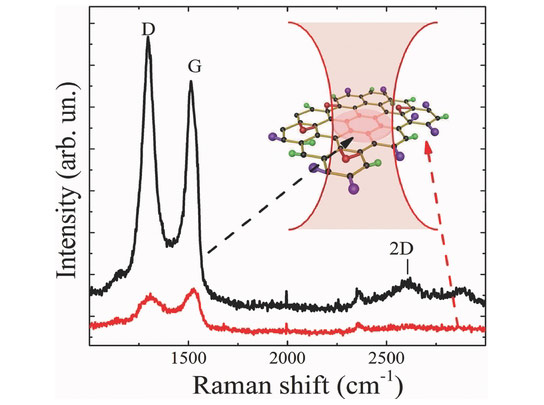
    High-quality continuous (GO) thin films are prepared by a self-assembly method. Z-scan measurements during the laser-induced reduction process unveil in situ nonlinear responses in the GO film. Third-order nonlinear responses of the GO film can be tuned dynamically by varying the laser input fluence. GO thin films with tunable nonlinear responses and versatile patterning opportunities by using direct laser writing may serve as promising solid-state materials for novel nonlinear functional devices. Credit: Xiaorui Zheng, et al., Advanced Materials, DOI: 10.1002/adma.201304681

    A new study details how scientists at the Swinburne Institute of Technology developed a micrometer thin film with record-breaking optical nonlinearity.

    Swinburne researchers have developed a high-quality continuous graphene oxide thin film that shows potential for ultrafast telecommunications.

    Associate Professor Baohua Jia led a team of researchers from Swinburne’s Center for Micro-Photonics to create a micrometer thin film with record-breaking optical nonlinearity suitable for high-performance integrated photonic devices used in all-optical communications, biomedicine, and photonic computing.

    “Such a laser patternable highly nonlinear thin film, about one hundredth of a human hair, has not been achieved by any other material,” Professor Jia said.

    Graphene is derived from carbon, the fourth most abundant element on earth. It has many useful properties, including light transparency and electrical conductivity, and can be completely recycled.

    To create the thin film the researchers spin-coated graphene oxide solution to a glass surface.

    Using a laser as a pen they created microstructures on the graphene oxide film to tune the nonlinearity of the material.

    “We have developed a new platform in which we can fabricate each optical component with desired nonlinearity,” PhD student Xiaorui Zheng said.

    “Currently with telecommunications or all optical communications you have to fabricate each component individually and try to integrate them together.

    “Now we can provide a film, on which everything can be fabricated with laser and then it is automatically integratable.”

    Current manufacturing methods in semiconductor labs require expensive cleanrooms to fabricate photonic chips. The fabrication and laser writing of this photonic material is simple and low cost.

    “Using this new method, we have demonstrated the possibility of manufacturing a scalable and cheap material,” Professor Jia said.

    The researchers are now working to fabricate a functional device.

    The Swinburne co-authors included Mr Xiaorui Zheng, Dr Xi Chen, and Professor Min Gu. This project is funded by the Australian Research Council’s Discovery Early Career Researcher Award scheme.

    Reference: “In Situ Third-Order Non-linear Responses During Laser Reduction of Graphene Oxide Thin Films Towards On-Chip Non-linear Photonic Devices” by Xiaorui Zheng, Baohua Jia, Xi Chen and Min Gu, 17 March 2014, Advanced Materials.
    DOI: 10.1002/adma.201304681


    Never miss a breakthrough: Join the SciTechDaily newsletter.
    Follow us on Google and Google News.

    Graphene Materials Science Photonics Swinburne University of Technology Telecommunications
    Share. Facebook Twitter Pinterest LinkedIn Email Reddit

    Related Articles

    Manipulating the Flow of Light in Extreme Ways Using “Magic Angle” Twistronics

    Graphene Oxide Polymer Offers a New Mechanism for Multimode Optical Recording

    Researchers Use Graphene in Photodetectors

    A Step Towards 2D Devices, Hybrid Graphene/Hexagonal Boron Nitride

    Controlled Graphene Crumpling Used as Artificial Muscle Actuators

    New 3D Form of Graphene May Lead to Flexible Electronics

    Graphene Membranes May be Used to Filter Water & Biological Samples

    The First All-optical Nanowire Switch

    “Patterned Regrowth” May Lead to Graphene-Based Circuits

    Leave A Reply Cancel Reply

    • Facebook
    • Twitter
    • Pinterest
    • YouTube

    Don't Miss a Discovery

    Subscribe for the Latest in Science & Tech!

    Trending News

    JWST Finds a “Star” 100 Billion Times Brighter Than Any Star Should Be

    Scientists Find a Hidden Biological Link Across Different Forms of Autism

    Astronomers Discover a Ghostly River of Stars That Could Reveal Dark Matter

    Why Is Colorectal Cancer Rising in People Under 50? New Clues Point to the Environment

    Quantum Fluctuations Break a Crystal’s Symmetry Rules

    Why Does an Irregular Heartbeat Strike 40 Years Early in Some People?

    Scientists Reveal How ADHD Could Fuel Creative Thinking

    Scientists Find Just 3 Minutes of Sprinting Can Transform Blood Chemistry

    Follow SciTechDaily
    • Facebook
    • Twitter
    • YouTube
    • Pinterest
    • Newsletter
    • RSS
    SciTech News
    • Biology News
    • Chemistry News
    • Earth News
    • Health News
    • Physics News
    • Science News
    • Space News
    • Technology News
    Recent Posts
    • Scientists Uncover Signs of an Ancient Climate “Tipping Point”
    • Cleaner Cars May Be Hiding a New Pollution Problem
    • Common Plant Chemical Linked to Widespread Organ Damage in Aquatic Animals
    • Scientists Discover a Hidden Baobab Species in Madagascar
    • Dogs and Humans May Share a Surprising Biological Secret to Longevity
    Copyright © 1998 - 2026 SciTechDaily. All Rights Reserved.
    • Science News
    • About
    • Contact
    • Editorial Board
    • Privacy Policy
    • Terms of Use

    Type above and press Enter to search. Press Esc to cancel.